Last week I made it to the National Arboretum east of Uijeongbu where they had quite a few not-so-exotic, Korean animals on display. Up first was a 너구리, or raccoon dog, which I hadn't seen (in person) before. Unfortunately, the pens were quite small, perhaps ten by twenty feet.
Attracting a lot of attention was the Siberian tiger, donated by China. It was asleep, but that didn't stop people from yelling at it and trying to get its attention. Its pen was bigger, but not very large considering we're talking about ten-foot long animal.
Up next was a wild boar, which I'd never seen in person. There were several, in fact, and long time readers may remember me writing about the wild boar invasion of Seoul (as the media presented it) nine years ago (here and here) as well as a (rather amusing, considering the convenience store invasion) update here in 2010. Needless to say, they were quite large, and seeing one these bearing down on me in a forest doesn't rate too highly on my to-do list.
A gray fox in a small enclosure. This one was sleeping; the other was pacing about quickly in its small enclosure. I remember an article by Robert Neff pointing out that in the 1920s it was wolves, and not tigers or leopards, which killed the most people in Korea's countryside (especially children).
Here's what the bear enclosure looked like.
At least it had a shaded area and a pool to cool off in, but it still looked pretty hot.
The bird enclosures contained (huge) vultures...
... and owls.
Next door was a 고라니, a small water deer. I was actually able to see this one in its entirety, compared to the rear end of one I caught a glimpse of along the Han River years ago.
I didn't actually look too much at the plants and trees, though I liked the shape of this flower:
Showing posts with label Environment. Show all posts
Thursday, July 31, 2014
Thursday, November 10, 2011
Ulsan's reputation hurt by fat, lazy, argumentative foreign teachers
Describing of the "mental structure that Koreans... hold," Hyunah Yang writes:
"I don't think you'd even hear a nuke if the north dropped one on you!"
(Kyunghyang Shimun, June 11, 2007)
I love the assertion that "because of some instructors, the image of Ulsan and of course the excellent instructors is being damaged." Yes, I'm sure most casual observers (who think about Ulsan regularly (don't you?)) were willing to give a city that is mostly chemical plant industrial sprawl the benefit of the doubt until they read about the 5% of foreign teachers who didn't have their contracts renewed for being fat and lazy ("That's the last straw - we're going to Haeundae this summer instead!").
While I'm sure things have improved since this July 19, 1970 Stars and Stripes article was written, it gives some idea of Ulsan's past:
As for the Yonhap article, one wonders what editorial decision led to its creation...
* From "Re-membering the Korean Military Comfort Women: Nationalism, Sexuality, and Silencing," in Dangerous Women: Gender & Korean Nationalism
The main feature of the structure is the way that it dichotomizes Koreans and Japanese - us and them, victim and offender, good and bad. These categories appear exclusive and independent, but are mutually defined by one another. Through blaming, the existence of an enemy is made visible, and this in turn helps to define the collective identity of "Korean." Within this dichotomy, however, Korean identity is built only upon victimhood.*Yonhap published the following story on Monday in the wake of the story of the Canadian teacher who was busted for the 'new kind' of drug - hashish.
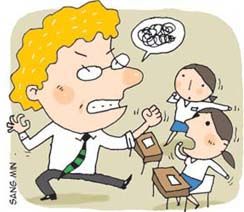
Some 'poor native speaking instructors' in the Ulsan area hurt its reputationOnce again, Korea is victimized by foreigners, in this case instructors (or teachers - they can't seem to keep that terminology straight). It's good to see government-funded Yonhap reinforcing the xenophobic, victimized aspects of the Korean identity by reminding people of the harm caused by these fat, poorly dressed foreigners who do not understand that the term 'optional' (in regard to after school classes) means anything but (like the 'democratic' in 'DPRK'). One wonders if, by yelling at the students, the teachers were merely trying to be heard over the din.
Problems caused by some native speaking instructors who work in Ulsan area elementary and middle schools are hurting the reputation of Ulsan Metropolitan Office of Education.
At the end of last month, Ulsan MOE received a letter of resignation from S(35), a middle school native speaking instructor who was arrested and charged for smoking cannabis resin (AKA hashish) by the Busan prosecutor's office on the 7th,
S had 29 grams of hash sent to his school from Canada and is suspected of smoking it twice by the Taewha River in Ulsan.
Last year and in 2009, twelve (3+9) native speaking teachers did not have their contracts renewed and were expelled by the office of education for poor teaching methods and having a poor attitude towards their service.
Native speaking instructors renew their one year contracts after being reviewed.
The instructors who were expelled often yelled at students, argued with their co-teachers or dressed poorly.
As well, the office of education said some were too fat and visited the hospital often, so classes progressed poorly, and some refused to teach after school classes.
An official at the office of education said, "There are 180 native speaking instructors working at elementary and middle schools (119 and 61 respectively) in the Ulsan area and most have outstanding experience and carry out high level classes." "However because of some instructors, the image of Ulsan and of course the excellent instructors is being damaged."
"I don't think you'd even hear a nuke if the north dropped one on you!"(Kyunghyang Shimun, June 11, 2007)
I love the assertion that "because of some instructors, the image of Ulsan and of course the excellent instructors is being damaged." Yes, I'm sure most casual observers (who think about Ulsan regularly (don't you?)) were willing to give a city that is mostly chemical plant industrial sprawl the benefit of the doubt until they read about the 5% of foreign teachers who didn't have their contracts renewed for being fat and lazy ("That's the last straw - we're going to Haeundae this summer instead!").
While I'm sure things have improved since this July 19, 1970 Stars and Stripes article was written, it gives some idea of Ulsan's past:
Ills Traced To SmogThis event appears to have inspired a story in Cho Se-hui's The Dwarf, in which the city of Ungang (a barely veiled Incheon) suffers a similar incident.
SEOUL — The Ulsan city health center released a report, to local press sources Thursday charging that an almost epidemic rash of headaches and nausea caused by air pollution has hit that highly-industrialized city 185 miles southeast of Seoul.
The center reportedly said a low-pressure weather front had caused toxic sulfur monoxide fumes to hang over the city for several hours Thursday, causing residents of the city's three most crowded districts to complain of severe headaches and vomiting.
According to the Health and Social Affairs Ministry in Seoul, the 10 major plants of the Ulsan industrial complex, just two miles from heart of the city, caused almost $500,000 in pollution damage this year, as well as adversely affecting the community's health.
As for the Yonhap article, one wonders what editorial decision led to its creation...
* From "Re-membering the Korean Military Comfort Women: Nationalism, Sexuality, and Silencing," in Dangerous Women: Gender & Korean Nationalism
Labels:
Books,
Crime,
Education,
Environment,
Foreigners,
Media
Tuesday, August 02, 2011
Umyeonsan landslide and Leaving the Earth
I'd seen this video of the Umyeonsan landslide at the Marmot's Hole, but hadn't seen this view of it happening from the street (from a car's black box).
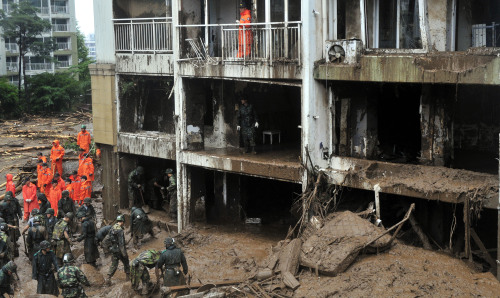
Pretty terrifying. I hadn't realized the extent of the damage until seeing these photos linked at ROK Drop, which make clear that at least the first two floors of the apartment building at the bottom of the slope were decimated.
The victims plan a lawsuit against the local governments, claiming they knew of the risk but did nothing to alert people to it. 18 people were killed, including 3 in the apartments seen in the photos linked above. Other articles look at the aftermath of the flooding and the funeral of a conscript police officer who was swept away during rescue operations in Dongducheon. It's still mind-boggling how much rain we got.
Seeing the video above, with the cars that happened to be passing by at that moment being washed away, it's hard not to think about chance, and it reminded me of this excellent, excellent episode of the documentary series First Person by Errol Morris (director of The Fog of War) entitled "Leaving the Earth," about a pilot dealing with one of the worst situations a commercial airliner could ever experience. If you have an hour to spare, it's well worth the time.
Pretty terrifying. I hadn't realized the extent of the damage until seeing these photos linked at ROK Drop, which make clear that at least the first two floors of the apartment building at the bottom of the slope were decimated.
The victims plan a lawsuit against the local governments, claiming they knew of the risk but did nothing to alert people to it. 18 people were killed, including 3 in the apartments seen in the photos linked above. Other articles look at the aftermath of the flooding and the funeral of a conscript police officer who was swept away during rescue operations in Dongducheon. It's still mind-boggling how much rain we got.
Seeing the video above, with the cars that happened to be passing by at that moment being washed away, it's hard not to think about chance, and it reminded me of this excellent, excellent episode of the documentary series First Person by Errol Morris (director of The Fog of War) entitled "Leaving the Earth," about a pilot dealing with one of the worst situations a commercial airliner could ever experience. If you have an hour to spare, it's well worth the time.
Wednesday, June 08, 2011
A swarm of bees
Some excitement outside work yesterday - a swarm of bees suddenly gathered around the roof of a house across the street:

Not the easiest thing to catch on camera from a distance. Before long a 119 emergency vehicle showed up, which was followed by a fire truck.

Hosing down the roof (they seemed to gathered around the underside of the roof, but never had a chance to land en masse) dispersed most of the bees (who knows where they went after that).

According to this, bees usually swarm near their original nest. I was up on Gaehwasan, behind where I live, a few weeks ago and noticed someone selling honey - with several (man made) hives clustered nearby - perhaps there are some being raised nearby where I work as well.
Oddly enough, I've blogged about bees before (real bees, not films). And as long as I'm on the topic, why not link to my favourite song from the Soft Boys' Can of Bees?
Not the easiest thing to catch on camera from a distance. Before long a 119 emergency vehicle showed up, which was followed by a fire truck.

Hosing down the roof (they seemed to gathered around the underside of the roof, but never had a chance to land en masse) dispersed most of the bees (who knows where they went after that).

According to this, bees usually swarm near their original nest. I was up on Gaehwasan, behind where I live, a few weeks ago and noticed someone selling honey - with several (man made) hives clustered nearby - perhaps there are some being raised nearby where I work as well.
Oddly enough, I've blogged about bees before (real bees, not films). And as long as I'm on the topic, why not link to my favourite song from the Soft Boys' Can of Bees?
Tuesday, February 22, 2011
On the prowl
The Joongang Ilbo posted a few photos of a salk (wild cat) in Changwon with a duck. I've still never actually seen one before.
On the topic of animals, national assembly reps have provided statistics that prove wild boar incursions are on the increase:
Members of the National 119 Rescue Service were sent to capture or kill wild boars 103 times in 2006, but the number has gradually increased to reach 384 in 2010, according to Rep. Ahn Hyoung-hwan of the governing Grand National Party. [...]I've posted on boars a few times before, and as a public service, I'll remind readers that an article five years ago
Gyeonggi Province posted the most reports with 227, followed by South Gyeongsang Province with 175, North Gyeongsang Province with 148 and Seoul with 41.
advised people not to run away or shout when they are faced with a boar on the street, adding that they should look straight into the boar’s eyes and promptly hide behind rocks or trees.
Monday, November 22, 2010
Boared yet again
[Lengthy update at bottom]
The Joongang Ilbo has an article about sightings of wild boars, including one in Samcheong park on Sunday which resulted in its capture. There's a photo of it after its capture here, as well as a chart showing the number of boars caught by year, as well as the number of sightings in cities and on roads since the beginning of October this year, including a collision in Chungcheongbuk-do that left a driver dead.
This isn't the first time boars have made there way into cities - it was reported on (and blown out of proportion) five years ago after boars made three incursions into Seoul in the space of a few weeks:
Unfortunately, soon after these photos were taken a neighbouring dog realized the identity of the boar and killed it. (I'm not sure if it was possible for that story to have a happy ending, really.)
When I first read about the boars, I wondered just how dangerous they were. To be sure, having a 200 - 300 pound animal charge you is not something that will turn out well, and I eventually noticed that Korean boars did have tusks. What really brought it home was a story in Horace G. Underwood's memoir Korea in War, Revolution and Peace (as well as in Donald Clark's Living Dangerously in Korea) about a hunting trip in the 1930s in (I think; the book's at home) Gangwon-do. The Underwoods built an addition to a Korean family's house with the stipulation that they got to use it for a week of the year, and they would get locals to go up onto the mountain and act as beaters, making noise as they moved down the mountain in tandem, chasing animals to the bottom where the hunters waited. Once, a boar had been shot and one of the Korean men moved towards it when it suddenly reared up and slashed his leg open with its tusk. The man was sent to Seoul and was fine, but Underwood noted that a knife could not have made a cleaner cut than that boar's tusk. He also noted, however, that that was the only time he'd seen a boar gore someone.
[Update]
YTN has a report on the latest boar to be caught, as does MBC (in IE only). Do watch the MBC report though, as it's got some great footage (hat tip to Gary Norris). When MBC explains the number of wild boars in the mountains around Seoul, it uses these great graphics:

All I can ask is, "What did you do with Cheongwadae, you bastard pigs?!" Even more fun is footage of a convenience store clerk standing on top of the counter, for what is apparently good reason - it jumps up on the counter after the clerk, who leaps off.

That's a pretty aggressive pig.
The one thing I can't figure out is why they blurred out one of the pigs' faces. While it crossed my mind that 초상권 may also apply to wild animals, I then remembered that most of the other boars had their faces shown. Perhaps that particular boar is related to someone in a position of power. Which might explain the cheongwadae connection above.
Here are a few related articles from the Joongang Ilbo over the past five years:
Searching for a meal
‘Wild pig chase’ ends after 11 hours
A hunting ban spurs city boar baby boom
Leopards on the decline (Which says that the last leopard in Korea was caught in Jirisan in 1963)
An article about the mutant boar movie Chaw.
Wild boars are a hog-sized problem (which tells us that in 1518 boars dug up the grave of a queen)
Villagers up in arms as wild boar invade
Still, I can't help but think of something like SNL's classic 'land shark' sketch, with the doorbell ringing and the family thinking the tangsuyuk has arrived*, only to have half a dozen wild boars burst into the apartment instead. It might work as a trailer. Begin by showing deforestation and apartment complexes surrounding mountains, follow it with images of police chasing and killing boars, and launch into the apartment complex attack.
The scene at school the next day isn't difficult to imagine: "Chul-soo! Do you really expect me to believe that a wild boar ate your homework?!"
"But-but - "
It pretty much writes itself...
* I suppose the tangsuyuk had arrived - but in an uncooked, still-living form.
The Joongang Ilbo has an article about sightings of wild boars, including one in Samcheong park on Sunday which resulted in its capture. There's a photo of it after its capture here, as well as a chart showing the number of boars caught by year, as well as the number of sightings in cities and on roads since the beginning of October this year, including a collision in Chungcheongbuk-do that left a driver dead.
This isn't the first time boars have made there way into cities - it was reported on (and blown out of proportion) five years ago after boars made three incursions into Seoul in the space of a few weeks:
The capital is under threat from an unlikely invasion after wild boars were sighted at several locations around the metropolitan area. Last month there were repeated sightings at the Sheraton Grande Walkerhill Hotel; now a den that is home to scores of the aggressive beasts has been discovered in Achasan.Terrifying stuff. Less terrifying were these photos which turned up in June 2006 of a baby boar found in Yangyang, Gangwon-do which was being raised by a woman's dogs as if it was their own.
Unfortunately, soon after these photos were taken a neighbouring dog realized the identity of the boar and killed it. (I'm not sure if it was possible for that story to have a happy ending, really.)
When I first read about the boars, I wondered just how dangerous they were. To be sure, having a 200 - 300 pound animal charge you is not something that will turn out well, and I eventually noticed that Korean boars did have tusks. What really brought it home was a story in Horace G. Underwood's memoir Korea in War, Revolution and Peace (as well as in Donald Clark's Living Dangerously in Korea) about a hunting trip in the 1930s in (I think; the book's at home) Gangwon-do. The Underwoods built an addition to a Korean family's house with the stipulation that they got to use it for a week of the year, and they would get locals to go up onto the mountain and act as beaters, making noise as they moved down the mountain in tandem, chasing animals to the bottom where the hunters waited. Once, a boar had been shot and one of the Korean men moved towards it when it suddenly reared up and slashed his leg open with its tusk. The man was sent to Seoul and was fine, but Underwood noted that a knife could not have made a cleaner cut than that boar's tusk. He also noted, however, that that was the only time he'd seen a boar gore someone.
[Update]
YTN has a report on the latest boar to be caught, as does MBC (in IE only). Do watch the MBC report though, as it's got some great footage (hat tip to Gary Norris). When MBC explains the number of wild boars in the mountains around Seoul, it uses these great graphics:

All I can ask is, "What did you do with Cheongwadae, you bastard pigs?!" Even more fun is footage of a convenience store clerk standing on top of the counter, for what is apparently good reason - it jumps up on the counter after the clerk, who leaps off.

That's a pretty aggressive pig.
The one thing I can't figure out is why they blurred out one of the pigs' faces. While it crossed my mind that 초상권 may also apply to wild animals, I then remembered that most of the other boars had their faces shown. Perhaps that particular boar is related to someone in a position of power. Which might explain the cheongwadae connection above.
Here are a few related articles from the Joongang Ilbo over the past five years:
Searching for a meal
‘Wild pig chase’ ends after 11 hours
A hunting ban spurs city boar baby boom
Leopards on the decline (Which says that the last leopard in Korea was caught in Jirisan in 1963)
An article about the mutant boar movie Chaw.
Wild boars are a hog-sized problem (which tells us that in 1518 boars dug up the grave of a queen)
Villagers up in arms as wild boar invade
The quiet night of Oct. 19 [2009] turned to terror with locals’ screams as a group of nine wild and hungry boar slipped into an apartment complex in a mountainous region of Gumi, North Gyeongsang.If those boars were anything like the one in the convenience store, I don't imagine it would have been much fun for the people outdoors that night.
Still, I can't help but think of something like SNL's classic 'land shark' sketch, with the doorbell ringing and the family thinking the tangsuyuk has arrived*, only to have half a dozen wild boars burst into the apartment instead. It might work as a trailer. Begin by showing deforestation and apartment complexes surrounding mountains, follow it with images of police chasing and killing boars, and launch into the apartment complex attack.
The scene at school the next day isn't difficult to imagine: "Chul-soo! Do you really expect me to believe that a wild boar ate your homework?!"
"But-but - "
It pretty much writes itself...
* I suppose the tangsuyuk had arrived - but in an uncooked, still-living form.
Friday, November 05, 2010
Thursday, September 30, 2010
Which is the Korean race's biggest holiday?
Old news, I guess, but I was just looking through this article and came across this statistic about the rainfall last Tuesday:
A few days later, a friend of mine showed me his cell phone photos of his trip back to Banghwa-dong from Bucheon that day, which revealed streets that resembled rivers, and shots taken from the rear door windows of the wake of the taxi in this river.
I decided to look around and found this article which has quite a few photos of the effect of the rain on the Gwanghwamun area, Gwanghwamun subway station, and Kyobo bookstore, as well as Cheonggyecheon.


I believe the last time it looked like this was during the flooding in 2006, when the Han River overflowed its banks.
One thing that got my attention was this caption on almost all of the photos in the Ohmynews article: "민족 최대 명절인 추석 연휴 첫날인 21일 오후..." As an introduction to the photo, it reads, "On the afternoon of the 21st, the first day of [our] race's biggest holiday..." Okay, I guess minjok could also be translated as 'nation,' (as it may be here, where "the nation's biggest holiday" is used) but it seems to be an example of how overused the word minjok can be. I can understand a description like that being in English-language articles, as there might be an expectation that the fifteen or so foreign tourists who read the KT, KH, and Joongang (combined) might not know much about Chuseok, but it seems rather odd to use it for Korean readers, though a Naver search reveals that it is widely used.
That it might be little more than a rhetorical flourish, however, is revealed in a cafe post (first result here) where the poster says that last Lunar New Years, an announcer on TV clearly said that Seollal is the minjok's biggest holiday, only for announcers to say last week that Chuseok is the minjok's biggest holiday. He asked, "So which one is it?" and then complained that he'd fought with his wife for two hours due to this broadcast and the question it raised. There was no complaint about the use of the term minjok itself, of course, but it does seem that there's awareness that some media outlets overuse superlatives attached to the term.
The Gangseo region in southwestern Seoul and Gangnam area in the southern part saw 293 mm of rainfall[.]I live in Gangseo, and had had no idea how bad it really was until later. I woke up to the wild sound of the wind and rain and went back to sleep, opting to stay in until it had mostly stopped. I'd noticed that the ground floor of my building was quite wet, and figured water must have gotten in (it's on an incline, where you need to go down two steps to the back door, and up four or five steps to the front). There didn't seem to be any sign of flood or water damage in the area, however (including a nearby basement supermarket).
A few days later, a friend of mine showed me his cell phone photos of his trip back to Banghwa-dong from Bucheon that day, which revealed streets that resembled rivers, and shots taken from the rear door windows of the wake of the taxi in this river.
I decided to look around and found this article which has quite a few photos of the effect of the rain on the Gwanghwamun area, Gwanghwamun subway station, and Kyobo bookstore, as well as Cheonggyecheon.


I believe the last time it looked like this was during the flooding in 2006, when the Han River overflowed its banks.
One thing that got my attention was this caption on almost all of the photos in the Ohmynews article: "민족 최대 명절인 추석 연휴 첫날인 21일 오후..." As an introduction to the photo, it reads, "On the afternoon of the 21st, the first day of [our] race's biggest holiday..." Okay, I guess minjok could also be translated as 'nation,' (as it may be here, where "the nation's biggest holiday" is used) but it seems to be an example of how overused the word minjok can be. I can understand a description like that being in English-language articles, as there might be an expectation that the fifteen or so foreign tourists who read the KT, KH, and Joongang (combined) might not know much about Chuseok, but it seems rather odd to use it for Korean readers, though a Naver search reveals that it is widely used.
That it might be little more than a rhetorical flourish, however, is revealed in a cafe post (first result here) where the poster says that last Lunar New Years, an announcer on TV clearly said that Seollal is the minjok's biggest holiday, only for announcers to say last week that Chuseok is the minjok's biggest holiday. He asked, "So which one is it?" and then complained that he'd fought with his wife for two hours due to this broadcast and the question it raised. There was no complaint about the use of the term minjok itself, of course, but it does seem that there's awareness that some media outlets overuse superlatives attached to the term.
Thursday, June 10, 2010
Putting SMEs in a more 'positive light'
It seems some middle school textbooks have the nerve to make companies that pollute the environment look bad, according to the Joongang Ilbo:
[Sound of crickets.]
Oh right, it was the LA Times, not a Korean newspaper, that broke the story of Samsung suing Michael Breen for a satirical article he wrote (which was quickly followed by the suit being dropped) Not that Korean newspapers are the only ones afraid of Samsung. One wonders what what they think of this.
Isn't corporate rule grand?
The Joongang Ilbo also reports that the Economic and Social Development Commission has said it plans to reduce the average annual labor time in Korea by up to 10 percent, down from the OECD high of 2,256 hours per year (in 2008) to around 1,800 or 1,900 hours. Don't start the countdown just yet, however - they don't plan to start this until 2020. Only ten more years!
Korean textbooks that negatively portray small- and medium-sized enterprises (SME) are expected to be revised by the end of July, the education ministry said Tuesday, in a move to prevent students from shunning jobs with such businesses.[...]What's next? The military complaining that textbooks that talk about the killing and torture of citizens by the governments of Park Chung-hee and Chun Doo-hwan make careers in the military look bad? ('Chapter 17: The 1980 Kwangju citizen surplus reduction.') One wonders what lobbying took place by the federation of small and medium businesses. Also, we wouldn't want to make big companies look bad in textbooks, considering how the media is always tearing them down a peg.
One ninth-grade textbook mentions a small dye factory that discharged contaminated water because it could not afford to run its purification equipment, causing a nearby rice field to dry up. Another textbook by a different publisher wrote that SMEs face financial difficulties because large corporations do not pay subcontractors on time. Such descriptions could also give big companies a bad name, Kim said.
“We have expressed our concern to the authors and received verbal responses that they recognize there is room for misinterpretation,” said Yoo Dae-gyoun, senior supervisor for the division of textbook planning at the Ministry of Education, Science and Technology. “The authors are currently thinking of ways to depict the same material in a more positive light.”
[Sound of crickets.]
Oh right, it was the LA Times, not a Korean newspaper, that broke the story of Samsung suing Michael Breen for a satirical article he wrote (which was quickly followed by the suit being dropped) Not that Korean newspapers are the only ones afraid of Samsung. One wonders what what they think of this.
Isn't corporate rule grand?
The Joongang Ilbo also reports that the Economic and Social Development Commission has said it plans to reduce the average annual labor time in Korea by up to 10 percent, down from the OECD high of 2,256 hours per year (in 2008) to around 1,800 or 1,900 hours. Don't start the countdown just yet, however - they don't plan to start this until 2020. Only ten more years!
Labels:
Education,
Environment,
Kwangju Uprising,
Media,
Society or Culture
Monday, April 26, 2010
One Spring Day

One of these days I'll put up some of the ads I've come across from the 1980s while researching the 1984 French 'Scandal.' The above one seems appropriate for today's post. I went up Gaehwasan the other day and took a few photos.

There was lots of forsythia to be seen.


I'm not sure what the above flowers are, but there were quite a few of them poking out of the leaves covering the forest floor. There were lots of azaleas as well.

This particular bush, overlooking a tomb, had forsythia and azaleas combined together.


The cherry blossom trees below weren't there a year and a half ago. The other trees that were there were unceremoniously torn out, cut into pieces and trucked away and replaced with the ones below:

They're quite a bit smaller than the trees that were there before, and I imagine the old ones will be missed in the sauna-esque days of summer when much less shade is available. The new trees are pretty, sure, (for two weeks of the year) but are still quite small, and don't really compare to these trees (which are likely 15 years old):


There were lots of birds up on Gaehwasan as well, but without my video camera and its zoom, I wasn't able to take photos of any of them.
Tuesday, March 02, 2010
Dobongsan

A couple weeks ago I hiked Dobongsan with a friend. The last (and first) time I'd gone was in 2001. On the way up there were a lot of birds. Crows, magpies, and quite a few of these (I'm not sure what it is, though I am quite certain it was not a pigeon!):

There were chickadees (I saw some, and heard their call) as well as these little guys (not a great photo):

As we went along the ridge, we reached a spot with this view (a close up is at the top of this post), which made the hike well worth it.

Worth it even though it soon turned very difficult. It had been raining throughout the day, and suddenly the temperature dropped, it began to snow, and the muddy trails began to freeze and become slippery - just like the rock slopes next to 30 meter drops.

What should have been a three hour or so hike turned out quite a bit longer, and it took a few days to recover. Never made it to the top of the highest peak like I did last time I went, but did get a nice photo of it, at least...
Thursday, September 03, 2009
Roadkill
No, not that Roadkill. This roadkill:

The Joongang Ilbo has an interesting article about roadkill on Korea's expressways, and the complications surrounding the accidents they cause.

I've written about water deer, pictured above, before, but I was surprised to find out they were so plentiful, and that they were being killed in such numbers. This response is interesting:
The KEC division in Muju County, North Jeolla, has taken an unconventional approach to the problem. Water deer, which represent the largest population of wildlife roadkill in Korea with 1,557 of the 2,286 recorded deaths last year, tend to run away at the sound or scent of tigers.Here are the roadkill statistics for the past decade:
So KEC officials, in cooperation with Daejeon Zoo, recorded the sound of angry tigers roaring and have installed speakers along the Tongyeong-Daejeon Expressway in the Mount Deokyu area to alert the deer. As odd as it might sound, the KEC also went so far as to collect tiger droppings from the zoo to scatter in the area.
“Although it’s difficult to provide statistics on the effect of the speakers, we have noticed a difference,” Jung Hong-joon of the KEC’s PR department said.
Since 2005, the KEC has been installing fencing along highway wildlife crossings. The KEC reports the number of animal fatalities, which had increased drastically since 2004, began to decrease last year because of this measure.

I also like this picture of the leopard cat, or salkwaengi (살쾡이) included in the article.

Be sure to read the whole article.
Oh, and the youtube search for the movie Roadkill turned up 'New York City' by the Demics, one of those songs I'd forgotten I'd known until 1996, when I was doing a radio show and a caller requesting it, telling me the lead singer had just died of cancer. He sounded like he was in shock, so I didn't have the heart to tell him I didn't know who they were - until I put on the record and went, 'Oh yeah! That song.'
Wednesday, August 19, 2009
Tree frog
I took these photos about an hour ago, when I looked and saw this little tree frog on the glass of the patio door. About the only time I saw one in Korea was on the window of a Family Mart in a rural part of Wonju.


Insects, like the one behind it in the last photo, were drawn to my flashlight, which gave the frog lots to eat. I tried to video it eating, but didn't have much luck.


Insects, like the one behind it in the last photo, were drawn to my flashlight, which gave the frog lots to eat. I tried to video it eating, but didn't have much luck.
Thursday, April 16, 2009
Like clockwork
Spring never arrives with subtlety in Korea. The second week of April always finds Seoul exploding in colour, especially due to the blooming cherry blossoms. These days the cherry blossom festival in Yeouido is always a big draw for crowds (at least for people in southwestern Seoul), though in the early 20th century, Changgyeonggung Palace - turned into Changgyeongwon park and zoo by the Japanese - was the place to go:
Here are a few photos taken over the past few years of mostly cherry blossoms (within a few hundred meters of my house, unless stated otherwise):
The above shot is my only one of cherry blossoms on Yeouido. It was taken while driving by on the Olympic Expressway while heading out on this trip.
Taken near Wolchulsan in Jeollanam-do, on my second trip into the countryside.

The two photos above were taken in Gangneung, near Gyeongpodae and Gangneung's lake.
The two photos above were taken south of Gimpo Airport, on the border between Seoul and Bucheon.
The above photo was taken near Banghwa Station.
Forsythia and azaleas on Gaehwasan.
The shot above isn't so spectacular, but a cropped version of it did serve as the header of this blog for a few years.
Here are a few photos taken over the past few years of mostly cherry blossoms (within a few hundred meters of my house, unless stated otherwise):
The above shot is my only one of cherry blossoms on Yeouido. It was taken while driving by on the Olympic Expressway while heading out on this trip.
Taken near Wolchulsan in Jeollanam-do, on my second trip into the countryside.

The two photos above were taken in Gangneung, near Gyeongpodae and Gangneung's lake.
The two photos above were taken south of Gimpo Airport, on the border between Seoul and Bucheon.
The above photo was taken near Banghwa Station.
Forsythia and azaleas on Gaehwasan.
The shot above isn't so spectacular, but a cropped version of it did serve as the header of this blog for a few years.
Subscribe to:
Posts (Atom)