Thursday, July 16, 2020

Blackface and depictions of indigenous people in South Korea in the 1960s, 1970s, and today

Update, July 22:
I've inserted some more examples below of festivals from 1974.

Original Post:

Eight years ago I wrote "Three decades of blackface in Korea," an examination of blackface in South Korea between 1978 and 2012, which has turned out to be my most-viewed post. During the past few years I've been researching youth culture in Korea from 1967-1976 by reading the weekly magazines from that time, and occasionally I've come across photos of Koreans in blackface. I decided to write a "prequel" post examining the use of blackface and depictions of Africans and indigenous people from that time.

Considering the role of the US in Korea after 1945, it is clear that American racial attitudes have influenced Koreans' attitudes toward black people, but since Koreans were wrenched into modernity by the Japanese Empire, one wonders what influence the Japanese had on Koreans in this regard. I really don't have an answer to that question, but I did discover David Wright's article, "The Use Of Race And Racial Perceptions Among Asians And Blacks: The Case Of The Japanese And African Americans," which reveals that Japanese people were exposed to American racial attitudes during some of their earliest official interactions with them. From pages 136-137:
In 1853, Commodore Matthew C. Perry arrived in Japan on a mission to force open the doors of trade and to propose a trade and commerce treaty thinly disguised as the U.S.-Japan Treaty of Friendship (Kanagawa 1854 Treaty). Among his crew were "tall jet black Negroes, completely armed to the teeth" whose job it was to escort the men who on July 14, 1853, delivered Commodore Perry's credentials and a letter from President Fillmore to the Japanese shogunate. Perry reportedly chose to have himself surrounded by the black men because they appeared to be the most intimidating. The use of black guards was an obvious attempt to impress the might of the United States on the Japanese officials and to intimidate them into signing an agreement as quickly as possible.

 Apparently this tactic was helpful because on March 23, 1854 the treaty was concluded and a celebration commemorating the fact soon followed. Commodore Perry and the white American sailors aboard the flagship Powhatan, choose to express their blissfulness by treating the Japanese delegates to a good old-fashioned minstrel show performed in blackface. According to diaries the Japanese "were entertained by an exhibition of negro minstrelsy, up by some of the sailors, who, blacking their faces and dressing themselves in character" sang 'Mistah Tambo' and 'Mistah Bones' to an apparently delighted Japanese audience. Not content with displaying their talents in front of a limited audience, some of the 'performers' later toured other parts of Japan with their successful 'act.'
What effect this had on the Japanese, and whether this might have eventually influenced Korean attitudes during the colonial period is not clear, but American racial attitudes most certainly had an influence on Koreans after 1945. Beyond the fact that there was a market for Confederate battle flags outside US bases in 1952, the incident that illustrates this influence best would be the Anjeong-ri race riots outside Camp Humphreys in July 1971, which I've written about before here and here. I've been doing more research on this topic and discovered that the situation was even worse than what I briefly described here. Incidents occurred at Camp Humphreys several times that year, mostly in response to the "color line" in the off-base clubs, which were often very unwelcoming to black soldiers, and whose Korean owners colluded to close down the only club that did serve them. As relations worsened, they exploded the evening of July 10, when black soldiers trashed the clubs that wouldn't serve them. In response, hundreds of Koreans gathered and attacked any black soldiers they found. The next day they held protests outside the gates of Camp Humphreys. Whatever traditional preferences might have existed in Korea for those with lighter-coloured skin, only the influence of American racial attitudes can explain a banner that reads "We don't need any ni--ers - Go back to cotton field."


(Photo from the Kyunghyang Sinmun.)

To what degree these attitudes - most likely learned from direct contact with white American soldiers - filtered into the population outside of the camp towns near US bases is not clear. What can be learned from the weekly magazines from the late 1960s and early 1970s, however, is that the use of blackface to depict black or indigenous people was not uncommon, and, in fact, the practice continues today.

One use of blackface - or wearing full-body black paint - in the late 1960s and 1970s was in costume parades at school or university festivals. Even today having students dress up in costumes for "international day" or such activities is common, and at a kindergarten / hagwon I worked at in 2001, one kindergarten class was dressed up in "primitive tribal" clothes and carried shields and spears and was said to be from "Africa."

Thinking of this, I couldn't help but be reminded of a term used in a 1984 Kyonghyang Shinmun article about Itaewon that described it as a place of "ethnic exhibition within Korea." The term "place of racial/ethnic exhibition"(인종전시장) was used to describe places around the world such as Geneva, New York, Bangkok, or, within Korea, a 1970 Asian Development Bank meeting, or the second World Taekwondo Competition in 1975. It highlighted the racial diversity of the outside world and stood in contrast to, and reinforced, the idea that Korea was a racially homogeneous nation.

Perhaps the most memorable use of the phrase, due to the accompanying illustration, might be from cartoonist Kobau's visit to Hong Kong in 1962, where he noted that the shower room at Repulse Bay Beach was a place of racial exhibition.

Interestingly, a 1973 Kyonghyang Shinmun article about Toronto contrasted it with large cities in the Great Lakes area like Detroit and Buffalo by saying that "Toronto gives off the feeling of a racial exhibition place, but it doesn't have anything like American ghettos and the accompanying scorn towards black people."

Despite such understanding of racism in the US, this "Miss Bokjori" cartoon from the February 18, 1970 issue of the Weekly Kyonghyang is hardly enlightened (start at top right):


Note the blackface-style caricature of a black person:


The June 10, 1970 issue of Sunday Seoul also featured a similar design (complete with a bone through the nose) of a spear-holding 'savage' who says to the white woman, "I ate my wife and decided you will be my wife." In this case, unlike the Miss Bokjori cartoon above, the cartoon is almost certainly reprinted from an American (or Western) publication. Sunday Seoul and Weekly Kyonghyang regularly reprinted single-panel American cartoons featuring adult humour. (Most obvious in the cartoons was the blatant sexism of the time. Who knew breasts were so funny?)


On the topic of "primitive natives," the Korea Times featured this ad in October 1956 (thanks to Rob York for sharing this):


Why they chose to depict a "native" (with every possible accoutrement from leopard head to mask to tooth necklace to a skull, and, of course, a bone through the nose) really is not clear at all.

As well, a caricature of black person can be found on the wrapper of Haitai Black Chocolate (or "해태 부랙 쵸코렡") in this ad from the November 17, 1971 Weekly Kyonghyang:
A more detailed expression of attitudes towards Africa can be found in the December 17, 1969 issue of Weekly Kyonghyang, which featured a "camera report" titled "Invitation to Africa: The black continent where the primitive and modern coexist." The article, By Son Chung-mu, clearly focused on topless women, both sexualizing them and depicting them as primitive. (Both Sunday Seoul and Weekly Kyonghyang regularly featured photos of nude women from 1968 to 1970).


The introduction both highlighted the contrast of the primitive and the modern in Africa by describing men with four or five wives and buildings with 20 or 30 floors, but also described Africans as people with black skin due to god baking them for too long, a "racial origin myth" told throughout East Asia (mentioned here in Taiwan).

Though Koreans may have felt their society to be inferior to the West (feelings no doubt reinforced by the cultural influence of the US military presence), the article places Korea above Africa in various ways. For example, we are shown this photo, accompanied by the following caption: "For black-skinned Africans, Korean-made radios are the most popular. Five years ago Goldstar entered the African market and this year is selling around 7,000 radios to the black continent (Sierra Leone)."


Compare the above caption to this photo and caption: "Engineers of the black continent, who are building houses, primitive as they are, to escape the heat. Weaving kudzu vines together is their best technique/technology. (Niger)"


The article also features a second photo of a topless woman ("with Hausa women in the Sahara milling grain") but this time with the author posing next to her. The juxtaposition of the Korean man, in crisp pants, shirt, tie, and sunglasses with the Hausa women, particularly the topless women, makes manifest the implied racial and gender hierarchy.


While it could, I suppose, be argued that these photos were chosen because the article was being published by a tabloid weekly that devoted many of its pages to photos of scantily-clad women, the same can't be said for an article the same author published a month or so later in the academic monthly Sedae, which featured this photo:


Titled "Mondo Cane: Africa," it was the first in a series called "Sights and sounds of the world's back alleys." (Mondo Cane was a 1962 Italian "exploitation documentary" about strange cultural practices from around the world.) A link to the article can be found here (click on the '원문보기' button; requires download of National Assembly Library document viewer).

Unlike the photo-oriented Weekly Kyonghyang article, the Sedae article is text-oriented, and some of that text is not at all what you would call enlightened (though it makes Korea look so in comparison). In one section, titled "The Ecology of Black Sex," he wrote that "Africans, who do not wear clothes properly, have a very narrow concept of sex" and then argued that sexual mores in Africa were being affected by the "current wave of free sex in the West" as it "penetrates the black continent." He then described how in one tribe, men and women would just meet and have sex, while in another, girls from the age of ten become the communal property of the men in the village. After the age of 12 or more, they had to comfort the men protecting the village and comfort those leaving to go fight. Highlighting the "lack of civilization" from a Korean point of view, he wrote that "Africans don’t know their own names. And they don’t know their ages. So for Africans there is no such thing as a family tree." Yes. He actually wrote that. Considering the importance of family trees in Korea, it's difficult not to conclude that he was trying to depict Africans as backward and inferior to Koreans, and was doing so in part by either outright lying about, or willfully misunderstanding, what he was seeing around him. Part and parcel of this process, then, is the confluence of ignorance or misinformation and portrayals of Africans or other indigenous people as inferior to Koreans.

Returning to the topic of blackface in Korea, having students paint their faces or other parts of their body black in order to dress up as "primitive" people was not uncommon at school festivals. Below is a costume parade for a girls' middle school's sports day at Hyochang Stadium in 1969 (from a book commemorating the 60th anniversary of the school's founding).


Note that there isn't any specificity in who they're depicting. Much like how the kindergarten children I saw dressed up in "tribal wear" were meant to represent "Africa," there seems to be an amorphous blend of various indigenous peoples, in this case with Native American headdresses and dark skin.

These pages from a May 25, 1969 Weekly Kyonghyang article showcase student festivals at universities in Seoul (and include cross-dressing):


A full page was dedicated to depicting an "Indian festival" costume parade at Konkuk University featuring "Indians" "who had grown up with their skin blackened by the sun holding axes and spears," a "group with bare feet in the jungle" who were seeking the "blessings of the sun god."


Once again, this seems to mix concepts of primitiveness, indigenous peoples, "Indians," and dark skin all at once.

As to where these ideas might have come from, a Donga Ilbo report on a May 1976 children's festival held, once again, at Hyochang Stadium (and attended by 20,000 children and first lady Park Geun-hye) describes one of the highlights of the festival: "In particular, the pinnacle of enjoyment for the children was an Indian dance demonstration by five American Boy Scout troop members with their faces painted black." I couldn't find any photos of the Americans, but these photos set the scene:


Another festival in 1972 provided the occasion for one of the few sets of color photos I found of such festivals. As the Kyunghyang Sinmun reported, in April 1972, Hankuk University of Foreign Studies held the second World Folk and Art Festival at Citizens Hall to celebrate the 18th anniversary of the university’s founding. Taking part were 330 HUFS students studying foreign languages, 30 foreign professors, and 100 foreigners living in Korea. The show was to include dances from 16 countries including those associated with an Indian marriage ceremony, Chinese dance, Spanish "flamingo" dance, and an Arab camel dance.

(Photo from the Kyonghyang Sinmun).

As it was described in a photo spread in the April 30, 1972 issue of Weekly Kyonghyang, the festival was held "in order to understand the indigenous lifestyles and folk culture of other countries in today's rapidly changing international society."


You have to wonder how the foreigners involved in the show felt about the whole thing (the Dutch girls at bottom right look a bit shell-shocked).

The dancer below is said to represent Portugal, though the caption makes it seem like someone mixed up "Iberian" and "Liberia" (and Seoul is closer to the equator than Lisbon): "The clothing of the Liberian Peninsula, which is close to the equator, is very practical. Do they enjoy wearing red and yellow because it is the expression of a sea power's personality?"


Is this actually representative of something from Portugal? It looks quite similar to the depictions of indigenous people above, and one wonders why there are skull and crossbones included as well. (That style of color pinwheel umbrella is still used in elementary school student festivals.)

[Update:]

Two years later, on April 20, 1974, the 20th anniversary of the founding of Hankuk University of Foreign Studies was celebrated in a similar way (from Sunday Seoul, May 5, 1974).


Once again, Portuguese are depicted in this way, with the exact same patterns on his shins, which suggests the same source as that pictured above two years earlier.


Students studying Portuguese at HUFS dancing together:


Oddly, the May 5, 1971 issue of Weekly Kyonghyang shows that the HUFS festival that year featured students in similar make-up but described it as being representative of Thailand (and mentions the participation of Thai UN soldiers). I suspect that may be an error by the magazine, since photos of Thai dancers are clearly visible in another photo.


The May 19, 1974 issue of Sunday Seoul also features photos of a sports competition sponsored by the magazine:


The person in full-body blackface with a grass skirt and a spear is not singled out for mention in the photo captions, but may be a TV celebrity.


[End of update]

The kinds of exhibitions seen at the HUFS party still occur today, and not just at school festivals. When Korea hosted the G-20 in 2010, a display of dolls depicting world leaders in their "traditional costumes" caused embarrassment when in was discovered Australia's Prime Minister was dressed up in Austrian clothes. Though this was fixed, nothing was said about the Canadian Prime Minister wearing a kilt.


Returning to the topic at hand, blackface was also used in other kinds of performances, particularly in the theater. In 2011 the Joongang Daily wrote about the return of a play to the stage in Korea:
American writer William Faulkner’s book “Requiem for a Nun,” which was dramatized for the theater by French author Albert Camus, is returning to the Korean theater scene for the first time in more than 30 years. The work by two Nobel Prize laureates in literature comes back with the same shocking title it had when it premiered in Korea in 1969: “Confession of a Black Prostitute.”
While the 2011 version didn't appear to use blackface, the 1969 version certainly did. Here is a photo from Sunday Seoul, September 14, 1969:


Weekly Kyonghyang, September 17, 1969:


Sunday Seoul, September 21, 1969:


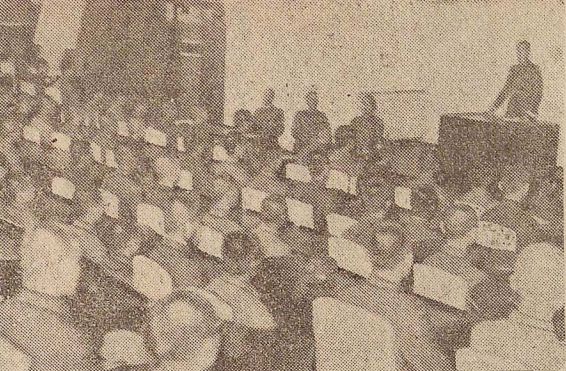
The September 14, 1975 issue of Sunday Seoul also captured the use of blackface at a "morale-boosting concert" that was common for both Korean and American troops. (These were rarely reported on by the weekly magazines prior to 1975; one assumes the increasingly dictatorial and militaristic Yushin authorities began to require such coverage that year). A month-long "Korea Thank you Festival" was then being performed for US troops and locals, and Sunday Seoul reported on a September 4 concert near Camp Stanley in Uijeongbu attended by 1000 US soldiers, including USFK Commanding General Stillwell, pictured below shaking hands with a performer:
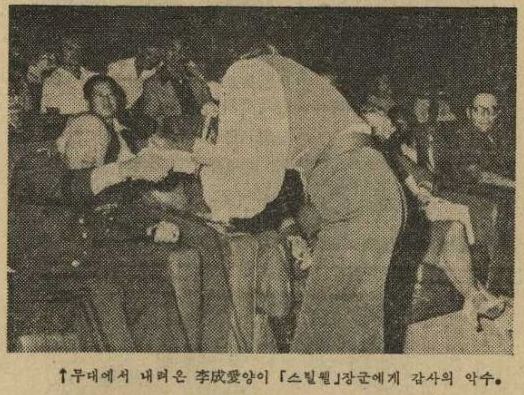

Novelty folk duo Two Koreans were among the performers, and a headline reads, "[When they] saw Two Koreans’ impression of Ray Charles and Louis Armstrong they convulsed with laughter":


The caption reads, "With black paint on their face and doing impressions of Ray Charles and Louis Armstrong, Two Koreans were the most popular act." (To be fair, one of the duo really could do a serviceable Louis Armstrong impression, as can be heard in their version of the Lee Jang-hee song, "한잔의 추억.") One wonders what the black soldiers in the audience would have thought of this. Like the children's festival with the American Boy Scouts in blackface that was presided over by first lady Park Geun-hye, this festival was attended by the commander of USFK.

Reusing some material from my previous post, performances of the South African, Apartheid-era play "The Island" in Seoul in 1978 were said to feature two actors made up to look like black convicts (one may be pictured in black face at that link, but it's a rather dark photo). Actors most certainly used blackface in a 1982 musical version of "Roots" (based on Alex Haley's novel and the TV series), which featured African music and jazz. An article about it included these photos:


In this February 1981 Joongang Ilbo article, titled "Fraudulent black makeup - hands were white," which collected readers' opinions of recent TV shows, there was a complaint that a KBS detective show with an episode titled 'Nigerian dream' was done with too little effort, because the actor only had black on his face but not on his hands, which were white. I think that may give some insight into the way in which blackface was considered a legitimate, and even proper, way for actors to portray black people, and that in order to appear authentic, the actor had to be in full black makeup of the sort seen at the cultural festivals pictured above.

This brings us up to where my post on blackface in Korea between 1978 and 2012 began. Despite the complaints from foreigners about the 2012 incident of comedians appearing in blackface on Korean television, such incidents involving celebrities, including K-pop stars like Mamamoo (is it just me or do most of the photos in that post look familiar?) and others continue to occur, and each time they do, the performers and the media company respond with shock and surprise at the angry response.

One question to ask in regard to why this persists might be this: Do these kind of black face (or black body) festivals and costume parades detailed above still continue today?


The answer to that question is yes. In fact, these festivals have local government funding. One that began in 1996 is the Gangdong Prehistoric Culture Festival which celebrates the prehistoric village site in Amsa-dong in Seoul. Below is a photo of the site during the festival:


It might not be clear in the photo above, but as can be seen in this photo of the parade during the Gangdong Prehistoric Culture Festival in May 2019, some of the participants are wearing full-body brown-face and carrying bones and clubs.


The two photos above are from this video, which also features a song to promote the festival's 20th anniversary in 2015.


In addition to this festival is the Yeoncheon Paleolithic Festival, which started in 1993.
An Arirang TV clip about the festival from last year can be seen here (the video description provides background on the festival), while the photo below is from here.


In a clip posted here, MBC covered the event in 2017, in which the reporter used split screen to interview himself as he dressed as a cave man and grunted like a monkey, and then walked up to children cooking meat on sticks and got the children to shout with him "Ooga! Ooga!"


Needless to say, seeing people today depict what they believe to be their prehistoric selves in brownface rather strongly suggests that at least some of the ideas about indigenous people that were present in the 1960s continue up to the present. In fact, just days ago when I showed a grade 5 class this video, the scene of him dancing with indigenous people from Papua New Guinea led one student to say "Ooga ooga," while others wondered if the scene was shot in Africa. All of this suggests the connections students perceive between "Africa," and indigenous or black people.

These connections have been reinforced in children's animation like Dooly (voted Korea's favorite animation in 2014), which has depicted "Africans" in the following manner.


It should be noted that this episode ('내 친구들,' viewable here) did not first air in the late 1980s during the first Dooly series, but in April 2009.

Many years ago, Michael Hurt examined how black people, indigenous people, and Africa were presented to students a generation ago when he posted images from a middle-school English dictionary published in the early 1990s. It's well worth your time to go and look at all of them, but here are two that are pertinent to the perpetuation of the attitudes described above; note the bones in the nose in both illustrations:


School textbooks have improved a great deal over the past decade, getting rid of blackface-like cartoon depictions of black characters in elementary school English books such as this one:


Even without these overt representations, however, textbooks can still convey ideas about a certain colour of skin:


To put this video in context, there were earlier scenes on the textbook cd in which students were shown that mixing three primary colours together resulted in the color black, but someone making this Grade 3 English textbook at YBM decided to take that idea in a peculiar direction, one that reminded me of mixed-race rapper Yoon Mi-rae singing about her personal experiences growing up in her song "Black Happiness": "I washed my face dozens of times a day... I resented my black skin." Though there have been positive changes made to textbooks over the past decade, there’s clearly still room for improvement.


Though it is influenced by the legacy of the US presence and role in Korea, blackface in Korea exists in a context quite different from that of the US. One aspect of this, seen in the articles about Africa from the late 1960s, reflected a need to position Korea’s level of civilization, which had been depicted by Japanese and Americans as being "backward," as being higher than that of less-developed countries. Another aspect was the perceived need to highlight, in contrast to the "racial exhibition" of other countries, Korea’s racial homogeneity as a positive attribute (the legacy of which still lingers; a survey last year found that "46 percent of Koreans said the country should be proud of maintaining a 'homogeneous bloodline,' and 35 percent said accepting people of different races undermined national unity"). This has often involved the deployment of stereotyped caricatures of people of other races. As well, essentialized depictions of people from foreign countries and cultures has likely been seen as acceptable because Koreans depict themselves in similar ways in textbooks and elsewhere. Having lost so many traditional ways of life during the forced march of modernization, things like hanbok, kimchi, and samulnori are used as shorthand for being "Korean," and these depictions are part and parcel of "international day" or other "global" activities.

While it’s not entirely clear when the use of blackface began in Korea, it seems likely that it was after 1945, at a time when the practice was considered acceptable by many Americans (as we can see with US soldiers laughing along with the Two Koreans’ blackface performance in 1975, or American Boy Scouts presenting an "Indian dance" in blackface a year later). Its use in Korea, however, was not connected to a long history of denigrating black people the way it was in the US. The above articles from 1969 make it clear that it was considered a perfectly acceptable way to depict black people on stage, to the point that, as the articles from the early 1980s make clear, not doing full-body blackface was considered inauthentic. Also problematic was (and is) its use in cultural festivals and in the media to depict indigenous people whose level of civilization is depicted as being below Korea’s. Still, it is worth remembering that these attitudes are the result of a complex interaction between South Korea's experience of colonization, its relationship with the US, including its exposure to American racial attitudes, and its attempts to both overcome its perceived subordinate position and to come to grips with the changes wrought by modernity and globalization.

Only in the past two decades has blackface and other demeaning depictions of black and indigenous people really been criticized in Korea, often (but not always) by foreigners. This has often been met with responses portraying it as a "misunderstanding" of Korean intentions, or as an "attack" by foreigners. While the use of blackface and negative depictions of black or indigenous people, complete with bones in their noses, deserve to be criticized, and cultural producers and educators in Korea should better understand that something can be offensive regardless of an lack of intent to offend, it might be worth reflecting on the very different context in which these appear in Korea, as well as the fact that the likely source for many of these concepts is the US, a country which has long been in a superior position in its relationship with Korea and which has a long history of depicting Korea and Koreans in negative ways. Some criticisms of blackface by foreigners, many of whom are likely perceived by Koreans to be white and American, have crossed the line from criticizing the practice to portraying it as an example of  Korean "backwardness." In cases like these, I find it hard to blame some Koreans for feeling that the criticism of Korean culture or society for being racist due to the use of blackface – while overlooking the fact of Korean blackface’s American origins and America's international position vis-à-vis Korea – might just be another way of asserting Western superiority over Korean culture. While carefully-applied pressure from the outside can have some effect (though "carefully-applied" is not the way I would describe discourse in the West at the moment, particularly that taking place on social media), blanket criticism is more likely to cause offense or to simply be ignored. That being the case, I don't really think the practice of depicting black and indigenous people in these ways is going to change until Koreans themselves decide to continue the conversation about discrimination stimulated by Hines Ward's visit to Korea in 2006 (though note the depiction of the racially mixed Korean in the cartoon). The passing of this anti-discrimination bill could also provide a tool to help facilitate change when that time comes.

Monday, June 29, 2020

When "pro-Japanese collaborators" become "victims" (and heroes)

The other day on Facebook I came across the story of Yang Chil-seong / Yanagawa Shichisei / Komarudin, a Korean who became a guard at a POW Camp operated by the Japanese army in Indonesia in September 1942, but then after WWII joined with two Japanese soldiers in the fight for Indonesian independence from the Dutch, took the name Komarudin, and, along with the two Japanese soldiers, was captured and executed in 1949. In 1975 his body was moved to a Indonesian independence heroes' cemetery. While Wikipedia has information in English and Korean, this Hankook Ilbo article has more information and a photo of him with the two Japanese soldiers. As it notes, it's not clear if he chose to be a POW camp guard or was forcibly mobilized. According to the article, when Indonesia was liberated at the end of the war, the Korean POW camp guards were investigated and 63 were imprisoned for more than 10 years as war criminals, and 4 were shot. According to a Korean guard who was there, Yang was considered to be close to the Japanese soldiers, and considering he joined two in fighting for Indonesian independence, the article surmises that this might be true.

My first response upon reading this (the English version did not make clear that he was a POW Camp guard), was to think of this recent article, which spoke of how General Kim Paek-il, who convinced the US military to save 100,000 refugees during the Heungnam evacuation of late 1950, was later targeted by anti-Japanese activists (inspired by Roh Moo-hyun's Presidential Committee for the Inspection of Collaboration in Japanese Imperialism), according to whom "Kim was involved in Japan's brutal crackdown on Korean independence fighters in the Manchuria region in the 1930s," and they erected a monument criticizing him next to his statue. Taking things further, in May some progressive lawmakers "called for a bill to have the remains of Kim and other Korean 'colluders' during the Japanese colonial period removed from the national cemetery," and to block the burial of Korean War hero Paik Sun-yup. There is no indication that such a bill would have any support, and I hope it doesn't. Considering Korea's long history of disinterring political enemies (perhaps they could just do as Yeonsan-gun did and simply behead the buried remains?), you would hope such officially-mandated desecration would remain in the pre-modern era where it belongs.

Thinking of the above example, I couldn't help but wonder if those lawmakers and activists would also want to put a memorial next to Komarudin's grave calling him a "pro-Japanese traitor," since that's what they seem to consider any Korean who joined the Japanese army to be. But then, after consulting the Korean-language articles, I realized he was a POW Camp guard, and, well, anti-Japanese activists - particularly those in the employ of official truth commissions - have demonstrated profoundly lenient attitudes toward POW Camp guards who mistreated Allied prisoners so badly that they were convicted of war crimes.

According to Utsumi Aiko’s “Korean ‘Imperial Soldiers’: Remembering Colonialism and Crimes against Allied POWs,” in the 2001 book Perilous Memories: The Asia-Pacific War(s), serving in the Japanese military in the 1930s and 1940s were 17,000 Volunteer soldiers (through a system begun in 1938) and around 110,000 soldiers who were conscripted in 1944 and 1945. There were also around 120,000 civilian employees of the military, which included POW Camp guards.

At the end of World War II, 23 Koreans were executed for war crimes, and 125 were imprisoned. Of the 148 in total, 3 were soldiers and 16 were translators, and “of the 3,016 Korean men conscripted to work as prison guards 129 were found guilty of war crimes.”

These war criminals were transferred to Sugamo Prison in Tokyo to serve out their sentences, but while Japanese serving out their sentences there got government benefits (for, say, injuries incurred during their service during the war), Koreans, since they were no longer Japanese citizens, did not. When the Korean war criminals were released, those who continued to live in Japan formed the Association for the Mutual Advancement of Korean War Criminals and sought compensation from the Japanese government (as described here).

What needs to be remembered, however, is that many POW Camp guards were not conscripted, but volunteered. According to an unpublished paper of mine about Japanese POW camps in Korea, the announcement of the conscription system for Koreans - to begin in 1944 - was announced on May 9, 1942.
In addition to this, on May 22, 1942 a system allowing Koreans to apply to be prison guards for American and British prisoners of war was announced. The Maeil Sinbo reported the “once again glorious news,” coming two weeks after the conscription system announcement, that “as imperial subjects our brethren from the peninsula will also bear the heavy responsibility of national defense” by guarding prisoners overseas, though some would be employed in Korea. Such lofty language appeared a day later when it was reported that “a sublime path to cooperate in building the southern part of the co-prosperity sphere has opened for the youth of the peninsula who will be employed by the military.” The reason for the system was made clear: “Six months have passed since the war to destroy the Americans and British was begun last December 8, and already the number of enemy prisoners has reached 340,000.” Applicants needed to be between the ages of 20 and 35, have robust bodies and no diseases, have completed at least 4th grade in elementary school, and had to be able to carry on everyday conversation in Japanese. The Maeil Sinbo spent weeks covering the application, testing, and instruction process of these young Korean men[.]
 The first day of applications. (Maeil Sinbo, May 26, 1942)

Taking an employment test. (Maeil Sinbo, June 6, 1942) 

(Maeil Sinbo, June 10, 1942)

Farewell ceremony. (Maeil Sinbo, June 13, 1942)

It's said that at least some of these POW guards were conscripted, but the earliest to be sent had to apply and pass written and physical tests to become guards.

A nuanced examination of how Koreans were remembered in POW literature, and of the POWs awareness of the low status of their Korean captors vis-a-vis the Japanese - while at the same time recalling their casual brutality - can be read here.

Now, in November 2006, under - once again - Roh Moo-hyun's presidency, the Truth Commission on Forced Mobilization under Japanese Colonial Rule, "confirmed," as the Donga Ilbo put it, that "Korean POW camp guards were sacrificed without a proper trial." It examined the cases of 86 of the 148 Koreans convicted by the Allies of war crimes and cleared 83 of them, or as the Hankyoreh put it, it "recognized them as victims and removed the stigma of them being war criminals." In other words, a Korean government commission unilaterally ruled that the judgements of the Allied War Crimes Tribunals after WWII no longer applied to these Koreans. It should be noted that 12 of the 86 applications made to the truth commission were from the relatives of Koreans who were executed for war crimes. The commission decided that the Korean war criminals, who "unavoidably" became POW camp guards to avoid the Japanese draft were burdened with responsibility for the abuse of Allied POWs, and so had to suffer the "double pain" of forced mobilization and becoming a war criminal.

Lee Se-il, head of the fact-finding investigation team, said, "As a result of analyzing the military prosecutor records of 15 Korean prisoner-in-law recently obtained from the National Archives of England, we were able to confirm that the conviction was made without clear evidence." (A few months later the Hankyoreh examined some of these cases and interviewed a former guard who had been sentenced to death. More on his case, and his activism in seeking redress from the Japanese government, can be found here.)

Needless to say, this didn't go over well at the time with non-Koreans, and led one blogger to say:
What annoys me is that one hears sympathy for men who would be called collaborators if they had been working in prisons that held fellow Koreans during colonial rule. Their prisoners were (largely) white, however, so they are afforded as much understanding as possible. And they get to be called “victims.”
[He follows this with a more nuanced discussion at the link.]

That mistakes were made when some of these POW Camp guards were judged, I would not be surprised. That mistakes were made in over half of the cases, including half of the cases that led to executions? That seems rather unlikely. But considering the fact that the guards suffered "double pain" at the hands of Japanese and Western imperialists, the two bêtes noires of National Liberation-style Korean progressivism, perhaps the desire to beatify them with the hallowed status of "victim," and, while they were at it, to declare the decisions of Allied tribunals null and void and therefore expand Korean sovereignty backwards in time, was too tempting to pass up.

On May 26, the Segye Ilbo published the following report that reveals that the work begun 14 years ago continues today:
Korean and Japanese scholars work together to recover the honor of Korean POW camp guards who became war criminals.

On May 26, the Ministry of Public Administration and Security-affiliated Foundation to Support Victims of Japanese Imperial Forced Labor announced that it will hold an international academic conference to re-examine the "reality of forced mobilization of Korean POW camp guards" who were dragged to Japan during the period of resistance to Japan.

On May 28th, the Foundation to Support Victims of Japanese Imperial Forced Labor will hold an academic conference on the theme of “International Comparisons to Forced Mobilization by Imperial Japan' at the ENA Suite Hotel in Seoul. This academic conference is looking to commemorate the Korean POW camp guards forcibly mobilized by the Japanese imperialists and to restore their honor. The Korean POW camp guards were sent by Japan to places like Thailand, Myanmar, the Philippines, and Indonesia by Japan, and faced with prisoners, after the Pacific War they were branded as war criminals. In 2006, they were first recognized as victims by the "Truth Commission for Victims of Forced Mobilization Under the Japanese Empire."

Five Korean and Japanese scholars will give presentations. Arimitsu Ken, an invited researcher from the Waseda University International Reconciliation Research Center will present “The progress and present of the compensation issue for Chosen soldiers and civilians after the war,” and Professor Okada Taihei from Tokyo University Graduate School’s Department of Interdisciplinary Cultural Studies, will present "Sexual Violence by Japanese Forces in Visayas, Philippines.''

As well, Kim Jeong-suk, a researcher at Sungkyunkwan University's East Asian History Research Institute, will present "Cases and Lives of Korean POW camp guards under the Japanese Empire," and Yoo Byeong-seon, a lecturer at the Faculty of Liberal Studies at Korean Traditional Culture University, will present "The current status and anti-Japanese activities of the Korean POW camp guards in Indonesia at the end of the Japanese Empire."

Kim Yong-deok, president of the Foundation to Support Victims of Japanese Imperial Forced Labor said, "Through this academic conference, how the prisoners of the Korean prisoners were mobilized and how the situation of war turned them into war criminals will be re-examined within the international community." "Even now, the way needs to be made clear to restore the honor of all those who suffered from Japanese imperialism."
Well, it's nice to see Koreans and Japanese working together, I guess. Still, the feeling you get from reading about "Korean POW camp guards who became war criminals" or who "were branded as war criminals" or about "how the situation of war turned them into war criminals" is that the reason they became war criminals was because of unfair actions taken by the Allies, and not because these Koreans abused Allied prisoners. It's certainly something to think about the next time you hear the Korean government decry Japan's refusal to take responsibility for its past.

Thursday, June 25, 2020

The Korean war as depicted by "Gobau"

Today marks the 70th anniversary of the beginning of the Korean War (or the 149th anniversary (+ 15 days), by some reckonings). I recently came across this 11-year-old Japan Focus article by Andrew Salmon about the art of 18-year-old Kim Song-hwan, who would later become the author of the newspaper cartoon "Gobau," about the era when he was hired as a war artist by the ROK Ministry of Defense. His drawings and watercolours are often stark and uncompromising in their depiction of what the war wrought upon Korean society. Kim Song-hwan went on to become perhaps the Korean newspaper cartoonist of the latter half of the 20th century, penning his "Gobau" cartoon for 45 years, as Colin Marshall wrote.

As I've mentioned before, Gobau was also featured in the cartoons US ambassador Philip Habib sent in a cable to the State Department in March 1973, months after the advent of the dictatorial Yusin constitution. According to Habib, they were just about the only public source of criticism, mild as it was, of government policy at that time. Habib's cable, which was part of  a collection of such cables at the National Assembly Library website, can be read here.

Update, June 29:

Robert Neff's article on the participation of Ethiopia's Kagnew Battalion in the Korean War is well worth reading.

Anti-war protest by GIs in Seoul in 1971, and my article on USFK race relations that year in the Korea Times

Yesterday, my latest Korea Times article filled in some of the events that occurred between the January 15, 1971 rally in memory of Martin Luther King held in Paju and the Anjeong-ri race riots of July that year, which I wrote about here and here.

Since writing that article a week or so ago, I began looking through the Stars and Stripes archive to discover that the story was far, far more complex (and covered in far more detail), than I had imagined. The incident at Camp Kaiser in May 1970 where various fires were set around the base seemed to be point where race relations became something to be concerned about in Korea, at least according to articles written later that year.

The army reacted by setting up different councils to try to address the problems on base, and tried to work with club owners to stop segregation in clubs. But some of the articles made clear that things were pretty dire at the time: racist graffiti in latrines, crosses burned onto blankets of black soldiers, which suggested Klan activity, areas of Dongducheon that black soldiers declared their own and essentially made off limits to white soldiers on pain of beatings, a bomb attack on a club frequented by black soldiers in Paju in the months after the January 1971 MLK rally, an earlier series of firebombing attacks at Camp Humphreys and in Anjeong-ri in April 1971 that predated the grenade attacks of May and the race riots of July, and the list goes on. Interesting as well is the fact that the Korean press sometimes provided details that Stars and Stripes did not, but Stars and Stripes also noted that the Korean press tended to sensationalize these events. They also - and this is true in the case of the Korea Times - tended to put the blame for these events on the black soldiers.

Needless to say, there's far too much there to cover in a post, and it will take time to sift through these articles. Something I covered in my KT article that can be dealt with in more detail at the moment is the May 17 anti-war protest by GIs in Myeong-dong. Here is the report on the protest published in Stars in Stripes on May 19, 1971:

Korean Cops Turn Them Over to MPs
31 GIs Arrested in Seoul Antiwar Protest
S&S Korea Bureau

SEOUL — Thirty-one American soldiers were arrested by Korean police Monday night after an anti- Vietnam war march through the streets of downtown Seoul.

The soldiers were taken to a nearby police station after Korean police arrested them in the Myongdong entertainment district in the center of the capital.

No violence was reported.

It was believed to be the first public organized antiwar demonstration by American soldiers in Korea, although in the past individual soldiers have worn black armbands in protest against the war.
The soldiers were released to American military policemen late Monday night after being questioned for three hours at Chung Ba Police Station where they were charged with blocking traffic and assembling without a permit, according to a military spokesman.

There was no violence observed during the demonstration which began at about noon with five soldiers silting on the steps of a downtown Seoul building. By 5 p.m., about 30 others had gathered. All wore black arm bands and demonstrated peacefully, attracting crowds of several hundred curious Koreans before police led them away without incident to waiting vans.

The demonstration, which leaders had earlier said they expected about 500 soldiers to join, had been planned for two weeks, they said. Printed flyers, criticizing the Indochina war and urging participation in Monday’s demonstrations had been distributed to most major U.S. military camps in the republic. Attempts also were made to elicit Korean University students' support for the anti-war rally, according to students.

At least two Koreans did join with the protesters briefly but were led away by Korean police almost immediately. Three other persons, who identified themselves as American military dependents also participated but were not taken into custody.

Demonstrators said they had gathered solely to protest the Vietnam War and to show their support for recent Washington marches. They were careful to stress that in no way were they demonstrating against Korea or the American role here, but were acting only as "concerned Americans wanting to end the Indochina debacle."

The soldiers were released in groups at about 11 p.m. from the police station where they said they had been questioned by men identifying themselves as Korean Central Intelligence agents.

As they were being trucked away to the Yongsan Provost Marshal's office they reported that they had been treated well, although they said they had not been allowed to contact American authorities or been advised of charges against them.

Police at the station refused admittance to reporters and police officials would not comment on the incident, saying only that "an investigation is in progress."

Army officials to whom the protesters were released said Tuesday morning that all of the men had been released to their units. The military spokesman was not able to comment on what further action might be taken against the men, but official legal sources here said any measures would probably be a matter for the Koreans to decide under the Status of Forces Agreement, because apparently the protestors had violated no American military statutes.

AP reported Korean onlookers showed no reaction to the antiwar march but called the marchers “Yankee beggars," apparently referring to their clothing.

(Korea is a staunchly anti-Communist, country and about 50,000 Korean troops are fighting in Vietnam in support of the Saigon Government.)

---------------

One wonders what the KCIA agents thought of the protest.

Here is the May 18, 1971 Korea Times article about the protest:


Here is a photo from the Korea Times:


Below is a photo from the May 18 Maeil Gyeongje, which played down the number of protesters ("around 10"), focused on the black soldiers present, and said the sit in only lasted one hour:


Below is a photo from the May 18 Kyonghyang Shinmun, which reported that around 5:15 pm Ernest Hirst (22) and about 30 other US soldiers in civilian clothes and wearing black armbands gathered in front of the Cosmos Department store in Myeong-dong and had flyers calling for an end to the war in Indochina. Then then marched for ten minutes to the Chosun Hotel and held a sit-in there until police convinced them to leave, so after that they returned to Myeong-dong where they held a silent protest for 3 hours. Gwon Yeong-ok (20), who lived in Chongsin-dong, joined in the demonstration briefly with three other Koreans and they were all taken to Namdaemun Police Station where they were released after a warning.


Below is a photo of the protest from the May 20 Stars and Stripes:


Stars and Stripes reported that day that Korean police had decided not to charge them; whether USFK would charge them was still being decided.


I haven't found any reports after this discussing the matter, so one assumes USFK authorities let it drop.

I would certainly be curious to hear first-hand accounts of this protest.

Monday, June 22, 2020

The rally in memory of Martin Luther King at RC 1 in Paju, 1971

 Rally commemorating the third anniversary of Martin Luther King's assassination held in Paju, Jan, 15, 1971.

Years ago I wrote about the Anjeong-ri race riots of July 1971, which took place outside Camp Humphreys. In the comments to the two posts I wrote (here and here) a number of soldiers who served at Camp Humphreys left comments describing their memories of that event. What was confusing, I realize now, is that there were actually two incidents that took place that year, seven weeks apart, at Camp Humphreys, and the soldiers at times referred to both. The reason I understand this now is that I recently looked through my Korea Times archive, where I found a number of articles about black soldiers in Korea demonstrating against discrimination going back to at least late 1970. What set the tone for 1971, however, was a rally held by black soldiers in memory of Martin Luther King on January 15, 1971, his birthday.

Here is the Korea Times article about the rally from January 16, 1971:


A few months ago, through this article by Jon Dunbar about Martin Limon's latest book, I was made aware of the newspaper Overseas Weekly, which was a tabloid weekly out of Germany that covered stories Stars and Stripes wouldn't. With the help of Jon, and Jacco Zwetsloot, we discovered that some of Overseas Weekly is preserved on microfilm here, but more easily accessible are some of its photos, searchable at the Hoover Institution (the Korea-related ones are here). It was there that I found scanned contact sheets for this rally (here, here, and here; click "Download low resolution copy" at right). I've posted some of them below. This page describes how the images of the rally itself were obtained: "All pix are of the protest meeting on RC One that the press were barred from. A guy slipped me the film." "RC One" referred to Recreation Center 1, which was located across the road from Camp Beard and next to the Yongjugol camp town in Paju.


The rally was held in front of the 2nd Infantry Division Museum, then located at RC 1. 


 It appears they finished the rally by lowering the flag to half mast.

As the Korea Times article noted, however, there was a significant response to this rally by USFK. Below are photos of MPs gathered on the football field (and go-kart track) at RC 1.


APCs on the move through Yongjugol.


As for it not initially being clear, as the Korea Times noted, whether the movement of APCs to the area was related to the rally or not, the following photos make it clear they were in the streets as the black soldiers walked through Yongjugol.


In fact, the Korea Times' photo of the APCs shows the soldiers walking on the right:


As the photographer described it, this photo shows "a helicopter that was orbiting the site":


There are 3 more photos that, with the one above, make a panorama showing that the football field was half-ringed with APCs, of which I could count at least 23.


A series of photos, including the one below, was described as showing "some troops in what appears to be a riot-control formation. I guess they were practicing."


It's unfortunate there aren't any photos of the club where the soldiers ended up continuing the rally, or of soldiers blocking entrance to it. What is clear, however, is that USFK authorities barred press from attending the initial rally at RC 1 and mobilized MPs, soldiers in 30 APCs, and helicopters to intimidate participants or stifle the rally after they left RC 1.

While the US military's response to the violence at Camp Humphreys six months later was to criticize the role Korean racism played, little was said in regard to the way in which USFK consistently stifled and suppressed rallies by black soldiers against discrimination that year, including this one and others in Seoul and Busan. A subsequent post will deal with these, and the way they led to the Anjeong-ri race riots.


As for where this rally to commemorate Martin Luther King took place, here is a map I made of the area, which is a 5-km drive east of Paju Station.


Photos of the Yongjugol area taken in the early 1960s can be seen (particularly if you follow the links) at this page about Camp Beaumont, and some basic information about Camp Beard is here. While written information online about Recreation Center 1 is sparse, there is a lengthy film of it taken in mid-1970 here (shown below). All of these camps have long since closed. The more recent Yongjugol red light district mentioned in this article is south of the stream from the 'Yongjugol' marked above, and served Korean soldiers stationed in the area.

In the below video of Recreation Center 1, just after the 6 minute mark you can see the flagpoles and 2nd Infantry Division Museum where the rally was held 6 months later, and around the 12:30 mark you can see the go-kart track and football field where the APCs were parked.


Wednesday, June 17, 2020

Writing about the Itaewon COVID-19 outbreak in the Korea Times, re-entry visa changes, and recent foreign teacher court cases

My latest article for the Korea Times, "Itaewon once again at center of virus fears," looks at the COVID-19 outbreak in Itaewon, touching on topics I covered here and here back in May. Also worth reading is the article "COVID-19 devastates Itaewon businesses."

Here is the "Sorry! Foreigners are not allowed to enter" sign I mentioned in the article (from here):


As for the recent removal of automatic re-entry for many visas and the need for a medical certificate attesting to a lack of COVID-19 symptoms in order to re-enter Korea (see here, for example), the government was quite open about its desire to "curb non-essential travel." Though, after complaints from chambers of commerce, the medical certificate requirement was dropped for business / journalism / academic trips of three weeks or less.

One announcement also reads that "As of 27 May, a total of 78 accumulated cases were reported since January 2020. This accounts for 53% of all 145 imported cases by foreigners, meaning long-term foreign residents are involved in over a half of all imported cases."

Well, "over a half of all imported cases" by foreigners. Applying these stats to KCDC stats, as of May 27 there were at total of 1,221 imported cases, with 1,076 by Koreans (88%), 67 by short term foreign visitors (5.5%), and 78 by long term foreign sojourners (6.4%).

It didn't say how many of those long term foreign sojourners were on F-4 visas, but [as statistics available here reveal] while F-4 visa holders make up over 25% of foreigners on long-term visas, they only made up 5.5% and 5.8% of foreigners entering the country in March and April, respectively, so the number of cases involving them is likely small. Due to the Korean government's support of a race-based right of return for ethnic Koreans on F-4 visas, that visa category is legally separate from others, and to threaten to bar their return if they lack a medical certificate would require legal changes, unlike other visa categories for which the government has much freer reign to impose restrictions.

Still, considering that long term foreign sojourners have made up only 6.4% of imported cases, it seems to create burdens while having little positive effect on the caseload here, particularly considering that everyone gets tested at the airport anyways.


In other foreign teacher-related news, Yonhap published a report a couple weeks ago titled "Native-speaking teacher gets three and a half years in prison for production and possession of obscene material involving teenage middle-school girls."

It notes that a 31-year-old South African native speaking teacher in Suwon was sentenced to three and a half years in prison for violating the law on sexual protection of children and adolescents (production, distribution and possession of obscene material).

He must also complete a 40-hour sexual assault treatment program and is banned from working at child and youth-related institutions and welfare facilities for the disabled for five years.

He was prosecuted for taking and sending obscene photos and videos to two teenage girls he met through a chatting application in October last year.

Though he confessed to the crime and admitted the charges during the initial police investigation, in court he argued that there were procedural problems, and that he was not shown a warrant. Unfortunately for him, the police sergeant involved testified and the judge did not accept the teacher’s claim that he had difficulty communicating during the arrest because the police sergeant, who had served as a KATUSA , confirmed his English proficiency in court.

This is a pretty strong sentence - it seems authorities are starting to take these cases quite a bit more seriously than in the past - though I imagine the fact that he did not admit guilt or show proper remorse in court contributed to the length of the sentence.

What was odd about this is that after seeing more than 80 articles about foreign teachers and Itaewon after the outbreak there, I could only find 12 articles about this case. You never know what the media is going to focus on.

Also, if you remember the Canadian woman who was arrested by police for violating the Child Welfare Act after she showed young students a "what does human flesh taste like" video earlier this year (see here and here), a court ruled she was not guilty, mostly due to a lack of intent on her part and her lack of previous criminal record. Civic groups complained about the ruling, saying the children's testimony was not taken enough into account, though it seems she's already left the country.