Anyone wanting to learn Korean - or Joseonmal - in the North Korean style can download pdfs of North Korean language textbooks posted here by the Pyongyang Project.

Thursday, July 04, 2013


Monday, July 01, 2013
Fundraiser for Daily NK at Scrooge Pub in Itaewon this Friday
I've been asked to pass along information about the Daily NK fundraiser at Scrooge Pub in Itaewon this Friday:
For more information contact dailynk@dailynk.com or refer to the facebook event page.#NIGHTOUT with Daily NK:
Turn the lights on in the North by empowering media democracy in the South
Daily NK (www.dailynk.com), an acclaimed news periodical reporting on all aspects of modern North Korea and cited by major international media—such as the New York Times, The New Yorker, Al Jazeera, and the BBC—will host a casual community outreach event on Friday, July 5, @ Scrooge Pub in Itaewon from 8PM to 10PM. Organized in concert with the media company’s first-ever crowd funding campaign on Indiegogo, the event seeks to foster face-to-face connections between the Seoul-based staff—including democracy activists, North Korean defectors, and international researchers—and the city’s dynamic international community. #NIGHTOUT will include noted guest speaker Kay Seok from Human Rights Watch and the National Democratic Institute, live music, the launch of the Indiegogo campaign, prizes and more.
VOICE IN THE CROWD—CONVERSATION WITH DAILYNK’S PRESIDENT, PARK INHO: A former student activist who campaigned against South Korea’s authoritarianism but was ultimately betrayed by the untruths the Kim Il Sung regime propagated, President Park will speak about his civil society-based organization’s mission to promote the free flow of information on the Korean Peninsula.
The entrance fee is a 10,000 won donation that includes one free drink.
Sunday, June 30, 2013
News on the CERD case
Joe Amon, the director of the Health Division at Human Rights Watch, wrote an interesting article published yesterday in the Diplomat which reveals some information about the CERD case.

I've been told that data from that survey was used in the teacher's reply to the ROK's tardy response, but as I mentioned before,
A year ago, [...] at the 19th International AIDS Conference [...] the Republic of South Korea co-hosted a session with UNAIDS on the issue [of HIV travel restrictions]. Kim Bong-hyun, deputy minister for multilateral and global affairs, in the Foreign Affairs and Trade Ministry acknowledged that discrimination based upon HIV status violated human rights and announced: “I am pleased to state, on behalf of my government, that the Republic of Korea has no HIV-specific travel restrictions under the Immigration Control Act and its implementing regulations. Lifting travel restrictions is a small step on our long journey to realize a society where there is no discrimination against people with HIV.” [...]Do read the rest of the article. It should also be noted that South Korea's hoodwinking of UNAIDS still stands - it continues to be listed as one of 133 countries which "have no HIV-specific restriction on entry, stay and residence" (see here (pdf)), something which the results of this survey should make clear isn't true at all (click to enlarge):
Not everyone is buying the double-talk. Just before last year’s AIDS conference, the UN committee that monitors the International Convention on the Elimination of All Forms of Racial Discrimination accepted a complaint against South Korea’s mandatory HIV tests for foreign teachers. The complaint says the requirement is racial discrimination, plain and simple. The committee gave the government three months to respond. Nearly a year later, in April, the government finally did.
The government neither denied that foreign teachers face mandatory HIV tests nor claimed the tests were necessary for public health reasons. In fact, it said nothing about the testing of foreign teachers upon entry, and countered that Education Ministry guidelines no longer require re-testing upon renewal of annual contracts.
This evasive, and incomplete, response is in stark contrast to the promises made about lifting all travel restrictions.

I've been told that data from that survey was used in the teacher's reply to the ROK's tardy response, but as I mentioned before,
Even if Korea were to submit a response tomorrow, due to a number of older cases awaiting consideration, the Committee won't be placing it on the agenda of their next session in August, and I'm not certain when the next session is.In point of fact, the ROK did reply day after I wrote that, so the same caveats stand. It's all in the Committee's hands now, though, and hopefully we'll have an answer before the year is out.
Daegu English teachers become honorary ambassadors for Dokdo
To promote international knowledge about Dokdo, the Daegu Office of Education sent 20 native speaking teachers from various countries to Dokdo from Tuesday to Thursday last week. The organizers planned for it to be a training event so that the teachers can be honorary ambassadors for Dokdo. They will also sit in on lectures by the Dokdo Research Institute, Yeongnam University, and the Northeast Asian History Foundation.
A Kyunghyang Sinmun article about this opens by describing an American teacher at a high school in Daegu: "These days she is using social network services to let friends and family in the US know that Dokdo is Korean territory." I guess that's no worse than spreading cat memes.

A follow-up Segye Ilbo article with a photo of them about to leave had the sub-headline "I'm so excited to go to Dokdo!" and an official telling us that "Using Facebook and Twitter, our foreign friends can also be taught that Dokdo is Korean territory."

The Joongang Ilbo published a photo of the teachers on the the islets and opens with quotes from a teacher:
'"Dokdo is really beautiful. I was surprised that it was much bigger than I thought." On the 26th, he stated his feelings about setting foot on Dokdo for the first time: "I'm proud that I waved the Korean flag and shouted "Dokdo is Korean land!" on Dokdo."' It actually names these people, but I'll spare them that, partly because I imagine the reporter took some creative license when writing the article.

Hopefully they didn't have to dance to Gangnam Style (it appears the video is now private... that's likely my fault).
It always amazes me that there's such an incredible tourist destination right next door, but Ulleungdo is always an afterthought when it comes to using foreigners as nationalist propaganda tools.
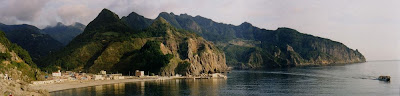
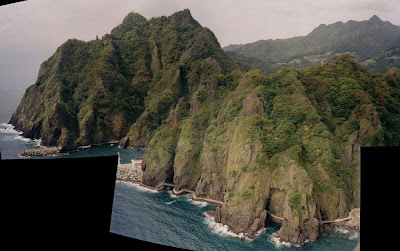

More photos of Ulleungdo are here.
A Kyunghyang Sinmun article about this opens by describing an American teacher at a high school in Daegu: "These days she is using social network services to let friends and family in the US know that Dokdo is Korean territory." I guess that's no worse than spreading cat memes.

A follow-up Segye Ilbo article with a photo of them about to leave had the sub-headline "I'm so excited to go to Dokdo!" and an official telling us that "Using Facebook and Twitter, our foreign friends can also be taught that Dokdo is Korean territory."

The Joongang Ilbo published a photo of the teachers on the the islets and opens with quotes from a teacher:
'"Dokdo is really beautiful. I was surprised that it was much bigger than I thought." On the 26th, he stated his feelings about setting foot on Dokdo for the first time: "I'm proud that I waved the Korean flag and shouted "Dokdo is Korean land!" on Dokdo."' It actually names these people, but I'll spare them that, partly because I imagine the reporter took some creative license when writing the article.

Hopefully they didn't have to dance to Gangnam Style (it appears the video is now private... that's likely my fault).
It always amazes me that there's such an incredible tourist destination right next door, but Ulleungdo is always an afterthought when it comes to using foreigners as nationalist propaganda tools.


More photos of Ulleungdo are here.
Thursday, June 27, 2013
Hobbies that get you on the news
Yonhap reported yesterday that American English teacher decided this kind of thing was a good idea:
In other news, just over a week ago a 26 year-old teaching assistant working at a university in Seoul was sentenced to 5 years in prison for having sex several times with a 12 year old elementary school girl he'd met via smartphone chatting earlier this year. For some odd reason only Newsis and two regional news outlets, the Jungbu Ilbo and Gyeonggi Sinmun, found this newsworthy.
American instructor prosecuted for secretly taking photos of 300 women with his iPodFunny how the "unspecified number of women" in the body of the article contradicts the headline. This also was reported by News Y, Chosun Ilbo, tbs, Kyunghyang Sinmun, MBN, Money Today, YTN, Asia Gyeongje, SBS, News 1, and the Segye Ilbo.
The Seoul Central District Prosecutors' Office revealed on June 25 that it had booked without detention a 45 year-old American, K, for secretly taking photos of women's body parts in public places (contravening the special law punishing sexual assault crimes)
According to prosecutors, K, who works as an instructor at a well-known hagwon in Seoul, is suspected of using his iPod, a portable MP3 device with a built-in camera, to take 306 videos of parts of the lower body of an unspecified number of women in public places such as subways.
The investigation found that K mainly took photos of the thighs and buttocks of women wearing short skirts and hot pants as they climbed stairs or stood in sloping places.
In other news, just over a week ago a 26 year-old teaching assistant working at a university in Seoul was sentenced to 5 years in prison for having sex several times with a 12 year old elementary school girl he'd met via smartphone chatting earlier this year. For some odd reason only Newsis and two regional news outlets, the Jungbu Ilbo and Gyeonggi Sinmun, found this newsworthy.
Tuesday, June 25, 2013
Photos, City
Awhile ago the Culture Trip posted "The Ten Most Influential Contemporary South Korean Photographers." Some I knew, most I didn't. Some, such as the portraits done by , Hein-kuhn Oh (오형근) are worth checking out, such as portraits of people in Itaewon in 1993, in Gwangju in 1995, and a few series of high school girls. The 'Cosmetics girls' series I found interesting - though these days she'd probably have an interesting comparison of elementary and middle school girls - I've bumped into a few former female students that I hadn't seen in a year or so and have been unable to recognize them, partly due to all the makeup they now wear (and this is a rather new development - it was only within the last 5 years students were allowed to wear their hair as they like and wear makeup - at least in many schools).
Also of interest were Ahn Sekwon (안세권)'s photos of Wolgok-dong's destruction between 2003 and 2007, and the redevelopment of Cheonggyecheon, which can be seen here.
On the same topic, here's a shot of a 'daldongnae' from the mid 1940s (from "Korea," published by Troop Information and Education Section Headquarters, XXIV Corps).

And here are a few shots taken on or around rooftops in Jongno a month or two ago:


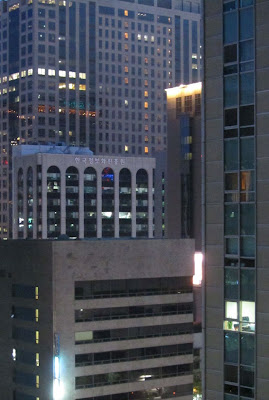


A few more photos taken at the same time are here.
Also of interest were Ahn Sekwon (안세권)'s photos of Wolgok-dong's destruction between 2003 and 2007, and the redevelopment of Cheonggyecheon, which can be seen here.
On the same topic, here's a shot of a 'daldongnae' from the mid 1940s (from "Korea," published by Troop Information and Education Section Headquarters, XXIV Corps).

And here are a few shots taken on or around rooftops in Jongno a month or two ago:


A few more photos taken at the same time are here.
Friday, June 21, 2013
Books about Korea galore
Anyone looking to do some reading might want to have a look at the Royal Asiatic Society's E-book collection. Up until now it has included every issue of Transactions, the Royal Asiatic Society's annual journal, dating back over a hundred years, as well as issues of the Korea Repository (a journal from the 1890s) and the Korea Review (from the first decade of the 1900s). Now, however, a rather large edition has been made to the library - former British Ambassador Martin Uden's collection of books, which have all been digitized in pdf form. With 373 books or magazine articles to choose from, reaching as late as the 1970s, you should be able to find something interesting. The Time Magazine articles from around the time of the Korean War I found quite interesting, as was the book "Korea," published by the troop information and education section headquarters of XXIV Corps, which occupied Korea from 1945-48. More recent is a memorial booklet of K-17, the seventeenth group of Peace Corps Volunteers brought to Korea (circa 1971) to teach English in middle schools. Here's a shot of apparent 'chopstick games' from their orientation:

On a related topic is this Peace Corps volunteer's memories of arriving in Korea in the 1970s.
In other 1970s-related news, Naver's news archive's side bar focuses on different news stories from the past, and this week its focus is on the story of the Baileys, who were shipwrecked for four months until being rescued by a Korean fishing vessel in 1973 (a story I looked at last year). The author of the Naver article managed to dig up quite a few photos I hadn't seen, and it's kind of neat that we both looked at this rather obscure story.

On a related topic is this Peace Corps volunteer's memories of arriving in Korea in the 1970s.
In other 1970s-related news, Naver's news archive's side bar focuses on different news stories from the past, and this week its focus is on the story of the Baileys, who were shipwrecked for four months until being rescued by a Korean fishing vessel in 1973 (a story I looked at last year). The author of the Naver article managed to dig up quite a few photos I hadn't seen, and it's kind of neat that we both looked at this rather obscure story.
Wednesday, June 19, 2013
Some links related to Korea and WWII
[Update below]
A discussion at the Korean Studies List about why Korea was not bombed by the US during WWII led Bill Streifer, who runs the Flight of the Hog Wild website, to post a WWII bombing target map of Korea. It makes quite clear just how much Japan concentrated heavy industry and power generation in northern Korea.
The story of the flight of the Hog Wild B-29 bomber, about which Streifer is writing a book, is an interesting one. The bomber set out in August 1945 to deliver relief supplies to the allied POWs being held in Hungnam (now in North Korea) when it was shot down by Soviet planes - arguably the first shots of the cold war. He also tells the story of Operation Eagle, in which an American C-47 landed at Yeouido Air Base on August 18, 1945 in order to check in on the POWs in Seoul, and the rather interesting reception they got from the Japanese (download pdf here, starts on page 13).
On a related topic, the Korea Studies list also mentioned an article by Yong-ho Ch'oe which I found at Japan Focus titled 'Korean Prisoners-of-War in Hawaii During World War II and the Case of US Navy Abduction of Three Korean Fishermen' The story of Korean labourers captured on Pacific islands (in which at times only ten percent survived the battles which took place), of three Korean deserters from the Japanese army in Burma who joined the OSS, and of the three Korean fishermen abducted off the coast of Korea by a US submarine makes for interesting reading; the editorializing, not so much.
He actually compares the abduction of the three fishermen to North Korea's abduction of Japanese citizens:
And also on the WWII side of things was last night's RAS lecture by Czech ambassador Jaroslav Olša, jr. about Han Hŭng-su, who spent the early 1930s studying in Japan, and late 1930s and much of the 1940s studying in Europe before returning to North Korea and being purged shortly after the war:
[Update]
Here's a map I made years ago of the cities the US bombed in Japan during WWII and the percentage of city area destroyed (sourced from 'The Fog of War'):

A discussion at the Korean Studies List about why Korea was not bombed by the US during WWII led Bill Streifer, who runs the Flight of the Hog Wild website, to post a WWII bombing target map of Korea. It makes quite clear just how much Japan concentrated heavy industry and power generation in northern Korea.

The story of the flight of the Hog Wild B-29 bomber, about which Streifer is writing a book, is an interesting one. The bomber set out in August 1945 to deliver relief supplies to the allied POWs being held in Hungnam (now in North Korea) when it was shot down by Soviet planes - arguably the first shots of the cold war. He also tells the story of Operation Eagle, in which an American C-47 landed at Yeouido Air Base on August 18, 1945 in order to check in on the POWs in Seoul, and the rather interesting reception they got from the Japanese (download pdf here, starts on page 13).
On a related topic, the Korea Studies list also mentioned an article by Yong-ho Ch'oe which I found at Japan Focus titled 'Korean Prisoners-of-War in Hawaii During World War II and the Case of US Navy Abduction of Three Korean Fishermen' The story of Korean labourers captured on Pacific islands (in which at times only ten percent survived the battles which took place), of three Korean deserters from the Japanese army in Burma who joined the OSS, and of the three Korean fishermen abducted off the coast of Korea by a US submarine makes for interesting reading; the editorializing, not so much.
He actually compares the abduction of the three fishermen to North Korea's abduction of Japanese citizens:
Long before North Korea's kidnapping, the United States committed a similar act, equally outrageous and reprehensible. The American abduction of three Korean fishermen deserves no less condemnation by the American public. [...] They too were innocent victims of immoral and illegal acts perpetrated in the name of war.Japanese civilians who were kidnapped and held for decades - or for the rest of their lives - in North Korea during peacetime and three fishermen kidnapped and held in a POW camp in Hawaii for six months during the biggest war in history? What an apt comparison!
And also on the WWII side of things was last night's RAS lecture by Czech ambassador Jaroslav Olša, jr. about Han Hŭng-su, who spent the early 1930s studying in Japan, and late 1930s and much of the 1940s studying in Europe before returning to North Korea and being purged shortly after the war:
His life and work made a lasting impact on South and North Korean archeology as well as on the study of Korean history and literature in Czechoslovakia and the knowledge of Korean literature in German-speaking countries in Europe. Multi-talented scholar, polyglot speaking at least six languages and author of numerous books and articles published in Korean, German, Czech, Polish and English, he is now being slowly rediscovered.It was a fascinating lecture, and Ambassador Olša was an engaging speaker; I'll post a link to the video once it's available.
[Update]
Here's a map I made years ago of the cities the US bombed in Japan during WWII and the percentage of city area destroyed (sourced from 'The Fog of War'):

Monday, June 17, 2013
Bits and pieces in the news about foreign teachers
A few stories regarding English teachers from the past few weeks:
A handful of news outlets (including Yonhap) reported over a week ago that Sarah Graydon (who I mentioned here and here) was making strides in recovering from ulcerative colitis in Gwangju, and that after spending 94 days in the hospital, was released and receiving outpatient treatment while being cared for by volunteers. NoCut News reported on June 9th that she had returned to England to continue treatment and be reunited with her family.
An SBS article titled "Sharp-eyed police officer catches man who sexually assaulted foreign instructor" revealed that Seoul's Seocho Police Station had arrested a 43 year-old Mr. Hong for sexually assaulting a Canadian hagwon instructor. Hong is suspected of sexually assaulting her on the stairs of a villa in Banpo-dong at 4am on May 9 .
Police were dispatched to the scene after the crime was reported by A but were unable to find clear evidence. Because the CCTV cameras picked up only a faint image of a man wearing a suit and tie, the investigation proceeded with difficulty.
The investigation had proceeded without progress for over a week when on May 16 Banpo police officer Choi Byeong-ha, who was out on patrol in the early morning on Gangnam-daero, noticed a man who resembled the suspect. Police then caught Hong while he was at work at a plastic surgery clinic on May 20.
The police investigation found that Mr. Hong had no doctor's license but had been made director of the hospital only because he had invested in it. They also discovered that he had been convicted of seven crimes in the past, including sexual assault. He was found to have been drunk at the time of the assault.
A News 1 article states that due to a large increase in the number of foreign hagwon instructors in Daejeon (an increase which isn't actually occurring), a local education office had released information on which Visa holders could work as instructors. The chart in the article reveals that D-2 (students) and F-3 (wives and grown children of other residents) holders can work as hagwon instructors with permission from immigration, while E-2 holders can work in foreign language hagwons. E-6 (entertainers), F-2, F-4, F-5, and F-6 visa holders, on the other hand, can not only work as hagwon instructors but also establish hagwons or teach private lessons.
Also, according to Yonhap, Incheon Office of Education announced last Tuesday that native speaking teachers there would go through a three step evaluation to improve their competency in class. The evaluation is aimed at 187 NSETs placed in elementary, middle and high schools in second semester last year. The first step involves their co-teachers, vice principal and principal evaluating their lesson plans, classes and teaching methods. The second step involves evaluating video of their classes. The third step will see the lowest 10% having to consult with specialist teachers and the highest 17 teachers (11 from elementary schools, 6 from middle schools) being recommended for evaluation by their city's office of education. An Incheon Office of Education said that this would help improve the skills of NSETs and uncover the best teachers.
A handful of news outlets (including Yonhap) reported over a week ago that Sarah Graydon (who I mentioned here and here) was making strides in recovering from ulcerative colitis in Gwangju, and that after spending 94 days in the hospital, was released and receiving outpatient treatment while being cared for by volunteers. NoCut News reported on June 9th that she had returned to England to continue treatment and be reunited with her family.
An SBS article titled "Sharp-eyed police officer catches man who sexually assaulted foreign instructor" revealed that Seoul's Seocho Police Station had arrested a 43 year-old Mr. Hong for sexually assaulting a Canadian hagwon instructor. Hong is suspected of sexually assaulting her on the stairs of a villa in Banpo-dong at 4am on May 9 .
Police were dispatched to the scene after the crime was reported by A but were unable to find clear evidence. Because the CCTV cameras picked up only a faint image of a man wearing a suit and tie, the investigation proceeded with difficulty.
The investigation had proceeded without progress for over a week when on May 16 Banpo police officer Choi Byeong-ha, who was out on patrol in the early morning on Gangnam-daero, noticed a man who resembled the suspect. Police then caught Hong while he was at work at a plastic surgery clinic on May 20.
The police investigation found that Mr. Hong had no doctor's license but had been made director of the hospital only because he had invested in it. They also discovered that he had been convicted of seven crimes in the past, including sexual assault. He was found to have been drunk at the time of the assault.
A News 1 article states that due to a large increase in the number of foreign hagwon instructors in Daejeon (an increase which isn't actually occurring), a local education office had released information on which Visa holders could work as instructors. The chart in the article reveals that D-2 (students) and F-3 (wives and grown children of other residents) holders can work as hagwon instructors with permission from immigration, while E-2 holders can work in foreign language hagwons. E-6 (entertainers), F-2, F-4, F-5, and F-6 visa holders, on the other hand, can not only work as hagwon instructors but also establish hagwons or teach private lessons.
Also, according to Yonhap, Incheon Office of Education announced last Tuesday that native speaking teachers there would go through a three step evaluation to improve their competency in class. The evaluation is aimed at 187 NSETs placed in elementary, middle and high schools in second semester last year. The first step involves their co-teachers, vice principal and principal evaluating their lesson plans, classes and teaching methods. The second step involves evaluating video of their classes. The third step will see the lowest 10% having to consult with specialist teachers and the highest 17 teachers (11 from elementary schools, 6 from middle schools) being recommended for evaluation by their city's office of education. An Incheon Office of Education said that this would help improve the skills of NSETs and uncover the best teachers.
Wednesday, June 12, 2013
Snowpiercer due out August 1
[Update: a trailer can be seen here (hat tip to Mark)]
Bong Joon-ho's new film, his English-language debut "Snowpiercer," is due out August 1. It's got quite the cast (Song Kang-ho, John Hurt, Chris Evans), and sounds pretty interesting:
Oh, and I just remembered Pacific Rim comes out in a month, so there's that, too.
Bong Joon-ho's new film, his English-language debut "Snowpiercer," is due out August 1. It's got quite the cast (Song Kang-ho, John Hurt, Chris Evans), and sounds pretty interesting:
The sci-fi film is based on the French graphic novel "Le Transperceneige" by Jacques Lob and Jean-Marc Rochette. Set mostly on a train in a post-apocalyptic future, the film portrays all living creatures aside from riders on the train, the "Snowpiercer," dying with the arrival of an ice age. The train never stops and travels around the world to ensure the remaining people's survival. The survivors must also fight their way to the first carriage, a critique of rigid social class structures.I've enjoyed all of Bong's other films, and I'm looking forward to this one. Photos can be seen here, and here's a preview:
Oh, and I just remembered Pacific Rim comes out in a month, so there's that, too.
Substance-induced chuckles
Last week, a Korea Herald interview with OB CEO Jang In-soo included this:
(I was surprised to read that an OB-made beer, Blue Girl, is the best-selling beer in Hong Kong.)
The news about ex-Misuda participant Bianca Mobley leaving the country to avoid prosecution for pot use was also amusing. As this article put it a month ago, police
Jang also commented on another controversial issue: The taste of South Korean beer.Oh, you minor beer companies and your ill-intended schemes! Damn you! Damn you all to hell!
He claimed that news reports that South Korean beers taste bad and dull is an ill-intended scheme of minor beer companies that seek a place in the Korean beer market.
“Liquor’s strength and taste follow the cultural code of that country. Vodka is the best-selling drink in Russia, but not in Korea,” he said.
He stressed that Korean beer products are typically mild in taste and scent because they are mostly served with meals.
(I was surprised to read that an OB-made beer, Blue Girl, is the best-selling beer in Hong Kong.)
The news about ex-Misuda participant Bianca Mobley leaving the country to avoid prosecution for pot use was also amusing. As this article put it a month ago, police
charged boy-band singer Choi Daniel and TV personality Bianca Mobley with smoking and selling marijuana. [...] The singer is accused of selling 3.5 grams of marijuana for 500,000 won ($458.50) as well as smoking the drug.The Korea Times article notes that
Mobley, who starred on the KBS talk show “Chatting Beauties,” is charged with helping Choi arrange the purchase and sales as well as smoking the marijuana [three times] with Choi.
The prosecution is currently planning to request the cooperation of Interpol and American courts to extradite her to Korea, according to a local prosecutor. The official doubts if this will be successful, because the charges against her are not very severe.You think?
Tuesday, June 11, 2013
A look at statistics related to foreigners in Korea
Yesterday the Marmot's Hole reported that the number of foreigners in Korea has surpassed 1.5 million:
Out of 1,486,367 foreigners in Korea in April, 461,023 were Korean Chinese. If we subtract them from the largest dongpo (overseas Korean) visa categories, we're left with 3,600 on the F-4-1 visa, 61,000 on the F-4-2 visa, 7,700 on the F-4-11 visa, and 8,000 on the F-5-7 visa, or about 80,000 in total. Add that to the number of Korean Chinese and that makes for about 540,000 ethnic Koreans (though there are probably more on other visas), or more than one third of the total.
Of the 80,000 ethnic Koreans who aren't Chinese, around 43,000 are Korean American (one third of the total 138,924 Americans; those connected to the US military make for another third), 13,000 are Korean Canadian (making for more than half of the 24,003 Canadians here) and 4,594 are Korean Russians.
Glancing over at the E-2 stats, there are currently 20,965 E-2 visa holders here, which shows that numbers are continuing to decrease. It's quite a drop from the all-time high of 24,107 here in February 2011 (when incoming and outgoing public school teachers overlapped).
Oh, and just because we crossed the 1.5 threshold on Sunday doesn't mean that it will stay above that point. That figure includes tourists, and fluctuates depending on the time of year.
According to the Ministry of Justice and the Immigration Department, there were 1,501,761 foreigners residing in Korea as of Sunday.In the comments to that post, some wondered just how many of these foreigners are ethnic Koreans. The answer to that question can be found in the most recent immigration report (from April), which can be found here.
Considering that there were only 678,687 foreigners in Korea in 2003, this would mean the foreign population has doubled in a decade.[...]
As of April, Chinese—including ethnic Koreans from China—accounted for 49.9% of Korea’s foreign population. They were followed by Americans (9.3%); Vietnamese (8.1%); Japanese, Filipinos and Thais (3% each); Uzbeks (2.5%); Indonesians (2.3%) and Mongolians (1.8%).
Out of 1,486,367 foreigners in Korea in April, 461,023 were Korean Chinese. If we subtract them from the largest dongpo (overseas Korean) visa categories, we're left with 3,600 on the F-4-1 visa, 61,000 on the F-4-2 visa, 7,700 on the F-4-11 visa, and 8,000 on the F-5-7 visa, or about 80,000 in total. Add that to the number of Korean Chinese and that makes for about 540,000 ethnic Koreans (though there are probably more on other visas), or more than one third of the total.
Of the 80,000 ethnic Koreans who aren't Chinese, around 43,000 are Korean American (one third of the total 138,924 Americans; those connected to the US military make for another third), 13,000 are Korean Canadian (making for more than half of the 24,003 Canadians here) and 4,594 are Korean Russians.
Glancing over at the E-2 stats, there are currently 20,965 E-2 visa holders here, which shows that numbers are continuing to decrease. It's quite a drop from the all-time high of 24,107 here in February 2011 (when incoming and outgoing public school teachers overlapped).
Oh, and just because we crossed the 1.5 threshold on Sunday doesn't mean that it will stay above that point. That figure includes tourists, and fluctuates depending on the time of year.
Subscribe to:
Posts (Atom)