Update:I wanted to include it when I put up this post, but the time involved in uploading it forced me to postpone it. A Korean scanlation of Kenkanryu can be found
here (scroll down to the bottom, click "Free", scroll down again and wait 40 seconds for the link to appear - and then wait) . While I'm well aware of the
legal debates over fansubs and scanlations, I don't think this will get an official translation here any time soon, and it's likely the only way non Japanese-speakers will get to peruse it in the near future. Regarding the accuracy of this translation, Matt from
Occidentalism said in the comments below that:
In all, I think I read about 40 pages of the Korean translation, which is about a sixth of comic, and could be considered a representative sample. While there could be mistakes (for example, I didnt check any of the essays in between chapters, only the comic itself), it is my opinion that whoever translated this went to great effort to be accurate. Update - Apology:
I've been taken to task for this post by Jodi, and rightfully so.
When I first found a copy of the manga in Japanese, simply by looking at it I could see discrepancies between Occidentalism’s descriptions of it and what I could see in front of me (the location of the page where he found the “the Hate Korean Wave” quote and the fact that there
was a difference in the way the Koreans and Japanese were drawn - as well the use of many of the same photos as in the “The Japanese Administration of Korea”), and I thought about mentioning this in a post.
The Onishi article’s description of Kanji Nishio’s participation in Kenkanryu made me curious and led me to discover the many links between the revisionists and Kenkanryu, and it surprised me that this connection hadn’t been pointed out elsewhere. I later found the Korean translation and read chapter 8, in which the debate about the colonial period takes place, (this was the chapter I was most curious to read, which shouldn’t be surprising, considering my last two posts) and could see what was being said was quite similar to the arguments made by Japanese revisionists, and which could be found at Occidentalism. I decided to combine the discrepancies I’d found and Kenkanryu's links with the revisionists into one post. Though the Korean text was similar to passages I’d seen that were translated into English, I didn’t want to address the written content of the chapter I’d read because I couldn’t be entirely certain it was correct. While I referred to the general outline and structure of the story (and paraphrased some written content in the first paragraph), I refrained from discussing or analyzing the actual written content.
And yet I most certainly passed judgment upon the comic, which was wrong if I wasn’t actually going to address what provoked my opinion of it (or more succinctly, one chapter of it – an important chapter, when discussing the topic of revisionism, but still, only one chapter). The post should have been confined to challenging Occidentalism’s discrepancies and pointing out the links between the comic and the historical revisionists – both of which were possible without reading the text (due in part to the translations in the Wikipedia article). By going beyond this and passing judgment on it, I overstepped the narrow boundaries that should have been more clearly set out for this post. I myself didn’t perceive how much I’d overstepped those boundaries until my writing was challenged by Jodi’s comment, which reminded me of the importance of this ‘heated topic’, and of addressing it in a public forum. I should not have judged the subject matter as I did, especially based on one chapter, and should have taken more care in writing and editing the post.
My apologies.
 Korean barbeque.... Yummy.
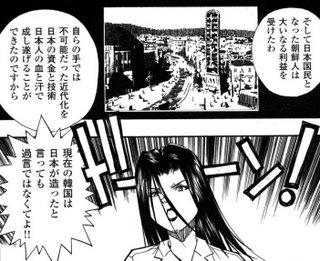
In the penultimate debating match duel between Korean and Japanese students (the latter possessing a "correct" view of history) towards the end of the Japanese comic
Kenkanryu ("Hating the Korea Wave", "The Hate Korea Wave", "Manga Hate South Korea", and myriad other translations), the Koreans are told of all the benefits they derived from Japan, which wouldn't have been possible without its investment and technology, as well as the blood and sweat of the Japanese people. This is followed by the oft-quoted, "It's not an exaggeration to say that Japan built the South Korea of today!"

The opponents of the Japanese "Far East Asia Research Society" are the "South Korean University Student Representatives Visiting Japan In Denunciation of Historical Distortion and Conspiracy To Revive Militarism, [a] dream team formed by assembling elite students from every university". Despite their "elite" team, they are helpless to defend themselves against the bulletproof arguments of the Japanese team (in fact they are depicted screaming angrily at their opponents only three pages into the debate) and they soon concede defeat as they are forced to accept that Japan did so much good for Korea when they helpfully modernized it between 1910 and 1945.
There's much more to the comic than the two debate set-pieces, but I do think that a lot of the entertainment for the anti-Korean, Japanese apologist set (not to say that those two positions are always congruent, just that it's not uncommon) comes from watching the Koreans getting pummelled by the superior, 'correct' Japanese arguments. If I was to be uncharitable, I might suggest that the appropriate place for Kenkanryu might be in the hentai section at Family Mart, considering the possible frisson this comic might provide to a certain portion of the manga reading market ("Clean-up in aisle four").
For a description of the comic, along with translations of the cover, chapters, and much more, the
Wikipedia entry about
Kenkanryu should really be read. Otherwise, I'll toss up a few pertinent quotes to get us started. As
this article tells us
"Kenkanryu," the manga whose title translates directly as "Hating Things South Korean," became a bestseller the moment it went on sale on July 26 [2005], topping charts run by Amazon Japan and other online bookstores.
At this point, the comic has sold 450,000 copies. While this may seem large, it's actually not that much larger than the already existing audience for such entertainment, as we will see. They have also done all they can to create an image of danger and radicalism that is always bound to attract a certain segment of the population:
"Kenkanryu" comes with a belt loudly proclaiming it as: "A controversial work publishing companies deemed too dangerous to print."
Its provocative title is also bound to attract attention, though it turns out that the title doesn't mean what a fluent speaker of Japanese might actually think it means, according to
Occidentalism (where, according to
this blog, "
the most balanced and least emotive review of Kenkanryu" is to be found) :
If you had just looked at the cover without reading the comic, you might think that actually meant ‘hate the Korean wave’ (I did too, before I read it), but once I read it, I understood the real meaning of the title.
This page is provided as evidence, and the text is translated:
Nowadays the massmedia [sic] is promoting ‘the Korean wave’ and the like for friendship, but behind that Japanese people that dislike Korea are growing in numbers. There is one more ‘Korean wave’ that the massmedia[sic] is hiding, that is… ‘the hate Korea wave’!!
Thus, it is "The Hate Korea Wave", not "Hate the Korea Wave", we are assured (though I'm not certain what the difference is, really). Obviously, being the entire point of the comic, one would assume that it appears near the beginning. The page he displayed actually appears on page 271 (out of 292), the last page of the comic before the epilogue. Were the makers of the comic in fact being very clever by waiting until the end of the comic to explain what the title meant, or was Occidentalism grasping at anything that might make it seem more 'objective' and therefore more palatable to a larger audience?
This article describes the beginning of the comic (well, it's not quite the opening, but it's in the first chapter, at any rate):
KenKanRyu opens with the hero beside the deathbead of his grandfather, a war veteran. The old man’s dying words are “we were only trying to help Korea” — a reference to Japan’s occupation of the peninsula in the early 20th century.
The main character, slave as he is to the Japanese mainstream media's lauding of Korea and the Korea wave, rebukes his grandfather when he learns of his experiences in Korea, but, motivated by his grandfather's dying words, he eventually becomes aware of the true nature of the dark side of the forc-- oh, sorry. Wrong fantasy. The first article I linked to provides us with lots of
very important information about the comic's author:
Sharin Yamano, the little-known manga artist who created "Kenkanryu," is described as a man in his early 30s, whose star sign is Leo and blood of type B. He has written a love-comedy manga, but also worked stints as a designer and illustrator. He has gone on record as saying the work was inspired by ultra-nationalist comic writer Yoshinori Kobayashi.
This article tells us a little about the aforementioned Yoshinori Kobayash:
The comics build on a genre established by comic artist Yoshinori Kobayashi in the 1990s. His "Manifesto of new pride" series of comics -- which claim Japan waged a noble war to liberate Asia from a racist world order -- have sold over a million copies. Japan has a population of about 127 million people.
"This genre may still be in a nascent stage," said Sharin Yamano, author of "Hate Korea," in an e-mail interview. "But I think the comics are selling well because they resonate with people who feel increasingly uneasy over Japan's neighbors."
When Norimitsu Onishi wrote an article about Kenkanryu for the New York Times, he was
taken to task over at Occidentalism, because he wrote that the comic
also betrays Japan’s conflicted identity, its longstanding feelings of superiority toward Asia and of inferiority toward the West. The Japanese characters in the book are drawn with big eyes, blond hair and Caucasian features; the Koreans are drawn with black hair, narrow eyes and very Asian features.
The response to this statement that Koreans and Japanese are drawn differently?
Actually, not every Japanese character is drawn with western features... Here are four major Japanese characters from the comic in the picture below... Two of them could maybe be westerners, but the other two could be nothing if not oriental. Three out of four of them have black hair. I will leave final judgement on the matter to the reader. (That picture is here).
Interesting. Let's make a comparison here. Let's say that it was said that in the comic, apples were all drawn to look fresh, but the oranges were drawn to look rotten. The rebuttal to this? "Not all of the apples look fresh. See? I leave it to your judgement." How can anyone judge when
no one is shown any oranges?
Of course, while withholding metaphorical oranges is a common tactic, and no oranges appear in that particular post, a pertinent
picture was posted in the
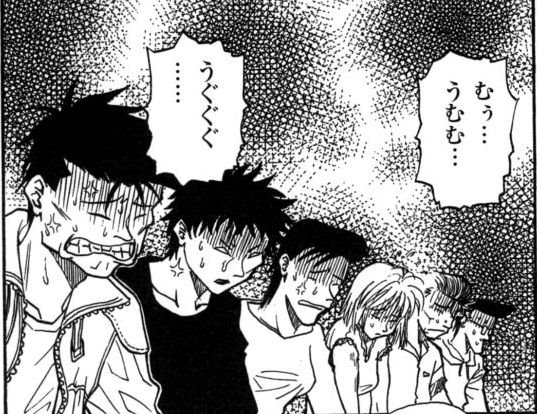
first Occidentalism post about Kenkanryu. Most of the characters are in the corners or at the bottom. Can you tell which of the four is Korean? In the picture below, it may be possible to discern which characters are meant to be perceived as Japanese and which are meant to be perceived as Korean:
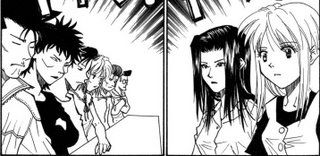
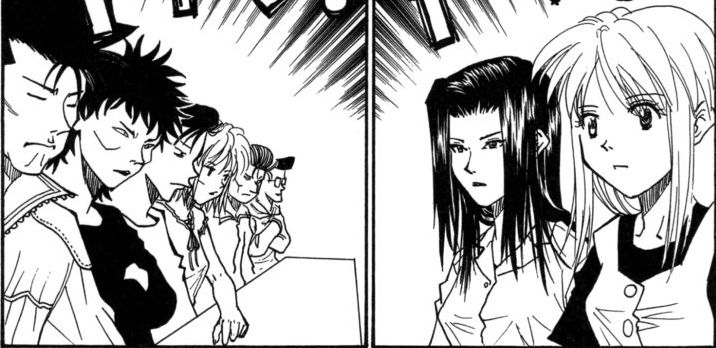
The distinction between Korean and Japanese may also be clear below, on the left (it may be worth pointing out that the Korean characters are basically depicted screaming, yelling, or crying whenever they appear - 73 out of 85 pages, by my unofficial count).
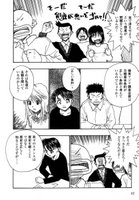
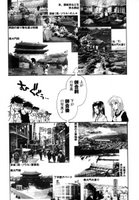
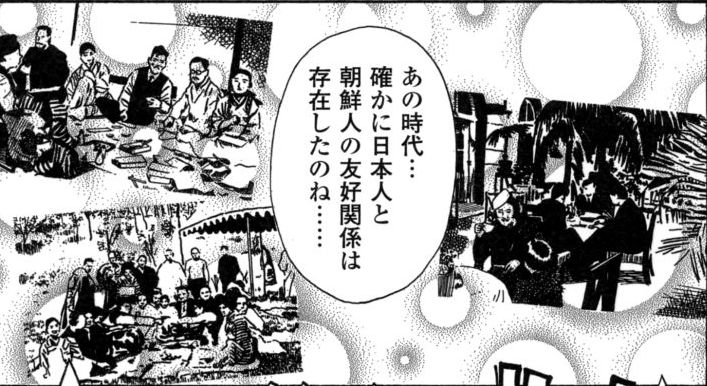
The page above on the right appears during the final debate near the end of the book. Much like the
Annual Report on the Progress and Reforms in Korea, the English-language publication the Japanese began publishing in 1907 to promote its modernizing mission in Korea, this page consists of '
a "before and after" presentation offering explanitory, pictorial... evidence of changes Japan had made on the penninsula'.
If you look at the photos presented on that page, you may notice that some of them look... familiar. Out of the 12 photos displayed on that page, 7 of them appear in the Occidentalism post titled "
The Japanese Administration of Korea". One of the photos in the panel below, which appears two pages earlier, also appears in that same post, while a
link to another was posted in the comments to my
post critiquing said Occidentalism post.
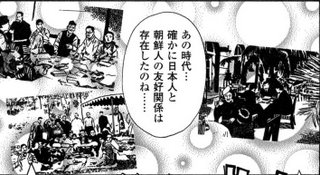
While this could be a coincidence (the Occidentalism post predates Kenkanryu by two weeks) one might begin to think that they are both drawing on similar sources. If you were thinking that these some of these sources might be Japanese Blogs, then "
Inside the Japanese Blogosphere - The Anti-Korea Wave" over at
Global Voices Online would be worth reading, as it provides both pertinent links and analysis. Looking at the comments to my previous posts, one often sees a collection of links to photos (with addresses like "
www.geocities.jp/korean10lies") accompanied by "If ____ was true then how come this photo exists?", in lieu of a coherent argument or trying to put the photos in context. This suggests that there are a plethora of websites or blogs out there with collections of these photos (not that this is surprising, of course, as they can be found on either side of almost any debate). At these sites you can find media other than photos, such as flash videos. A number of these were
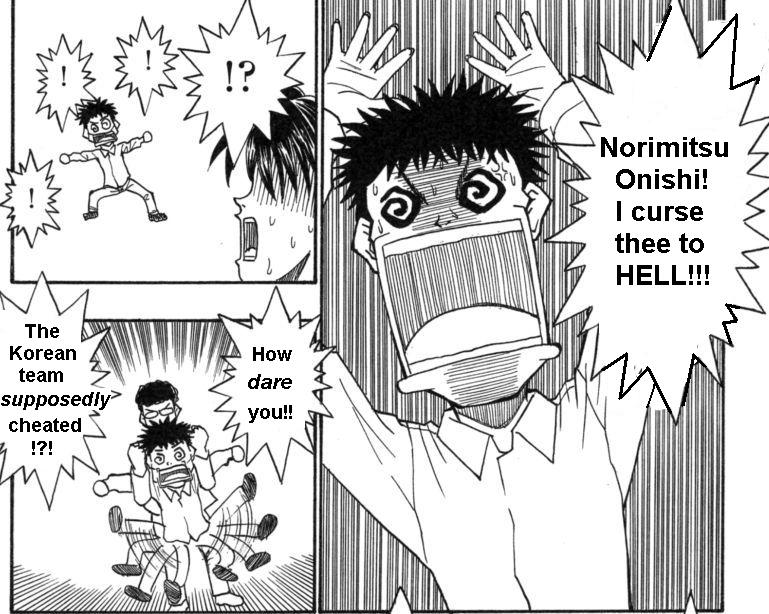
posted at Occidentalism "proving" that the Korean team cheated [Edit: This should say 'advanced unfairly'] during the world cup. As a collection of accusations backed by photos and video clips devoid of any immediate context, they are (unintentionally) hilarious. Looked at in addition to the "The Japanese Administration of Korea" post over there and the use of the photos in Kenkanryu, it
may be possible to notice a pattern. I leave it to the reader to decide.
At Occidentalism, however, these flash videos are accepted as nothing less than the truth, and when Onishi had the
gall to write this -
It begins with a chapter on how South Korea’s soccer team supposedly cheated to advance in the 2002 Word Cup
- it didn't get a very good reaction:

Well, okay, it didn't happen
exactly like that:
The comic reproduces actual incidents from the 2002 World Cup. The author of the article distorts this presentation by simply saying the comic accuses the Korean team of cheating.
I assume this opinion (ie. "actual incidents") comes from the fact that they are drawn from photos or video stills, which could never be
faked, or more importantly, edited and taken out of context. At any rate, the most important aspect of Onishi's article will be discussed later; it suffices to say that it has nothing to do with how the Korean team supposedly cheated, or how the characters were drawn, even though his mention of these (as well as his "incorrect" understanding of the title) brought on this:
So who is the writer of the article? Judging from his name, ‘Norimitsu Onishi’, it would seem that he is Japanese, but I have my doubts about that. I would be willing to bet that he is actually an ethnic Korean.
Just as anyone who criticizes the war on terror is actually a terrorist. It gets better, though: "
Norimitsu Onishi just doesnt hate Japan, he seems to hate the US too." What's funny about this is the fact that the historical revisionism that Kenkanryu is influenced by is quite anti-American, as we will see.
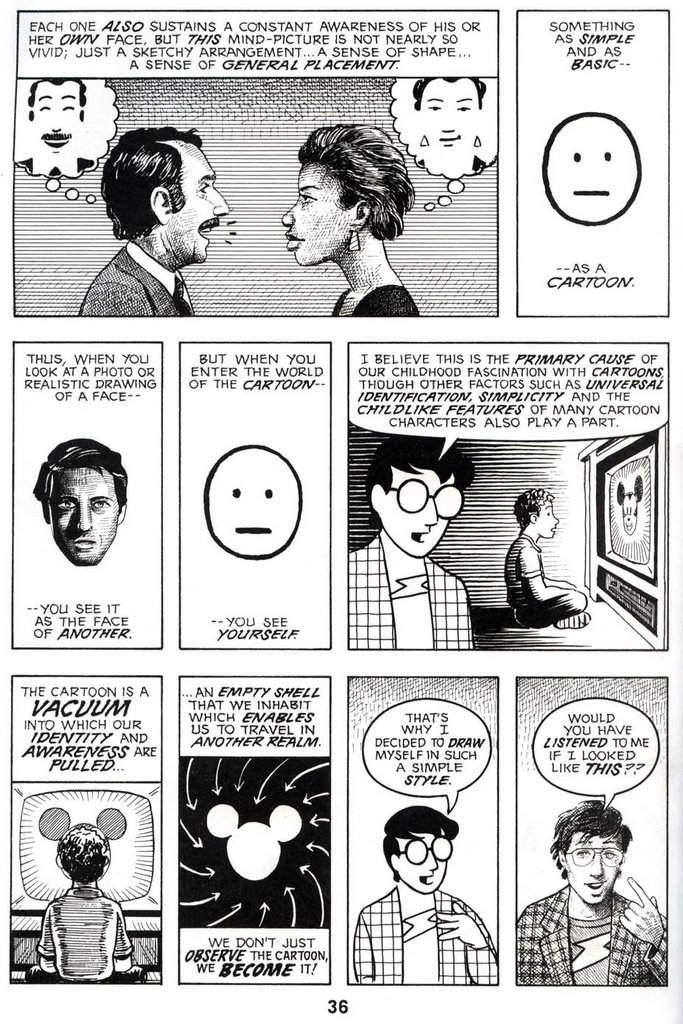
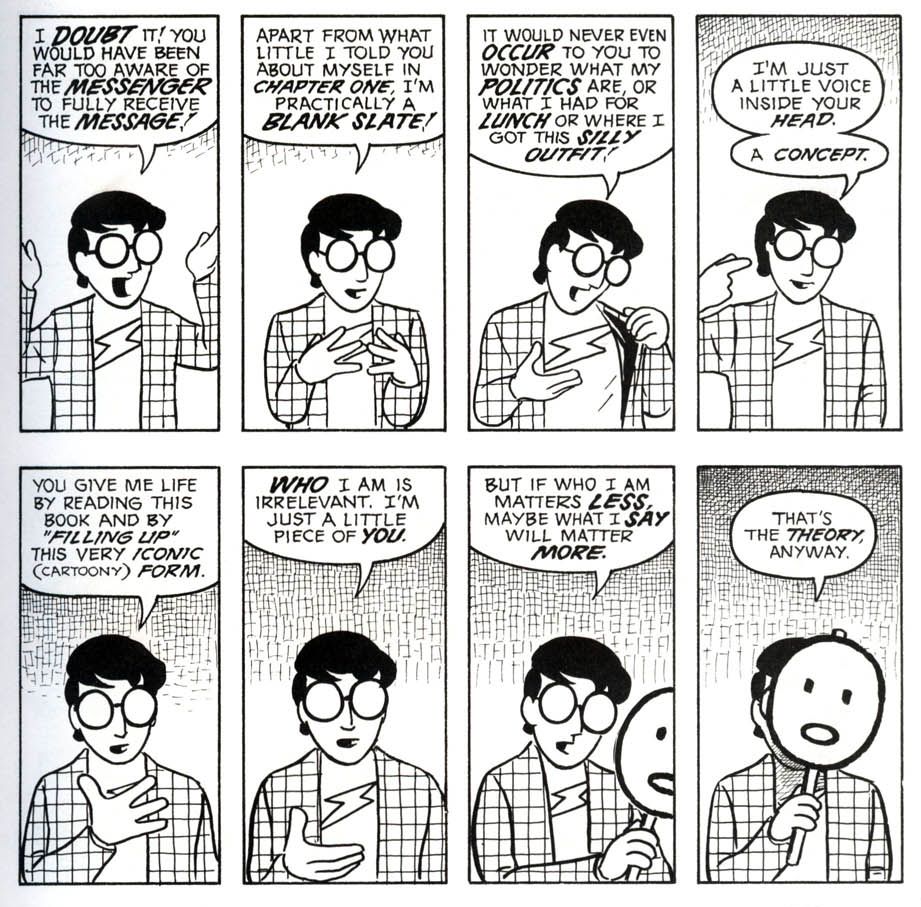
For a moment, though, let's return to how the Korean and Japanese characters were drawn. In Scott McCloud's excellent book
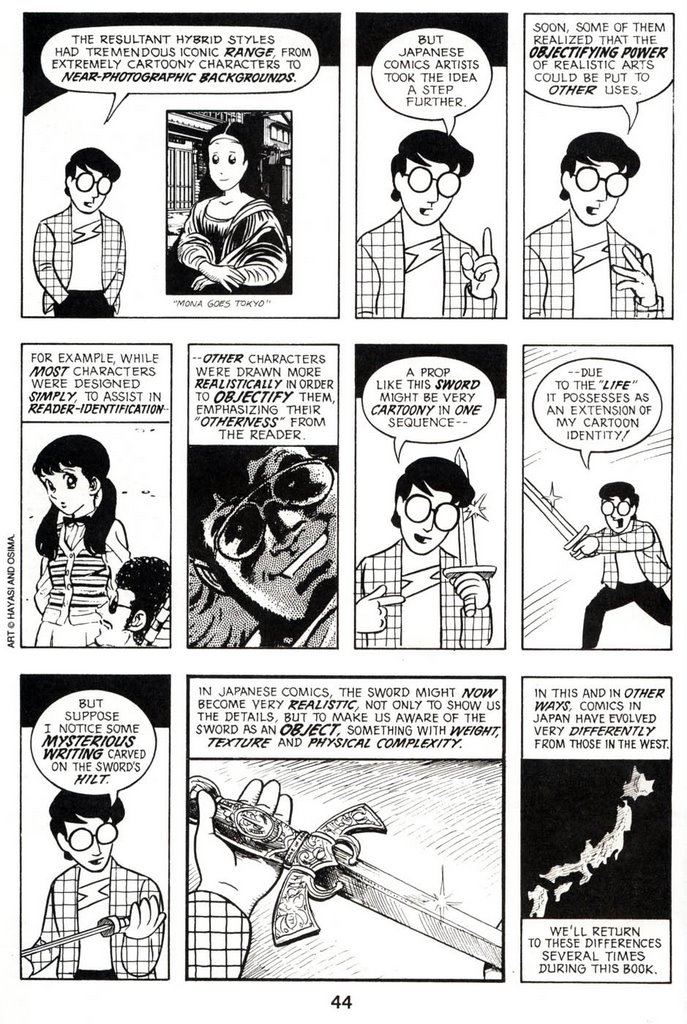
Understanding Comics, he explains how the simplistic nature of cartoons (meaning the style of drawing, not the media of animation or comics) allows readers to identify with them in a way that is impossible with more detailed, objective drawings. Do read the three pertinent pages below for a detailed description.

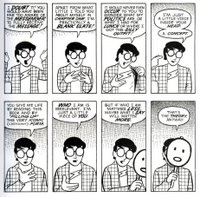
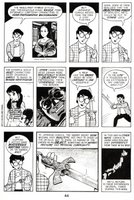
On the last page, left, he examines the use of 'masking', or using simply drawn cartoonish characters against detailed backgrounds. After examining it's use in different countries, he looks at its unique use in Japan.
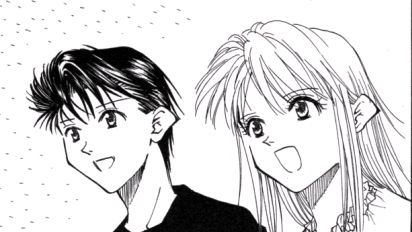
The most important points he makes about the use of this technique in Japanese manga are shown below, and illustrated by panels from Kenkanryu:
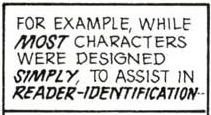
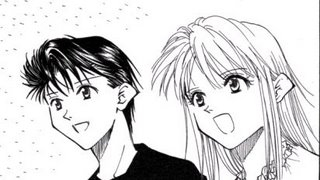

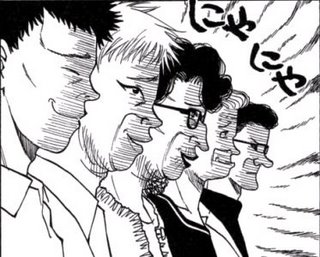
So, according to this critique, who is the reader supposed to identify with, and who is having their otherness emphasized? While it could be pointed out that this technique is used so often in Japan that artists may not be conscious of their use of it, in the chapter the above photo is taken from, there's no need to apply this critique, as the "other" characters are so ridiculously caricatured (they may not all be Korean; the Wikipedia article translates their description from the comic: "Alumni supporters of the Asian History Research Society who aim to topple the Far East Asia Research Society.[...] Their only identity lies in anti-Japanese activism." It's not clear what their ethnicity is, but whoever they are, the above critique is still pertinent).
Enough of the comic itself for a moment (and its supporters who defend it against criticism by misrepresenting its contents). With the help of Rebecca Clifford's 2004 essay
Cleansing History, Cleansing Japan: Kobayashi Yoshinori’s Analects of War and Japan’s Revisionist Revival, we will look at how the currently best-known revisionists in Japan came together as part of a reaction to events which occurred in the early 1990s.
The end of the Liberal Democratic Party’s long-standing hegemony in the Diet opened up new opportunities to address the question of how the war is officially and publicly represented in Japan.
When Hosokawa Morihiro’s Japan New party won the 1993 election, ending 38 years of LDP rule, his admission that Japan had waged an “aggressive” war was the first time a prime minister had spoken publicly of the war in a negative light. His successor, Murayama Tomiichi, offered a public apology to the people of Asia for Japan’s actions during the war. “
Against the backdrop of these events, the Liberal Historiography Study Group emerged as an oppositional force, repudiating apology and insisting on the primacy of the national cause.”
The Liberal Historiography Study Group was formed in 1995 by Tokyo university education professor
Fujioka Nobukatsu. The group is best known abroad for its offshoot organization, the Japanese Society for History Textbook Reform, which was formed with the main goal of
removing references to Japanese war crimes from junior high school and high school history textbooks, [and which] vehemently attacked the Ministry of Education’s 1996 decision to allow references to ‘comfort women’ to be included in textbooks. The group has written it’s own textbook, New History of Japan, which was approved by the MoE in 2001 and became available for use in schools in April 2001. It underwent 137 mandatory revisions, however, an has not been adopted for use by more than a handful of local school boards.
Thus the Society for History Textbook Reform was formed by members of the Liberal Historiography Study Group in order to target the inclusion of 'inappropriate' topics in textbooks in 1996. The two most pertinent chapters of the New History Textbook can be found in English
here, and more on the controversy can be found
here and
here.
Despite the notoriety of the textbook, “
it is primarily [Liberal Historiography Study Group founder]
Fujioka and member Kobayashi Yoshinori who have striven to create a broad public base for the group’s ideas.” Fujioka published
History Not Taught In Textbooks in 1997, which, instead of making students think their history consisted of aggressive and immoral acts (leading to loss of pride and patriotic spirit), provided them with biographies of ‘great’ Japanese historical figures to present to them a history they could be proud of. Its two volumes were two of the top ten best-selling books that year.
The next year, in 1998, Kobayashi Yoshinori’s
Senso-ron, or "Analects of War", (also known as
"On War"), appeared, and became a huge hit, with its 3 volumes to date selling over a million copies.
Analects of War's central premise – that the history of World War Two must be recast in a positive light if Japan is to regain a sense of National Pride – is borrowed directly from Fujioka’s work.
He seeks not only a positive and positivistic re-evaluation of Japan’s reason’s for waging war, but aims to use this interpretation of Japan’s wartime history as a prism through which he can expose the defects in contemporary society.
He ties growing selfishness and listlessness amongst the younger generation, along with teen prostitution and the loss of masculinity amongst men, to the lack of anything to believe in, and this, of course, is due to the Americans - their peace constitution, their ‘victor’s justice’ sham of war crimes trials, and their censorship and propaganda which convinced the Japanese people that their war was not just and heroic. His feelings about American influence in Japan are also related
here:
The Japanese are becoming more American. They dye their hair blond or put it in dreads and dance to this crazy black people's music. The way Michael Jackson dances is not the way Japanese people dance.
Clifford also compares notions of purity and pollution in the manga to themes found in wartime propaganda, and looks at how foreign, mostly American, influence is blamed for polluting Japan and causing its current social ills. America is also scapegoated for the Nanking Massacre:
One of the crimes invented by the judges at the Tokyo Trials was the Nanking Massacre. Since the Americans killed 300,000 people with the atomic bomb in Hiroshima and Nagasaki, they wanted to pin an equally heinous crime on the Japanese. … 300,000 people were massacred (in Japan): there weren’t even 200,000 people living in Nanking at the time. … There were 200 Nationalist Army guerillas hiding in the safety zone at Nanking, and they were the ones who committed the rape and murder in Nanking. Then they pretended that these crimes had been the doing of the Japanese army.
In addition to evading responsibility for Nanking, he calls for a re-evaluation of the Kamakaze pilots, and in "
On Taiwan", regarding comfort women, took the
position that
These women were already prostitutes and that "becoming comfort women was a step up for them, because they preferred military brothels to civilian brothels".
As to how Kobayashi argues his point,
this review argues that
Kobayashi's manga stories employ a consistent technique. The main character appears to be Kobayashi based on his looks and views, and sometimes this character appears as a child. In each chapter he examines a particular issue related to war by first considering one side of a position. The main character then points out a few weaknesses and logical inconsistencies with this side of the issue, so he gets angry and concludes that the other side is correct after mentioning a few more pieces of evidence. This method of reasoning can easily lead to incorrect conclusions. For example, Kobayashi provides very convincing support in Chapter 11 of the forgery or misattribution of fifteen specific photos related to Japan's wartime atrocities and the Nanking massacre. Based on this persuasive but very limited evidence, he denies the historical accuracy of the 1937 Nanking massacre without addressing other overwhelming evidence related to the incident.
Fujioka Nobukatsu presents what are likely the same photos
here (which was likely the uncredited source of Occidentalism's
expose of 'misattributed' photos). As a strategy for 'arguing', attacking a statistic or photo or a single line in someone's opposing argument while ignoring the rest is a familiar technique. Having discussed "On War", authored by a member of Liberal Historiography Study Group (and arguably the best known advocate of the revisionist views it adheres to), it might be worth mentioning this again:
Sharin Yamano, the little-known manga artist who created "Kenkanryu,"[...] has gone on record as saying the work was inspired by ultra-nationalist comic writer Yoshinori Kobayashi.
Not only was he inspired by Kobayashi, and his 'argument' or 'debate' style of putting forward a certain point of view, and not only is the organization that the protagonists in
Kenkanryu belong to named the "Far East Asia Research Society" (shades of the Liberal Historiography Study Group?), but there is also something rather interesting that appeared in the aforementioned Norimitsu Onishi
NYT article:
Kanji Nishio, a scholar of German literature, is honorary chairman of the Japanese Society for History Textbook Reform, the nationalist organization that has pushed to have references to the country's wartime atrocities eliminated from junior high school textbooks.
Mr. Nishio is blunt about how Japan should deal with its neighbors, saying nothing has changed since 1885, when one of modern Japan's most influential intellectuals, Yukichi Fukuzawa, said Japan should emulate the advanced nations of the West and leave Asia by dissociating itself from its backward neighbors, especially China and Korea.
"I wonder why they haven't grown up at all," Mr. Nishio said. "They don't change. I wonder why China and Korea haven't learned anything."
Mr. Nishio, who wrote a chapter in the comic book about South Korea, said Japan should try to cut itself off from China and South Korea, as Fukuzawa advocated. "Currently we cannot ignore South Korea and China," Mr. Nishio said. "Economically, it's difficult. But in our hearts, psychologically, we should remain composed and keep that attitude." [emphasis added]
Not only do we have
Kenkanryu's author influenced by the style and content of a revisionist comic drawn by a member of the Liberal Historiography Study Group, we also have the honorary chairman of the Japanese Society for History Textbook Reform contributing an article to the comic. There are, in fact, four (relatively) lengthy written articles to be found in the pages of
Kenkanryu:
"Those Poor People Who Cannot See Outside", a 5 page article by Kanji Nishio (whose writing - some in English - can be found
here)
"South Korea and the Anti-Japanese Media", a 4 page article by
Koyu Nishimura, described as a 'publicist'.
"Masochism and the Hate Korea Wave - Considering the Hate Korea Kitchens", a 7 page article by Takahiro Otsuki, a professor who was a member of textbook society when it was formed.
"What is the Takeshima Issue?", a 7 page article by Masao Shimojo, a professor who wrote the 2004 book
To which Country Does Takeshima Belong, Japan or South Korea? An article he wrote about the Liancourt Rocks is translated
here.
A comic which compiles pieces by writers such as these, with links to the organizations best known for pushing the historical revisionist agenda, should likely not be seen as an amateur hatchet job. Its impressive sales, however, (450,000 at this point) may in fact be due to its pedigree.
On War's 3 volumes have sold anywhere from 1 million to 1.5 million copies, depending on what you read, but the sales of each of its volumes are likely quite similar to
Kenkanryu's sales. They likely share similar audiences, or to put it another way,
Kenkanryu may be preaching to the converted. It may be worthwhile, however, to take a look at what is being preached.
Though this November, 2005
article mistakenly portrays Kenkanryu as 'spawning' a new genre (when one of the 'followers' is a manga by Kobayashi (!)), it still has some rather interesting points to make:
The controversial manga (comic) has sold more than 360,000 copies in three months, and spawned a new genre of fiercely polemical comics lamenting Japan’s “weakness” in dealing with regional disputes.
KenKanRyu (Hating the Korean Boom) has been joined on the shelves of Japan’s mainstream bookstores by Chugoku Nyumon (Introducing China) and Yasukuni Shrine [by Kobayashi]...
Yasukuni Shrine lashes out at the “sickness” of a Japanese public that would succumb to Chinese and South Korean pressure by dismantling the monument which honours war criminals with the rest of the war dead.
In another
article, it is said that in
Kenkanryu, "
The Japanese student accuses his country's leaders of kowtowing to Korean protests", while in this
article, Masao Shimojo, who wrote the article in Kenkanryu about the Liancourt Rocks, is quoted as saying "
Japan [...]
never asserts itself at all, preferring the principle of peace at any price. In other words, South Korea's anti-Japanese attitude is being propagated by Japan itself."
Words like "sickness" and "weak" are rather interesting. Does anyone find it strange that these people are using arguments against their own society that are similar to those used against Korea
100 years ago to justify colonizing it? It's by no means entirely the same, but the arguments made against Korea, that it was too corrupt and weak to help itself, sound rather similar to what Kobayashi was described as railing against in
On War. Comparing the Japanese view of China and its relationship to Korea at the time of the Sino-Japanese War also turns up interesting results. As correspondent James Creelman described it, "
Japan emancipated the helpless Corean nation from the centuried despotism of China". Now it is Japan, the revisionists argue, who must be rescued from American influence, as well as from the pressure to "kowtow" to its neighbours (as Korea was "emancipated" from having to kowtow to China). It's also worth mentioning that when considering “factors contributing to Japan's victory” in that war, the New Textbook says “just as important was awareness on the part of the Japanese that they were now one people and citizens of a united nation." It is interesting that Creelman had the
same thing to say about the war:
In considering the astonishing result of the war between Japan and China, it is important to remember that the most decisive elements in the struggle were the presence of a passionate national sentiment on the one side, and the almost complete absence of patriotism on the other side.
As Rebecca Clifford's essay above makes clear, Kobayashi sees the lack of patriotism as one of Japan's greatest problems (mostly stemming from how America restructured Japan after the war and from viewing Japan's actions in World War II as criminal). In linking it to the listnessless and emptiness of life in contemporary Japan (something dealt with, along with these manga, in this relevant blog
post), he seems to echo Army Minister Anami Korechika, who, as the debate raged over whether to surrender on August 9, 1945,
predicted that
"If we go on like this and surrender, the Yamato race would be as good as dead spiritually.” Korechika is echoed in even odder places, however:
Tora, Tora, Tora! Pearl Harbour was our only choice. Our race was corrupted from the day we lost the war..." Karin Amamiya, lead singer of ultra-nationalist hardcore punk band The Revolutionary Truth looms centre stage, barking out aggressive but heartfelt anti-American sentiments to a dwindling audience....
[During a trip to North Korea] she is markedly struck by the way that the North Koreans are bound together by a common value system "Words such as solidarity touched my heart as a nationalist". In contrast, she sees the only shared values the Japanese possess is via consumerism and value systems imposed from outside. "The Japanese can't make friends. Only cut their wrists and call sex lines."
It is statements such as these that throw light on where Amamiya is coming from in her politics. At numerous points in the film she confesses that a troubled upbringing and 9 years of bullying at the hands of her school classmates left her feeling an outsider. Nationalism provided a channel for her feelings of ostracism and self-loathing. Similarly, in an unguarded moment, [guitarist/band-leader Hidehito] Itoh confesses he embraced nationalism to stop being a nerd. "When did you force these two ideas, 'to stop being a nerd', and 'anti-America' together?", asks [filmmaker Yutaka] Tsuchiya. "Well, after joining the Nationalists, actually", Itoh capitulates.
The passages above are quoted from a
review of Yutaka Tsuchiya's documentary on the band,
The New God. He said in an
interview that what motivated him to make the documentary was that "I really wanted to think about why [Kobayashi's
On War] sold those half a million copies." He goes on to discuss "endless mundanity" and the "lack of connection to society", subjects portrayed quite often by Japanese filmmakers like Shinji Aoyama, Hideaki Anno, Shunji Iwai (in
All About Lily Chou Chou, at least) and perhaps my favourite, Akihiko Shiota (
Harmful Insect and
Canary being standouts). Another that could be included would be Kinji Fukasaku, who talked about how people of his generation longed for the freedom of the 'black market' era that followed Japan's defeat, and who railed against the utterly corrupt nature of Japan Inc. One of the most memorable images in 1972's
Under the Flag of the Rising Sun is of the mushroom cloud over Hiroshima, which then cuts to downtown Tokyo, with its traffic and overpasses and neon, making, to a degree, the same connection that Kobayashi does. This film, however, stands in complete opposition to
On War, as its most memorable line, uttered by a woman trying to find out why her husband was executed, reveals:
The government didn't ask anybody's permission to start the war. But we're the ones stuck paying for all of it.
It is voices such as hers that the revisionists would like to pre-empt, by portraying that war, and the Japan which fought it, in the best light possible. I find it rather ironic, however, that in order to paint Imperial Japan in a better light, contemporary Japan is portrayed by the revisionists as Korea and Japan were 100 years ago - as sick, weak, and lacking strong national sentiment - even as comics like
Kenkanryu do their best to attack contemporary Korea and China today.
Postscript:
Of course, a Korean response to Kenkanryu, named Hyeomilryu (or Hate the Japanese Wave) was a surprise to no one - it was the fact that it was so utterly abyssmal that shocked people. Occidentalism had a field day with it, (and rightly so) posting
translations of
several pages (something that was not done to the same degree with Kenkanryu, oddly enough). As related in these articles (
here and
here), South Koreans weren't very impressed. Hyeomilryu, written by Yang Byeong-seol, hasn't exactly
sold very well either:
Manga Hate South Korea has sold 450,000 copies. As for Manga Hate Japan, "I couldn't find a publisher, so I started a company and printed up 3,000 copies at my own expense," Yang reportedly told an unidentified journalist Asahi Geino speaks to. "It sells not too badly. I myself took it around to the major book shops, who agreed to stock it."
It should be pointed out, however, that the Hyeomilryu
announced several months ago, which was to be written by Kim Seong-mo, is not the one that was
released recently. The aforementioned Wikipedia
entry explains further:
However, another Hyeomilryu by a not well known cartoonist Yang ByungSul had been already published. Hyeomilryu by Yang ByungSul however has been greatly criticized by many fellow Korean media and readers for not being logical enough to be an answer to Kenkanryu. The cartoonist in an interview admitted that his book was not supposed to be a professionally written article, but it's something he published with his own money as a emotional outcry toward Kenkanryu.
The fault may lie in either of them thinking that there's much point in attempting to reply to it at all. I have to wonder how many Koreans have read the 'fansubbed' version I have, just as I'd wonder who in Japan would bother to read a Korean response, especially when
Kenkanryu 2 has already been
published.











 Sosa-gu, Bucheon, 1972.6.25



 Godeok area, Gangdong-gu, 1984.8.5