Wednesday, April 05, 2006

Kenkanryu in the Realm of the Revisionists

Update:

I wanted to include it when I put up this post, but the time involved in uploading it forced me to postpone it. A Korean scanlation of Kenkanryu can be found here (scroll down to the bottom, click "Free", scroll down again and wait 40 seconds for the link to appear - and then wait) . While I'm well aware of the legal debates over fansubs and scanlations, I don't think this will get an official translation here any time soon, and it's likely the only way non Japanese-speakers will get to peruse it in the near future. Regarding the accuracy of this translation, Matt from Occidentalism said in the comments below that:

In all, I think I read about 40 pages of the Korean translation, which is about a sixth of comic, and could be considered a representative sample. While there could be mistakes (for example, I didnt check any of the essays in between chapters, only the comic itself), it is my opinion that whoever translated this went to great effort to be accurate.


Update - Apology:

I've been taken to task for this post by Jodi, and rightfully so.

When I first found a copy of the manga in Japanese, simply by looking at it I could see discrepancies between Occidentalism’s descriptions of it and what I could see in front of me (the location of the page where he found the “the Hate Korean Wave” quote and the fact that there was a difference in the way the Koreans and Japanese were drawn - as well the use of many of the same photos as in the “The Japanese Administration of Korea”), and I thought about mentioning this in a post.

The Onishi article’s description of Kanji Nishio’s participation in Kenkanryu made me curious and led me to discover the many links between the revisionists and Kenkanryu, and it surprised me that this connection hadn’t been pointed out elsewhere. I later found the Korean translation and read chapter 8, in which the debate about the colonial period takes place, (this was the chapter I was most curious to read, which shouldn’t be surprising, considering my last two posts) and could see what was being said was quite similar to the arguments made by Japanese revisionists, and which could be found at Occidentalism. I decided to combine the discrepancies I’d found and Kenkanryu's links with the revisionists into one post. Though the Korean text was similar to passages I’d seen that were translated into English, I didn’t want to address the written content of the chapter I’d read because I couldn’t be entirely certain it was correct. While I referred to the general outline and structure of the story (and paraphrased some written content in the first paragraph), I refrained from discussing or analyzing the actual written content.

And yet I most certainly passed judgment upon the comic, which was wrong if I wasn’t actually going to address what provoked my opinion of it (or more succinctly, one chapter of it – an important chapter, when discussing the topic of revisionism, but still, only one chapter). The post should have been confined to challenging Occidentalism’s discrepancies and pointing out the links between the comic and the historical revisionists – both of which were possible without reading the text (due in part to the translations in the Wikipedia article). By going beyond this and passing judgment on it, I overstepped the narrow boundaries that should have been more clearly set out for this post. I myself didn’t perceive how much I’d overstepped those boundaries until my writing was challenged by Jodi’s comment, which reminded me of the importance of this ‘heated topic’, and of addressing it in a public forum. I should not have judged the subject matter as I did, especially based on one chapter, and should have taken more care in writing and editing the post.

My apologies.


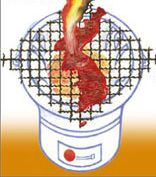
Korean barbeque.... Yummy.


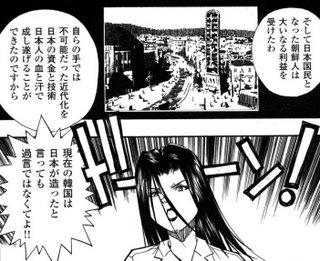
In the penultimate debating match duel between Korean and Japanese students (the latter possessing a "correct" view of history) towards the end of the Japanese comic Kenkanryu ("Hating the Korea Wave", "The Hate Korea Wave", "Manga Hate South Korea", and myriad other translations), the Koreans are told of all the benefits they derived from Japan, which wouldn't have been possible without its investment and technology, as well as the blood and sweat of the Japanese people. This is followed by the oft-quoted, "It's not an exaggeration to say that Japan built the South Korea of today!"


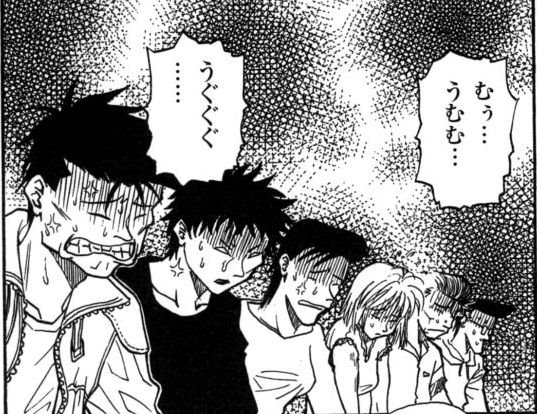
The opponents of the Japanese "Far East Asia Research Society" are the "South Korean University Student Representatives Visiting Japan In Denunciation of Historical Distortion and Conspiracy To Revive Militarism, [a] dream team formed by assembling elite students from every university". Despite their "elite" team, they are helpless to defend themselves against the bulletproof arguments of the Japanese team (in fact they are depicted screaming angrily at their opponents only three pages into the debate) and they soon concede defeat as they are forced to accept that Japan did so much good for Korea when they helpfully modernized it between 1910 and 1945.

There's much more to the comic than the two debate set-pieces, but I do think that a lot of the entertainment for the anti-Korean, Japanese apologist set (not to say that those two positions are always congruent, just that it's not uncommon) comes from watching the Koreans getting pummelled by the superior, 'correct' Japanese arguments. If I was to be uncharitable, I might suggest that the appropriate place for Kenkanryu might be in the hentai section at Family Mart, considering the possible frisson this comic might provide to a certain portion of the manga reading market ("Clean-up in aisle four").

For a description of the comic, along with translations of the cover, chapters, and much more, the Wikipedia entry about Kenkanryu should really be read. Otherwise, I'll toss up a few pertinent quotes to get us started. As this article tells us
"Kenkanryu," the manga whose title translates directly as "Hating Things South Korean," became a bestseller the moment it went on sale on July 26 [2005], topping charts run by Amazon Japan and other online bookstores.
At this point, the comic has sold 450,000 copies. While this may seem large, it's actually not that much larger than the already existing audience for such entertainment, as we will see. They have also done all they can to create an image of danger and radicalism that is always bound to attract a certain segment of the population:
"Kenkanryu" comes with a belt loudly proclaiming it as: "A controversial work publishing companies deemed too dangerous to print."
Its provocative title is also bound to attract attention, though it turns out that the title doesn't mean what a fluent speaker of Japanese might actually think it means, according to Occidentalism (where, according to this blog, "the most balanced and least emotive review of Kenkanryu" is to be found) :
If you had just looked at the cover without reading the comic, you might think that actually meant ‘hate the Korean wave’ (I did too, before I read it), but once I read it, I understood the real meaning of the title.
This page is provided as evidence, and the text is translated:
Nowadays the massmedia [sic] is promoting ‘the Korean wave’ and the like for friendship, but behind that Japanese people that dislike Korea are growing in numbers. There is one more ‘Korean wave’ that the massmedia[sic] is hiding, that is… ‘the hate Korea wave’!!
Thus, it is "The Hate Korea Wave", not "Hate the Korea Wave", we are assured (though I'm not certain what the difference is, really). Obviously, being the entire point of the comic, one would assume that it appears near the beginning. The page he displayed actually appears on page 271 (out of 292), the last page of the comic before the epilogue. Were the makers of the comic in fact being very clever by waiting until the end of the comic to explain what the title meant, or was Occidentalism grasping at anything that might make it seem more 'objective' and therefore more palatable to a larger audience?

This article describes the beginning of the comic (well, it's not quite the opening, but it's in the first chapter, at any rate):
KenKanRyu opens with the hero beside the deathbead of his grandfather, a war veteran. The old man’s dying words are “we were only trying to help Korea” — a reference to Japan’s occupation of the peninsula in the early 20th century.
The main character, slave as he is to the Japanese mainstream media's lauding of Korea and the Korea wave, rebukes his grandfather when he learns of his experiences in Korea, but, motivated by his grandfather's dying words, he eventually becomes aware of the true nature of the dark side of the forc-- oh, sorry. Wrong fantasy. The first article I linked to provides us with lots of very important information about the comic's author:
Sharin Yamano, the little-known manga artist who created "Kenkanryu," is described as a man in his early 30s, whose star sign is Leo and blood of type B. He has written a love-comedy manga, but also worked stints as a designer and illustrator. He has gone on record as saying the work was inspired by ultra-nationalist comic writer Yoshinori Kobayashi.
This article tells us a little about the aforementioned Yoshinori Kobayash:
The comics build on a genre established by comic artist Yoshinori Kobayashi in the 1990s. His "Manifesto of new pride" series of comics -- which claim Japan waged a noble war to liberate Asia from a racist world order -- have sold over a million copies. Japan has a population of about 127 million people.

"This genre may still be in a nascent stage," said Sharin Yamano, author of "Hate Korea," in an e-mail interview. "But I think the comics are selling well because they resonate with people who feel increasingly uneasy over Japan's neighbors."

When Norimitsu Onishi wrote an article about Kenkanryu for the New York Times, he was taken to task over at Occidentalism, because he wrote that the comic
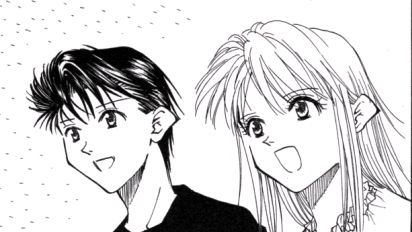
also betrays Japan’s conflicted identity, its longstanding feelings of superiority toward Asia and of inferiority toward the West. The Japanese characters in the book are drawn with big eyes, blond hair and Caucasian features; the Koreans are drawn with black hair, narrow eyes and very Asian features.
The response to this statement that Koreans and Japanese are drawn differently?
Actually, not every Japanese character is drawn with western features... Here are four major Japanese characters from the comic in the picture below... Two of them could maybe be westerners, but the other two could be nothing if not oriental. Three out of four of them have black hair. I will leave final judgement on the matter to the reader. (That picture is here).
Interesting. Let's make a comparison here. Let's say that it was said that in the comic, apples were all drawn to look fresh, but the oranges were drawn to look rotten. The rebuttal to this? "Not all of the apples look fresh. See? I leave it to your judgement." How can anyone judge when no one is shown any oranges?

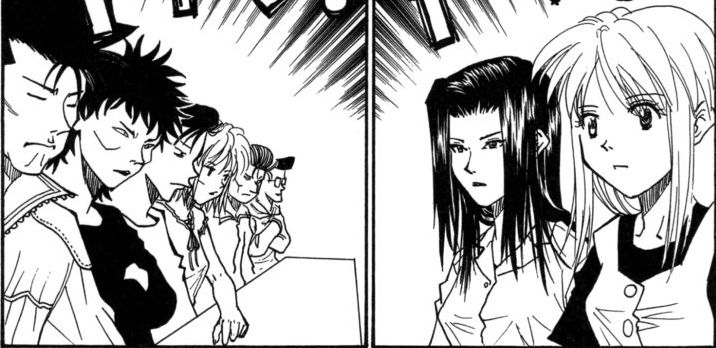
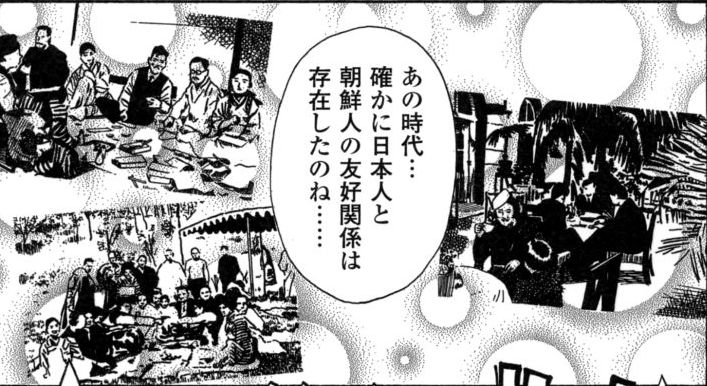
Of course, while withholding metaphorical oranges is a common tactic, and no oranges appear in that particular post, a pertinent picture was posted in the first Occidentalism post about Kenkanryu. Most of the characters are in the corners or at the bottom. Can you tell which of the four is Korean? In the picture below, it may be possible to discern which characters are meant to be perceived as Japanese and which are meant to be perceived as Korean:
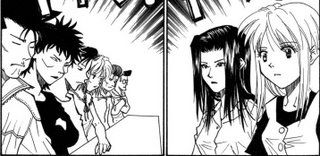

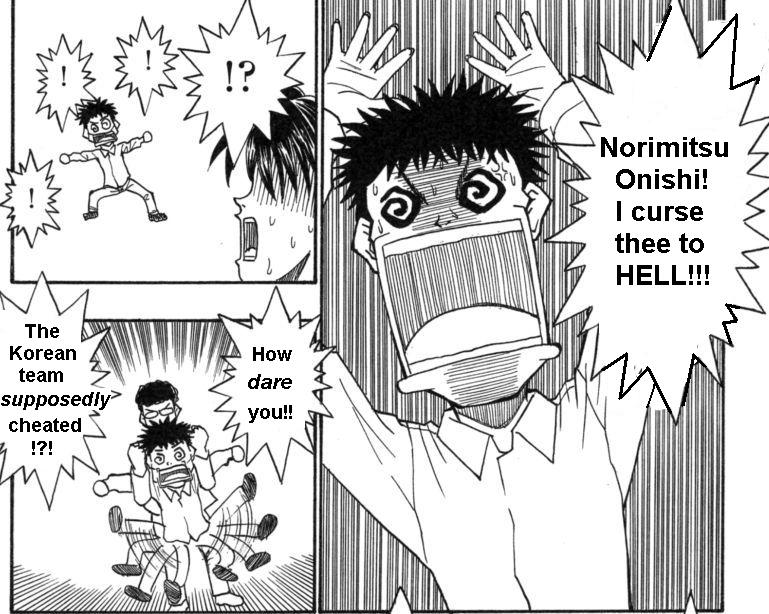
The distinction between Korean and Japanese may also be clear below, on the left (it may be worth pointing out that the Korean characters are basically depicted screaming, yelling, or crying whenever they appear - 73 out of 85 pages, by my unofficial count).
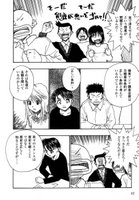
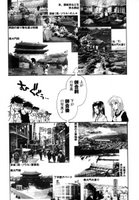
The page above on the right appears during the final debate near the end of the book. Much like the Annual Report on the Progress and Reforms in Korea, the English-language publication the Japanese began publishing in 1907 to promote its modernizing mission in Korea, this page consists of 'a "before and after" presentation offering explanitory, pictorial... evidence of changes Japan had made on the penninsula'.

If you look at the photos presented on that page, you may notice that some of them look... familiar. Out of the 12 photos displayed on that page, 7 of them appear in the Occidentalism post titled "The Japanese Administration of Korea". One of the photos in the panel below, which appears two pages earlier, also appears in that same post, while a link to another was posted in the comments to my post critiquing said Occidentalism post.
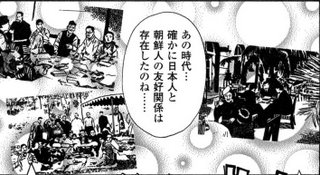
While this could be a coincidence (the Occidentalism post predates Kenkanryu by two weeks) one might begin to think that they are both drawing on similar sources. If you were thinking that these some of these sources might be Japanese Blogs, then "Inside the Japanese Blogosphere - The Anti-Korea Wave" over at Global Voices Online would be worth reading, as it provides both pertinent links and analysis. Looking at the comments to my previous posts, one often sees a collection of links to photos (with addresses like "www.geocities.jp/korean10lies") accompanied by "If ____ was true then how come this photo exists?", in lieu of a coherent argument or trying to put the photos in context. This suggests that there are a plethora of websites or blogs out there with collections of these photos (not that this is surprising, of course, as they can be found on either side of almost any debate). At these sites you can find media other than photos, such as flash videos. A number of these were posted at Occidentalism "proving" that the Korean team cheated [Edit: This should say 'advanced unfairly'] during the world cup. As a collection of accusations backed by photos and video clips devoid of any immediate context, they are (unintentionally) hilarious. Looked at in addition to the "The Japanese Administration of Korea" post over there and the use of the photos in Kenkanryu, it may be possible to notice a pattern. I leave it to the reader to decide.

At Occidentalism, however, these flash videos are accepted as nothing less than the truth, and when Onishi had the gall to write this -
It begins with a chapter on how South Korea’s soccer team supposedly cheated to advance in the 2002 Word Cup
- it didn't get a very good reaction:

Well, okay, it didn't happen exactly like that:
The comic reproduces actual incidents from the 2002 World Cup. The author of the article distorts this presentation by simply saying the comic accuses the Korean team of cheating.
I assume this opinion (ie. "actual incidents") comes from the fact that they are drawn from photos or video stills, which could never be faked, or more importantly, edited and taken out of context. At any rate, the most important aspect of Onishi's article will be discussed later; it suffices to say that it has nothing to do with how the Korean team supposedly cheated, or how the characters were drawn, even though his mention of these (as well as his "incorrect" understanding of the title) brought on this:
So who is the writer of the article? Judging from his name, ‘Norimitsu Onishi’, it would seem that he is Japanese, but I have my doubts about that. I would be willing to bet that he is actually an ethnic Korean.
Just as anyone who criticizes the war on terror is actually a terrorist. It gets better, though: "Norimitsu Onishi just doesnt hate Japan, he seems to hate the US too." What's funny about this is the fact that the historical revisionism that Kenkanryu is influenced by is quite anti-American, as we will see.

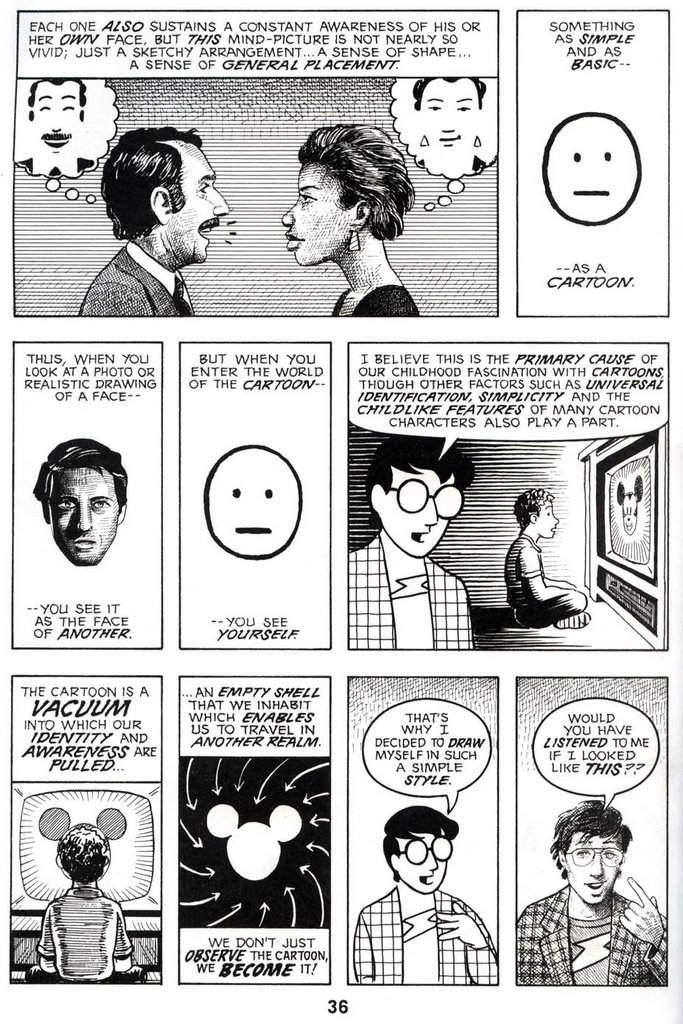
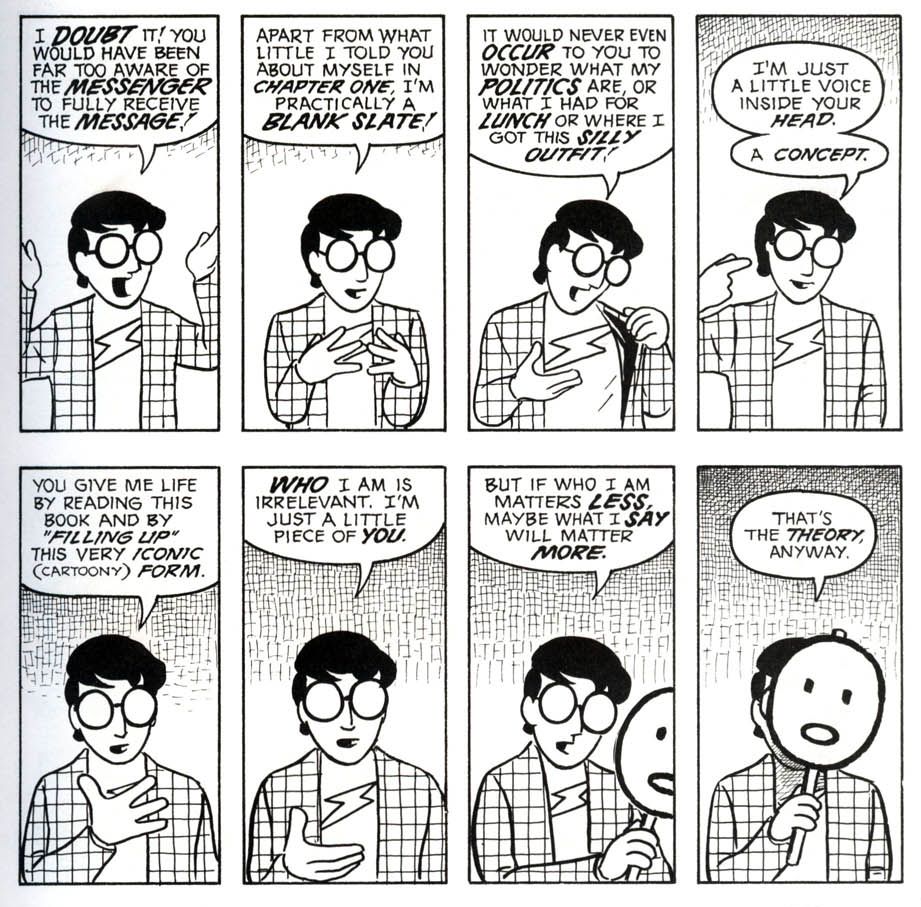
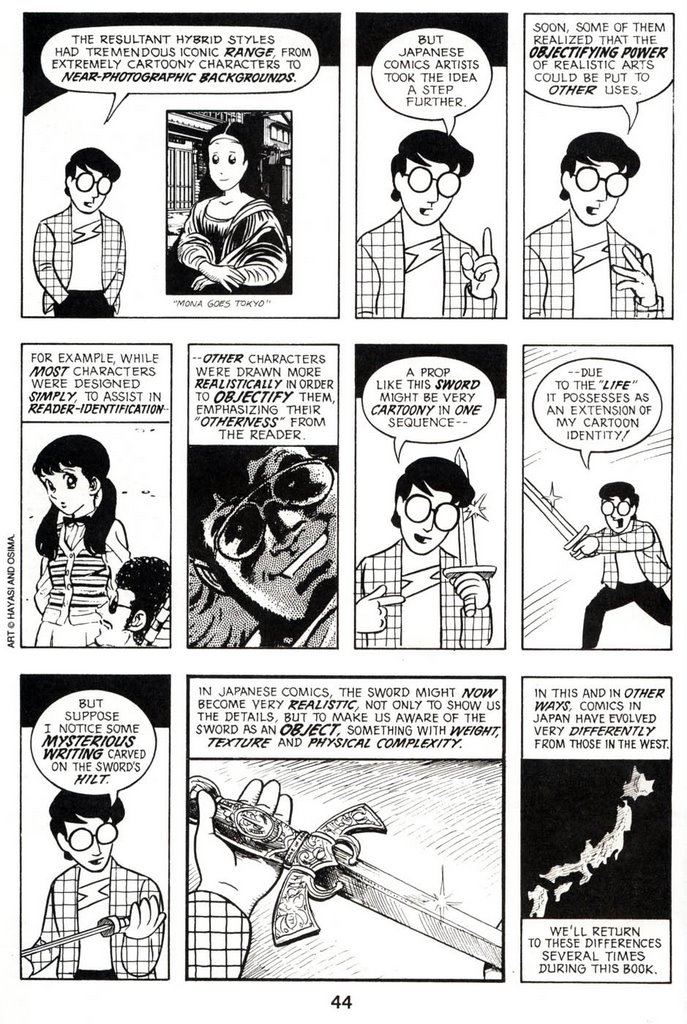
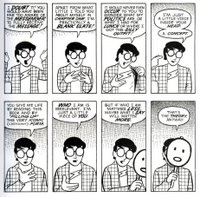
For a moment, though, let's return to how the Korean and Japanese characters were drawn. In Scott McCloud's excellent book Understanding Comics, he explains how the simplistic nature of cartoons (meaning the style of drawing, not the media of animation or comics) allows readers to identify with them in a way that is impossible with more detailed, objective drawings. Do read the three pertinent pages below for a detailed description.

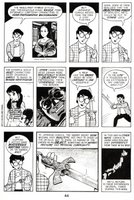


On the last page, left, he examines the use of 'masking', or using simply drawn cartoonish characters against detailed backgrounds. After examining it's use in different countries, he looks at its unique use in Japan.

The most important points he makes about the use of this technique in Japanese manga are shown below, and illustrated by panels from Kenkanryu:
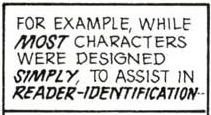
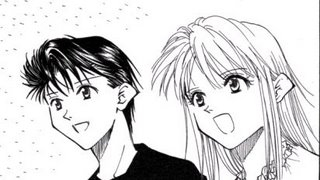

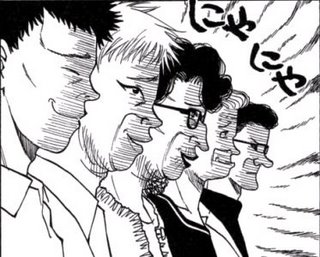


So, according to this critique, who is the reader supposed to identify with, and who is having their otherness emphasized? While it could be pointed out that this technique is used so often in Japan that artists may not be conscious of their use of it, in the chapter the above photo is taken from, there's no need to apply this critique, as the "other" characters are so ridiculously caricatured (they may not all be Korean; the Wikipedia article translates their description from the comic: "Alumni supporters of the Asian History Research Society who aim to topple the Far East Asia Research Society.[...] Their only identity lies in anti-Japanese activism." It's not clear what their ethnicity is, but whoever they are, the above critique is still pertinent).

Enough of the comic itself for a moment (and its supporters who defend it against criticism by misrepresenting its contents). With the help of Rebecca Clifford's 2004 essay Cleansing History, Cleansing Japan: Kobayashi Yoshinori’s Analects of War and Japan’s Revisionist Revival, we will look at how the currently best-known revisionists in Japan came together as part of a reaction to events which occurred in the early 1990s.
The end of the Liberal Democratic Party’s long-standing hegemony in the Diet opened up new opportunities to address the question of how the war is officially and publicly represented in Japan.
When Hosokawa Morihiro’s Japan New party won the 1993 election, ending 38 years of LDP rule, his admission that Japan had waged an “aggressive” war was the first time a prime minister had spoken publicly of the war in a negative light. His successor, Murayama Tomiichi, offered a public apology to the people of Asia for Japan’s actions during the war. “Against the backdrop of these events, the Liberal Historiography Study Group emerged as an oppositional force, repudiating apology and insisting on the primacy of the national cause.”

The Liberal Historiography Study Group was formed in 1995 by Tokyo university education professor Fujioka Nobukatsu. The group is best known abroad for its offshoot organization, the Japanese Society for History Textbook Reform, which was formed with the main goal of
removing references to Japanese war crimes from junior high school and high school history textbooks, [and which] vehemently attacked the Ministry of Education’s 1996 decision to allow references to ‘comfort women’ to be included in textbooks. The group has written it’s own textbook, New History of Japan, which was approved by the MoE in 2001 and became available for use in schools in April 2001. It underwent 137 mandatory revisions, however, an has not been adopted for use by more than a handful of local school boards.
Thus the Society for History Textbook Reform was formed by members of the Liberal Historiography Study Group in order to target the inclusion of 'inappropriate' topics in textbooks in 1996. The two most pertinent chapters of the New History Textbook can be found in English here, and more on the controversy can be found here and here.

Despite the notoriety of the textbook, “it is primarily [Liberal Historiography Study Group founder] Fujioka and member Kobayashi Yoshinori who have striven to create a broad public base for the group’s ideas.” Fujioka published History Not Taught In Textbooks in 1997, which, instead of making students think their history consisted of aggressive and immoral acts (leading to loss of pride and patriotic spirit), provided them with biographies of ‘great’ Japanese historical figures to present to them a history they could be proud of. Its two volumes were two of the top ten best-selling books that year.

The next year, in 1998, Kobayashi Yoshinori’s Senso-ron, or "Analects of War", (also known as "On War"), appeared, and became a huge hit, with its 3 volumes to date selling over a million copies.
Analects of War's central premise – that the history of World War Two must be recast in a positive light if Japan is to regain a sense of National Pride – is borrowed directly from Fujioka’s work.

He seeks not only a positive and positivistic re-evaluation of Japan’s reason’s for waging war, but aims to use this interpretation of Japan’s wartime history as a prism through which he can expose the defects in contemporary society.
He ties growing selfishness and listlessness amongst the younger generation, along with teen prostitution and the loss of masculinity amongst men, to the lack of anything to believe in, and this, of course, is due to the Americans - their peace constitution, their ‘victor’s justice’ sham of war crimes trials, and their censorship and propaganda which convinced the Japanese people that their war was not just and heroic. His feelings about American influence in Japan are also related here:
The Japanese are becoming more American. They dye their hair blond or put it in dreads and dance to this crazy black people's music. The way Michael Jackson dances is not the way Japanese people dance.
Clifford also compares notions of purity and pollution in the manga to themes found in wartime propaganda, and looks at how foreign, mostly American, influence is blamed for polluting Japan and causing its current social ills. America is also scapegoated for the Nanking Massacre:
One of the crimes invented by the judges at the Tokyo Trials was the Nanking Massacre. Since the Americans killed 300,000 people with the atomic bomb in Hiroshima and Nagasaki, they wanted to pin an equally heinous crime on the Japanese. … 300,000 people were massacred (in Japan): there weren’t even 200,000 people living in Nanking at the time. … There were 200 Nationalist Army guerillas hiding in the safety zone at Nanking, and they were the ones who committed the rape and murder in Nanking. Then they pretended that these crimes had been the doing of the Japanese army.
In addition to evading responsibility for Nanking, he calls for a re-evaluation of the Kamakaze pilots, and in "On Taiwan", regarding comfort women, took the position that
These women were already prostitutes and that "becoming comfort women was a step up for them, because they preferred military brothels to civilian brothels".
As to how Kobayashi argues his point, this review argues that
Kobayashi's manga stories employ a consistent technique. The main character appears to be Kobayashi based on his looks and views, and sometimes this character appears as a child. In each chapter he examines a particular issue related to war by first considering one side of a position. The main character then points out a few weaknesses and logical inconsistencies with this side of the issue, so he gets angry and concludes that the other side is correct after mentioning a few more pieces of evidence. This method of reasoning can easily lead to incorrect conclusions. For example, Kobayashi provides very convincing support in Chapter 11 of the forgery or misattribution of fifteen specific photos related to Japan's wartime atrocities and the Nanking massacre. Based on this persuasive but very limited evidence, he denies the historical accuracy of the 1937 Nanking massacre without addressing other overwhelming evidence related to the incident.
Fujioka Nobukatsu presents what are likely the same photos here (which was likely the uncredited source of Occidentalism's expose of 'misattributed' photos). As a strategy for 'arguing', attacking a statistic or photo or a single line in someone's opposing argument while ignoring the rest is a familiar technique. Having discussed "On War", authored by a member of Liberal Historiography Study Group (and arguably the best known advocate of the revisionist views it adheres to), it might be worth mentioning this again:
Sharin Yamano, the little-known manga artist who created "Kenkanryu,"[...] has gone on record as saying the work was inspired by ultra-nationalist comic writer Yoshinori Kobayashi.
Not only was he inspired by Kobayashi, and his 'argument' or 'debate' style of putting forward a certain point of view, and not only is the organization that the protagonists in Kenkanryu belong to named the "Far East Asia Research Society" (shades of the Liberal Historiography Study Group?), but there is also something rather interesting that appeared in the aforementioned Norimitsu Onishi NYT article:
Kanji Nishio, a scholar of German literature, is honorary chairman of the Japanese Society for History Textbook Reform, the nationalist organization that has pushed to have references to the country's wartime atrocities eliminated from junior high school textbooks.

Mr. Nishio is blunt about how Japan should deal with its neighbors, saying nothing has changed since 1885, when one of modern Japan's most influential intellectuals, Yukichi Fukuzawa, said Japan should emulate the advanced nations of the West and leave Asia by dissociating itself from its backward neighbors, especially China and Korea.

"I wonder why they haven't grown up at all," Mr. Nishio said. "They don't change. I wonder why China and Korea haven't learned anything."

Mr. Nishio, who wrote a chapter in the comic book about South Korea, said Japan should try to cut itself off from China and South Korea, as Fukuzawa advocated. "Currently we cannot ignore South Korea and China," Mr. Nishio said. "Economically, it's difficult. But in our hearts, psychologically, we should remain composed and keep that attitude." [emphasis added]
Not only do we have Kenkanryu's author influenced by the style and content of a revisionist comic drawn by a member of the Liberal Historiography Study Group, we also have the honorary chairman of the Japanese Society for History Textbook Reform contributing an article to the comic. There are, in fact, four (relatively) lengthy written articles to be found in the pages of Kenkanryu:

"Those Poor People Who Cannot See Outside", a 5 page article by Kanji Nishio (whose writing - some in English - can be found here)
"South Korea and the Anti-Japanese Media", a 4 page article by Koyu Nishimura, described as a 'publicist'.
"Masochism and the Hate Korea Wave - Considering the Hate Korea Kitchens", a 7 page article by Takahiro Otsuki, a professor who was a member of textbook society when it was formed.
"What is the Takeshima Issue?", a 7 page article by Masao Shimojo, a professor who wrote the 2004 book To which Country Does Takeshima Belong, Japan or South Korea? An article he wrote about the Liancourt Rocks is translated here.

A comic which compiles pieces by writers such as these, with links to the organizations best known for pushing the historical revisionist agenda, should likely not be seen as an amateur hatchet job. Its impressive sales, however, (450,000 at this point) may in fact be due to its pedigree. On War's 3 volumes have sold anywhere from 1 million to 1.5 million copies, depending on what you read, but the sales of each of its volumes are likely quite similar to Kenkanryu's sales. They likely share similar audiences, or to put it another way, Kenkanryu may be preaching to the converted. It may be worthwhile, however, to take a look at what is being preached.

Though this November, 2005 article mistakenly portrays Kenkanryu as 'spawning' a new genre (when one of the 'followers' is a manga by Kobayashi (!)), it still has some rather interesting points to make:
The controversial manga (comic) has sold more than 360,000 copies in three months, and spawned a new genre of fiercely polemical comics lamenting Japan’s “weakness” in dealing with regional disputes.

KenKanRyu (Hating the Korean Boom) has been joined on the shelves of Japan’s mainstream bookstores by Chugoku Nyumon (Introducing China) and Yasukuni Shrine [by Kobayashi]...

Yasukuni Shrine lashes out at the “sickness” of a Japanese public that would succumb to Chinese and South Korean pressure by dismantling the monument which honours war criminals with the rest of the war dead.
In another article, it is said that in Kenkanryu, "The Japanese student accuses his country's leaders of kowtowing to Korean protests", while in this article, Masao Shimojo, who wrote the article in Kenkanryu about the Liancourt Rocks, is quoted as saying "Japan [...] never asserts itself at all, preferring the principle of peace at any price. In other words, South Korea's anti-Japanese attitude is being propagated by Japan itself."

Words like "sickness" and "weak" are rather interesting. Does anyone find it strange that these people are using arguments against their own society that are similar to those used against Korea 100 years ago to justify colonizing it? It's by no means entirely the same, but the arguments made against Korea, that it was too corrupt and weak to help itself, sound rather similar to what Kobayashi was described as railing against in On War. Comparing the Japanese view of China and its relationship to Korea at the time of the Sino-Japanese War also turns up interesting results. As correspondent James Creelman described it, "Japan emancipated the helpless Corean nation from the centuried despotism of China". Now it is Japan, the revisionists argue, who must be rescued from American influence, as well as from the pressure to "kowtow" to its neighbours (as Korea was "emancipated" from having to kowtow to China). It's also worth mentioning that when considering “factors contributing to Japan's victory” in that war, the New Textbook says “just as important was awareness on the part of the Japanese that they were now one people and citizens of a united nation." It is interesting that Creelman had the same thing to say about the war:
In considering the astonishing result of the war between Japan and China, it is important to remember that the most decisive elements in the struggle were the presence of a passionate national sentiment on the one side, and the almost complete absence of patriotism on the other side.
As Rebecca Clifford's essay above makes clear, Kobayashi sees the lack of patriotism as one of Japan's greatest problems (mostly stemming from how America restructured Japan after the war and from viewing Japan's actions in World War II as criminal). In linking it to the listnessless and emptiness of life in contemporary Japan (something dealt with, along with these manga, in this relevant blog post), he seems to echo Army Minister Anami Korechika, who, as the debate raged over whether to surrender on August 9, 1945, predicted that "If we go on like this and surrender, the Yamato race would be as good as dead spiritually.” Korechika is echoed in even odder places, however:
Tora, Tora, Tora! Pearl Harbour was our only choice. Our race was corrupted from the day we lost the war..." Karin Amamiya, lead singer of ultra-nationalist hardcore punk band The Revolutionary Truth looms centre stage, barking out aggressive but heartfelt anti-American sentiments to a dwindling audience....

[During a trip to North Korea] she is markedly struck by the way that the North Koreans are bound together by a common value system "Words such as solidarity touched my heart as a nationalist". In contrast, she sees the only shared values the Japanese possess is via consumerism and value systems imposed from outside. "The Japanese can't make friends. Only cut their wrists and call sex lines."

It is statements such as these that throw light on where Amamiya is coming from in her politics. At numerous points in the film she confesses that a troubled upbringing and 9 years of bullying at the hands of her school classmates left her feeling an outsider. Nationalism provided a channel for her feelings of ostracism and self-loathing. Similarly, in an unguarded moment, [guitarist/band-leader Hidehito] Itoh confesses he embraced nationalism to stop being a nerd. "When did you force these two ideas, 'to stop being a nerd', and 'anti-America' together?", asks [filmmaker Yutaka] Tsuchiya. "Well, after joining the Nationalists, actually", Itoh capitulates.
The passages above are quoted from a review of Yutaka Tsuchiya's documentary on the band, The New God. He said in an interview that what motivated him to make the documentary was that "I really wanted to think about why [Kobayashi's On War] sold those half a million copies." He goes on to discuss "endless mundanity" and the "lack of connection to society", subjects portrayed quite often by Japanese filmmakers like Shinji Aoyama, Hideaki Anno, Shunji Iwai (in All About Lily Chou Chou, at least) and perhaps my favourite, Akihiko Shiota (Harmful Insect and Canary being standouts). Another that could be included would be Kinji Fukasaku, who talked about how people of his generation longed for the freedom of the 'black market' era that followed Japan's defeat, and who railed against the utterly corrupt nature of Japan Inc. One of the most memorable images in 1972's Under the Flag of the Rising Sun is of the mushroom cloud over Hiroshima, which then cuts to downtown Tokyo, with its traffic and overpasses and neon, making, to a degree, the same connection that Kobayashi does. This film, however, stands in complete opposition to On War, as its most memorable line, uttered by a woman trying to find out why her husband was executed, reveals:
The government didn't ask anybody's permission to start the war. But we're the ones stuck paying for all of it.
It is voices such as hers that the revisionists would like to pre-empt, by portraying that war, and the Japan which fought it, in the best light possible. I find it rather ironic, however, that in order to paint Imperial Japan in a better light, contemporary Japan is portrayed by the revisionists as Korea and Japan were 100 years ago - as sick, weak, and lacking strong national sentiment - even as comics like Kenkanryu do their best to attack contemporary Korea and China today.


Postscript:

Of course, a Korean response to Kenkanryu, named Hyeomilryu (or Hate the Japanese Wave) was a surprise to no one - it was the fact that it was so utterly abyssmal that shocked people. Occidentalism had a field day with it, (and rightly so) posting translations of several pages (something that was not done to the same degree with Kenkanryu, oddly enough). As related in these articles (here and here), South Koreans weren't very impressed. Hyeomilryu, written by Yang Byeong-seol, hasn't exactly sold very well either:
Manga Hate South Korea has sold 450,000 copies. As for Manga Hate Japan, "I couldn't find a publisher, so I started a company and printed up 3,000 copies at my own expense," Yang reportedly told an unidentified journalist Asahi Geino speaks to. "It sells not too badly. I myself took it around to the major book shops, who agreed to stock it."
It should be pointed out, however, that the Hyeomilryu announced several months ago, which was to be written by Kim Seong-mo, is not the one that was released recently. The aforementioned Wikipedia entry explains further:
However, another Hyeomilryu by a not well known cartoonist Yang ByungSul had been already published. Hyeomilryu by Yang ByungSul however has been greatly criticized by many fellow Korean media and readers for not being logical enough to be an answer to Kenkanryu. The cartoonist in an interview admitted that his book was not supposed to be a professionally written article, but it's something he published with his own money as a emotional outcry toward Kenkanryu.
The fault may lie in either of them thinking that there's much point in attempting to reply to it at all. I have to wonder how many Koreans have read the 'fansubbed' version I have, just as I'd wonder who in Japan would bother to read a Korean response, especially when Kenkanryu 2 has already been published.

Friday, March 24, 2006

Japan's Historical Cultivation of Foreign Apologists

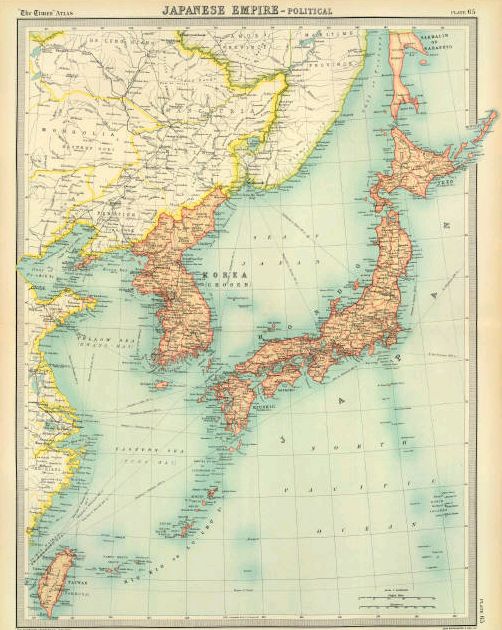
After Japan's surprising victory over China in 1895, France, Germany, and Russia forced Japan to give up the Liaodong penninsula. Despite Japan's victory, these European powers had little respect for her as a rising 'imperial' power, and most certainly did not want her moving into Chinese territory. But by 1922, when the above map was published in The Times Atlas, titled The Japanese Empire, she had beaten Russia and gotten the Liaodong penninsula back, was recognized as having an 'Empire', and had even managed to get the western powers to acquiesce to the annexation of Korea. How did it happen? One important factor is discussed in Korea's Fight For Freedom (1920), where F.A. McKenzie wrote this of Japan's actions in the years immediately prior to Korea's annexation:
They had carefully organized their claque in Europe and America, especially in America. They engaged the services of a group of paid agents--some of them holding highly responsible positions--to sing their praises and advocate their cause. They enlisted others by more subtle means, delicate flattery and social ambition. They taught diplomats and consular officials, especially of Great Britain and America, that it was a bad thing to become a persona non grata to Tokyo. They were backed by a number of people, who were sincerely won over by the finer sides of the Japanese character. In diplomatic and social intrigue, the Japanese make the rest of the world look as children. They used their forces not merely to laud themselves, but to promote the belief that the Koreans were an exhausted and good-for-nothing race.
Or as a comment on my last post described Korea at that time, "a country filled with a deep spiritual and physical sickness."

One of the more interesting examples of a contemporary foreign apologist for Japan's designs on Korea was George Trumbull Ladd, who wrote In Korea with Marquis Ito, published in 1908. A fascinating review of this book can be found in Scott Burgeson's book Korea Bug. Needless to say, his review of In Korea with Marquis Ito, which considers both the 'vitriol' with which he wrote as well as some of the hard lessons Koreans could take from it, is nowhere near as dismissive of the book as the 2001 Korean Herald review which first made me aware of it (here; ok, that's autotranslated from French, but you'll get the idea). Long out of print, it has actually very recently been reprinted, if anyone is interested).

The rising sun eclipses the taeguk.
Scanned from Korea Bug.


At any rate, after undertaking a great deal of pioneering research in the field of psychology, and retiring from Yale, Ladd and his wife made their third trip to Japan in 1906. On the first page of his book, Ladd tells two stories related to the Russo-Japanese War he heard while en route to Japan, and explains why he's telling them:
...they are repeated here because they illustrate the code of honor whose spirit so generally pervaded the army and navy of Japan during their contest with their formidable enemy. It is in reliance on the triumph of this code that those who know the nation best are hopeful of its ability to overcome the difficulties which are being encountered in the effort to establish a condition favorable to safety, peace, and prosperity by a Japanese protectorate over Korea.
While the first page alone already gives the reader a pretty clear idea of how he feels about Japan regarding its relationship with Korea (in fact, Burgeson characterizes the book as "an answer in search of a question, one in which the author's mind about his subject has been fixed at the outset, and refuses to open itself to any changes or new discoveries."), he goes on to explain that while he had planned to lecture on philosopy and psychology, as he had done on his previous trips in 1892 and 1899,
The thought of seeing something of the "Hermit Kingdom" (a title, by the way, no longer appropriate) had been in our minds before leaving America, only as a somewhat remote possibility. Not long after our arrival in Japan the hint was several times given by an intimate friend, who is also in the confidence of Marquis Ito, that the latter intended, on his return in mid-winter from Seoul, to invite us to be his guests in his Korean residence.
At a garden party, Ladd finally meets Ito:
After an exchange of friendly greetings almost immediately the Marquis said: 'I am expecting to see you in my own land, which is now Korea'; and when I jestingly asked, 'But is it safe to be in Korea?' (implying some fear of Russian invasion under his protectorate) he shook his fist playfully in the air and answered: 'But I will protect you.'
Later, Ladd recounts a private meeting with Ito:
I was to feel quite independent as to my plans and movements in co-operating with him to raise out of their present, and indeed historical, low condition the unfortunate Koreans. In all manners affecting the home policy of his government as Resident General, he was now a Korean himself; he was primarily interested in the welfare, educationally and economically, of these thirteen or fourteen millions of wretched people who had been so long and so badly misgoverned. In their wish to remain independent, he sympathized with them. The wish was natural and proper; indeed, one would be compelled to think less highly of them, if they did not have and show this wish. As to foreign relations, and as to those Koreans who were plotting with foreigners against the Japanese, his attitude was of neccessity entirely different.[...] Japan was henceforth bound to protect herself and the Koreans against the domination of foreign nations who cared only to exploit the country in their own selfish interests or to the injury of the Japanese.
Ito puts the best spin possible on Japan's reasons for wanting to swallow Korea, and this, Burgeson writes, is essentially the main argument of the book. Ladd goes on to write disparagingly of Korea's history (as told to him by the Japanese) and largely sees Korea and Koreans as being dirty, backward, and in need of Japanese tutelage. In his description of the king, he said:
His face wore a pleasant smile with which he is said to greet all foreigners... although it's asthetical effect is somewhat hindered by a bad set of teeth.
Later, when he dismissed as a forgery a document shown to him by Koreans which supposedly illustrated Japan's plans to annex Korea, he wrote:
The silliness of mind, the almost hopeless and incurable credulity and absolute absence of sound judgement which characterizes, with exceedingly few exceptions, the political views and actions of even the official and educated class in Korea, was the impression made upon me by this, as by all my experiences during my stay in the land.
It's interesting how, when I reread this review the other day, some of Ladd's phrases seemed very familiar, mainly because I had just read the four chapters pertaining to Korea in James Creelman's 1901 book On the Great Highway, (shades of Hunter S. Thompson?) which recount his experiences covering the 1894-1895 Sino-Japanese war. Creelman was, to use a modern term, embedded in the Japanese army along with other journalists like Frederic Villiers.

[Edit] Foreign correspondents with the Japanese Army.
Detail of Japanese woodcut taken from this page.

If this was essentially the message Japan was trying to project in 1906 -
Japan was henceforth bound to protect herself and the Koreans against the domination of foreign nations who cared only to exploit the country in their own selfish interests or to the injury of the Japanese [as Japan wanted only to] raise [the Koreans] out of their present, and indeed historical, low condition.
- then the following basically sums up the way they wanted their war against China over Korea spun in 1894:
The armies of Asiatic barbarism and Asiatic civilization met on this ground to fight the first great battle of the war that ended in the fall of Wei-Hai-Wei and Port Arthur; and here Japan emancipated the helpless Corean nation from the centuried despotism of China.
The book covers the war from the mid-September battle for Pyongyang to the late November battle of Port Arthur. In those two months, he would have constantly been receiving the Japanese line on the war and their reasons for waging it. Just how close he was to the Japanese officers whose campaigns he was recording, and how important his reporting was for them is illustrated here:
That night, on my way back to Ping Yang, I found the main Japanese fleet at the mouth of the Tai-Tong River. Admiral Ito had defeated the Chinese fleet, and had just fallen back on the Corean coast for repairs and ammunition. It was a great opportunity for a war correspondent. No other newspaper man had reached the victorious fleet, and fortune had given to me the first story of the most important naval fight of modern times -- the battle of the Yalu.

When I boarded the flagship Hashidate, Admiral Ito was asleep, but he dressed himself and sent for his fleet captains in order to help me out with the details of the conflict.

As the Japanese admiral sat at his table, surrounded by his officers, with the rude charts of the battle spread out before him, he looked like a sea-commander -- tall, eagle-eyed, square-jawed, with a sabre scar furrowed across his broad forehead; a close-mouthed man whose coat was always buttoned to his chin. Bending over the maps and smoothing out the paper with his sinewy, big-knuckled hands, the lamp-light gleaming against his powerful face, he was a man not easily forgotten.

And when the tale of that thrilling struggle on the Yellow Sea was over, the admiral turned to me smilingly.

"It is a big piece of news for you," he said.

"Yes," I answered, "but I have received a still greater piece of news."

Then I drew from my pocket the cablegram announcing the birth of my boy, and read it.

"Good!" cried the admiral. "We will celebrate the event. Steward, bring champagne!"

Standing in a circle, the admiral and his captains clinked their glasses together and drank the health of my little son.
Later he tells us that "There was nothing to eat in the little house where I slept, but the field-marshal sent me a bottle of Burgundy." The good impression the Japanese made on him was able, several years later, to overcome the fact that he witnessed this:
"I saw a man who was kneeling to the troops and begging for mercy pinned to the ground with a bayonet while his head was hacked off with a sword...An old man on his knees in the street was cut almost in two...

"All day the troops kept dragging frightened men out of their houses and shooting them or cutting them to pieces...All through the the second day the reign of murder continued. Hundreds and hundreds were killed. Out on one road alone there were 227 corpses...

"Next day I went...to see a court-yard filled with mutilated corpses. As we entered we surprised two soldiers bending over one of the bodies. One had a knife in his hand. They had ripped open the corpse and were cutting the heart out. When they saw us they cowered and tried to hide their faces.

"I am satisfied that not more than one hundred Chinamen were killed in fair battle at Port Arthur, and that a least 2000 unarmed men were put to death. It may be called the natural result of the fury of troops who have seen the mutilated bodies of their comrades, or it may be called retaliation, but no civilized nation could be capable of the atrocities I witnessed at Port Arthur."
Frederic Villiers' account of the Port Arthur massacre can be found here. The Japanese version of events can be found here, while the outcome for Creelman, personally, is recounted to his wife Alice in a December 21, 1894 letter from Yokohama:
I am now the general target for abuse in Japan simply because I have told the truth about Port Arthur. I knew in advance that to lay the naked facts before the public would mean the instant activity of the vast enginery of abuse maintained by the Japanese government and so I considered my duty call. I could not as a reputable journalist nor as an American attempt to conceal any fact of the great crime. It was too monstrous, too cold, too long continued.....[emphasis added]
Less than a decade later, despite witnessing such a 'great crime', and becoming a 'target for abuse' for revealing it, he was able to write
Whatever I may have written of that three days' slaughter at a time when Japan was seeking admission to the family of civilized nations, it is only just to say that the massacre at Port Arthur was the only lapse of the Japanese from the usages of humane warfare. A witness for civilization, I could not remain silent in the presence of such a crime. The humanity and self-control of the Japanese soldiery during the historic march of the allied nations to Peking, seven years later have redeemed Japan in the eyes of history. The Japanese have demonstrated to the world that their civilization is substantial.
Creelman, despite the fact that he thought so much of Japan, did not see Korea in quite the same way Ladd did.
The traveller in Corea is bewildered by the effects of three thousand years of hermit life upon this strange people. They are not savages. Thirty centuries of civilization are set down in their literature. Nowhere else in the world have I seen such magnificent specimens of physical manhood. The ordinary European is a pygmy among the tall, straight, powerful Coreans. An indescribable gravity and dignity of manner lends itself to the impressive grace and strength and the noble features of this ancient race. As the men become old they grow long beards, which add to their naturally majestic bearing.
Yet the Coreans are the emptiest-headed, most childlike, and most generally foolish people among civilized nations. They are the grown-up children of Asia. Their ignorance is not like the ignorance of Central Africa. Hundreds of years ago, they inspired Japan with the love of art, and their literature is as old as Egypt. They are gentle and meditative. Throughout the Corean peninsula, stately quotations from the noblest Chinese odes are painted on the public buildings, in the quaint summer pagodas, and on the walls of dwelling houses. Their very battle flags are inscribed with philosophic sayings. But the Coreans are drugged with abstract scholasticism and demonology. They are credulous almost beyond belief.
Creelman's descriptions of Korean reasoning, or lack thereof - "emptiest-headed, most childlike, and most generally foolish people"; "credulous" - sounds very similar to what Ladd would write over a decade later: "The silliness of mind, the almost hopeless and incurable credulity and absolute absence of sound judgement..." Just in case one were to think this was the common perception at the time, Isabella Bird Bishop had this to say:
The Koreans certainly are a handsome race... Mentally the Koreans are liberally endowed... The foreign teachers bear willing testimony to their mental adroitness and quickness of perception, and their talent for the acquisition of languages, which they speak more fluently and with a far better accent than either the Chinese or Japanese. They have the Oriental vices of suspicion, cunning, and untruthfulness.
Bishop's opinion of Korean mental ablilities is different, but shares in common with Creelman an appreciation for Koreans physically - "a handsome race"; and "magnificent specimens of physical manhood", respectively (though it goes without saying Creelman presents almost every story or observation with a rather dramatic flair). Creelman and Ladd also differed on their opinions of the King of Korea. Creelman presents the reader with this description:
He stood behind a table, in front of a gaudily upholstered European chair, with his small, nervous hands crossed lightly over his ceinture, -- a slender, shy man, with an oval face, thin, silky mustache and chin beard, a kind, voluptuous mouth, and soft, dark eyes. He had the eyes of a beautiful girl. When he smiled he hung his head on one side, half closed his eyes, looked straight at us, and opened them slowly with the expression of a bashful woman.
Ladd wasn't as appreciative:
His face wore a pleasant smile with which he is said to greet all foreigners... although it's asthetical effect is somewhat hindered by a bad set of teeth.
Ladd saw Korea as dirty and feared getting sick; Creelman, while describing Chemulpo (Incheon) as dirty, described Seoul as "the picturesque capital of Corea", at odds with Bishop's description of Seoul only a few months earlier.

One has to wonder at the difference (and similitarities) in these men's view of Korea, and what it is attributable too. One could certainly speculate about the strength of their characters and their abilities to think for themselves instead of believing uncritically what the Japanese were spoon-feeding them; in that case the principled war correspondent would seem to have been better able to think for himself than the retired academic who acted as an English-language conduit for the views of the powerful men who were wooing him. While this interpretation may have merit, more likely it was the difference in the messages the Japanese were feeding these men.

During the Sino-Japanese War, Creelman spoke of the meeting of the "armies of Asiatic barbarism and Asiatic civilization". The Chinese were to be made to look semi-barbaric (a task made easier by the behavior of their troops), while the Japanese were to be portrayed as a member of the family of civilized nations. Much of this was due to the desire on Japan's part to be taken seriously by the west (with insecurity playing a role) , and so their troops were generally very well behaved throughout the campaign - at least in front of the foreign correspondents. Creelman, travelling by ship to Manchuria, wouldn't have seen the behavior of the Japanese troops who occupied Pyongyang after their victory there:
15,000 - four-fifths of its houses destroyed, streets and alleys choked with ruins... Everywhere there were the same scenes, miles of them... Phyongyang was not taken by assault ; there was no actual fighting in the city...

When the Japanese entered and found that the larger part of the population had fled, the soldiers tore out the posts and woodwork, and often used the roofs also for fuel, or lighted fires on house floors, leaving them burning, when the houses took fire and perished. They looted property left by the fugitives during three weeks after the battle... Under these circumstances the prosperity of the most prosperous city in Korea was destroyed.
While this is certainly not comparable to the atrocities that took place in Port Arthur, leaving a city of 80,000 in ruins is not something I would call very civilized. Beyond portraying themselves as polite warriors fighting barbarians, the Japanese further wanted to be seen as "emancipat[ing] the helpless Corean nation from the centuried despotism of China." In order to make the Koreans seem, indeed, helpless, one would think they would have to be made to seem incompetent or even stupid, which is how Creelman portrays them. That's how Ladd portrays them as well, though Creelman still has nice things to say about Korean civilization, history, and physical appearance.

By the time Ladd came to Korea, however, Japan, having beaten rival Russia, was taking great "effort to establish a condition favorable to safety, peace, and prosperity" for itself in Korea. In order to seem justified in this, their 'code of honor' and civilization had to be emphasized. They had to seem as though they were trying to "raise out of their present, and indeed historical, low condition the unfortunate Koreans." Now the Koreans' 'wretchedness' and 'low condition' had to be made to seem historical, and that only the civilized Japanese could aid them. There could be no more mentions of "Thirty centuries of civilization", or of their "indescribable gravity and dignity of manner", or "impressive grace" and certainly nothing like "Hundreds of years ago, they inspired Japan with the love of art". All of that had to go. As F.A. McKenzie said above, they had "to promote the belief that the Koreans were an exhausted and good-for-nothing race."

Ladd was more than up to the task. His disparaging view of Korea was no doubt coloured by the Japanese guides who explained the country's history and culture (or lack thereof) to him. As F.A. McKenzie wrote in The Tragedy of Korea (1908):
One distinguished foreigner, who returned home and wrote a book largely given up to laudation of the Japanese and contemptuous abuse of the Koreans, admitted that he had never, during his journey, had any contact with Koreans save those his Japanese guides brought to him. Some foreign journalists were blinded the same way.
The opening of Korea's Fight For Freedom essentially consists of character references giving support to McKenzie; they also illustrate how Japan celebrated the foreigners who lauded them, and attacked those who criticized them.
"Mr. F.A. McKenzie has been abused in the columns of the Japanese press_ with a violence which, in the absence of any reasoned controversy, indicated a last resource... It is difficult to see how Mr. McKenzie's sincerity could be called into question, for he, too, like many other critics of the new Administration, was once a warm friend and supporter of Japan.

"In those days, his contributions were quoted at great length in the newspapers of Tokyo, while the editorial columns expressed their appreciation of his marked capacity. So soon, however, as he found fault with the conditions prevailing in Korea, he was contemptuously termed a 'yellow journalist' and a 'sensation monger.'"--From "Empires of the Far East" by F. Lancelot Lawson.

"Mr. McKenzie was perhaps the only foreigner outside the ranks of missionaries who ever took the trouble to elude the vigilance of the Japanese, escape from Seoul into the interior, and there see with his own eyes what the Japanese were really doing. And yet when men of this kind... have the presumption to tell the world that all is not well in Korea, and that the Japanese cannot be acquitted of guilt in this context, grave pundits in Tokyo, London and New York gravely rebuke them for following their own senses in preference to the official returns of the Residency General. It is a poor joke at the best! Nor is it the symptom of a powerful cause that the failure of the Japanese authorities to 'pacify' the interior is ascribed to 'anti-Japanese' writers like Mr. McKenzie."--From "Peace and War in the Far East," by E.J. Harrison. [emphasis added]
And what were these 'official returns' of the Residency General? Andre Schmid's Korea Between Empires, 1895-1919 gives a description:
...the colonial authorities sought to disseminate to the West the rationale for their growing Asian empire... To this end, an elaborate propaganda campaign was launched by the Resident General Office and, after 1910, continued by the Governor General Office. For a Japanese-speaking colonial administration seeking to gain the West's support for its endeavors in Korea, this plunged the office into the task of preparing foreign-language materials about its endeavors. It's premier series, begun in 1907, was a glossy yearbook written in English entitled Annual Report on the Progress and Reforms in Korea, a less than subtle promotion of colonialism. During the first decade of publication, the yearbooks' format was a "before and after" presentation offering explanitory, pictorial, and statistical evidence of changes Japan had made on the penninsula since establishing the Protectorate. This approach could be applied to almost any topic, from hygiene to road systems, with the contrast achieved through the judicious choice of adjectives. Accordingly, the penninsula's financial condition before annexation was in the "wildest confusion," and expenditures were "wasted to no purpose". But after Japan's reforms, the foundation of Korea's finances was "firmer," and details of how these achievements had been accomplished were buttressed by reams of statistics. This contrastive effect was also captured in photographs, as in the case of two pictures of the Han River south of Seoul. A photograph of a bridge built under the new Japanese administration was placed next to a second photograph showing a few boats moving back and forth across the river, labeled "before the construction of the Iron Bridge."[emphasis added]
A less than subtle, comparative, 'before and after' format using photos and phrases like "wildest confusion" (which in today's parlance might be "basket case")? I wonder if, when the Japanese developed this format for their propaganda purposes, they realized it might also be useful for justifying their colonial adventure long after the fact?

When I read of Japan's elaborate propaganda effort aimed at convincing the West that the Koreans were in need of Japan's aid, and that Japan, as a selfless, civilized country was trying only to help their neighbour, and that it was cataloguing the ways in which it was, in fact, modernizing Korea, I couldn't help but think of this passage in "Korea's Fight For Freedom":
Then Japan sought to make the land a show place. Elaborate public buildings were erected, railroads opened, state maintained, far in excess of the economic strength of the nation. To pay for extravagant improvements, taxation and personal service were made to bear heavily on the people. Many of the improvements were of no possible service to the Koreans themselves. They were made to benefit Japanese or to impress strangers. And the officials forgot that even subject peoples have ideals and souls. They sought to force loyalty, to beat it into children with the stick and drill it into men by gruelling experiences in prison cells. Then they were amazed that they had bred rebels. They sought to wipe out Korean culture, and then were aggrieved because Koreans would not take kindly to Japanese learning. They treated the Koreans with open contempt, and then wondered that they did not love them.

Monday, March 13, 2006

Badly Defended Apologist Views

Regarding the above picture from this post, this comment was posted:
That picture was taken after the Japanese forced modernization on Korea after taking over, and also made the Koreans take care of their cultural heritage.
That picture was also taken before the USAF forced urban renewal upon 69 Japanese cities in the spring and summer of 1945, just to help everyone place it in within a certain time period.

The commenter also left a link to a post about how much good Japan did for Korea between 1910-1945, at a blog called Occidentalism. What follows is my response to a few of the assertions made in the post, as commenting on the post at the blog is no longer possible.

Before you read the post, however, you may want to read Andrei Lankov's brief outline of the colonial period; and you especially should read Plunge's well-written piece about the contribution Japan made to Korea's economic growth (or lack thereof), as the linked-to post seems to have Plunge's piece in its sights. Plunge argues, among other things, that Korea was well on it's way to developing with the aid of many western nations, and that Japan in fact derailed that development to institute its own form of modernization.

Our commenter, in his post, later refers to Plunge's writing as "a flurry of wild assertions and unforgivable deception by omission," which, ironically, is a very good description of his own writing.

If you look at the top of his post, you'll be treated to a photo of a rather pathetic looking Korean person, followed by this caption:

This was the true state of Koreans in the Choson Era.

I'm impressed he found one photo to sum up every aspect of life in Korea over a 500 year period. I can do that too.


How happy they all look, even though they're hard at work. Of course, I'd have to be lacking in critical thinking abilities to make a sweeping statement about this photo, saying that it represented the lot of all Koreans at that time. Percival Lowell, an American who came to Korea in 1883 and served as the counselor and foreign secretary to the 1883 Special Mission from Korea to the United States, lived in Korea for months after his return and wrote the book Choson: Land of the Morning Calm (1886). He also took numerous photos, and to look at these dozens of photos (here; click' search') taken by one of the first westerners to arrive in the country, before the results of early modernization began to be seen a decade later, one might get the idea that Korea was not quite as terrible as our commenter would have it (and though I wouldn't call his photos representative of what all of Korea was like at the time, they provide a broader look at the subject than the single photo of what appears to be a beggar/laborer/slave in the Occidentalism post).

At any rate, he goes on to ridicule Korean medicine (or rather shamanistic rituals), and lauds the Japanese for introducing modern medicine to Korea, when it was actually introduced by Christian missionaries. The first medical school was opened in Seoul in 1886, and by the turn of the century Severance Hospital Medical School was opened, with the first trained doctors graduated from Severance in June 1908 (Severance would of course become Yonsei University).

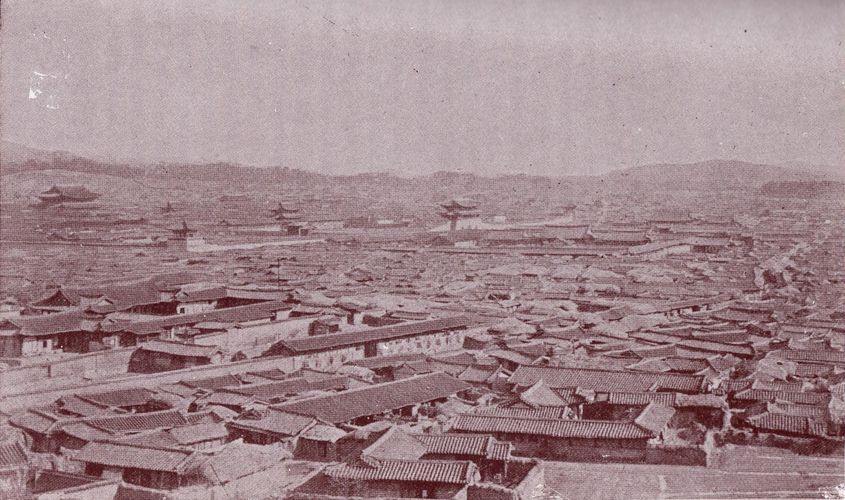
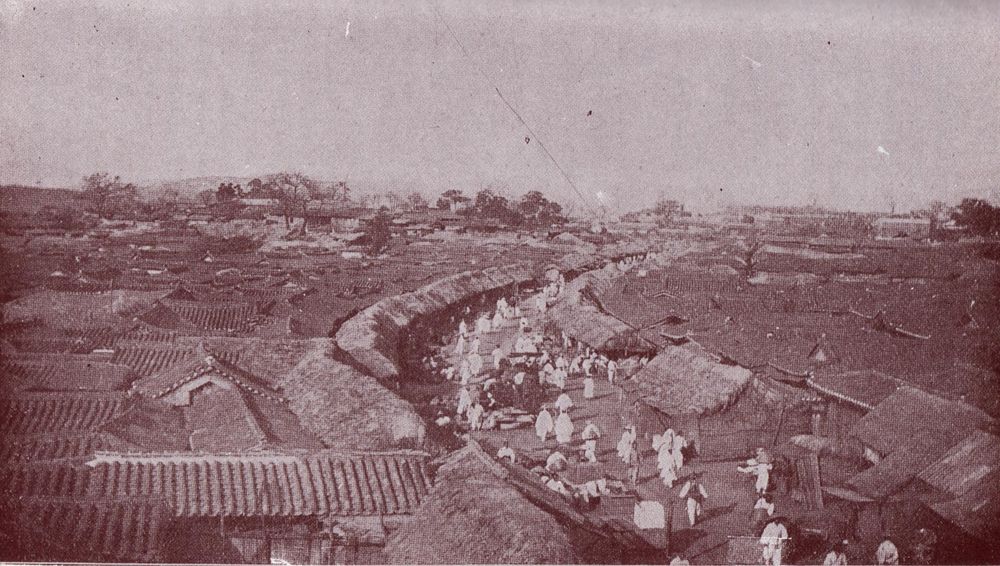
We're also shown a photo said to be of Seoul's cityscape, full of thatched roofs, which is compared to an older photo of Tokyo, and on the basis of these two photos, Korea is called a 'basket case'. As Kushibo points out, it's a rather misleading photo, as it is by no means representative of all of Seoul. This photo, which appears in Isabella Bird Bishop's Korea and Her Neighbours (1898), shows a cityscape of tiled roofs in northwestern Seoul, which allows for a more favourable comparison to Tokyo.

From Korea and Her Neighbours, plate opposite pg. 426
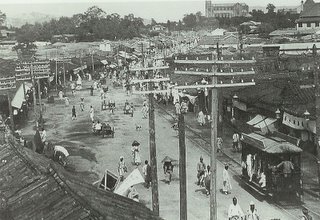
This photo, also from the same book, looks out from Namdaemun's balcony to the northeast. This area is also apparently mostly tiled houses (as opposed to the thatch roofed street stalls). Both photos would have been taken between 1894 and 1897.

Ibid. opposite pg. 440
We're also shown the following picture of Namdaemun from the 1880s or 1890s, which the writer, judging by the caption, seems to think shows the reader that Koreans lived in slavery.

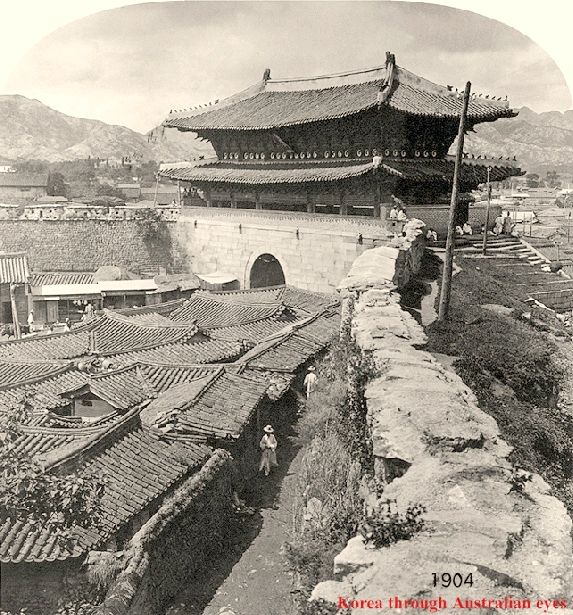
Compare this to the following photo, taken by George Rose in 1904:
The thatched roofs outside the gate have been tiled (another 1904 view is here); one small example of the progress being made, prior to the establishment of Japan's protectorate over Korea.

I'll quote from Plunge's post for a moment:
In 1904, an American by the name of Angus Hamilton visited Korea... He said of Korea, “The streets of Seoul are magnificent, spacious, clean, admirably made and well-drained. The narrow, dirty lanes have been widened, gutters have been covered, roadways broadened. Seoul is within measurable distance of becoming the highest, most interesting and cleanest city in the East.” He continued on to say, “Seoul was the first city in East Asia to have electricity, trolley cars, water, telephone and telegraph systems all at the same time.” Much of this was thanks to trade with the United States. Seoul Electric Company, Seoul Electric Trolley Company and Seoul Fresh Spring Water Company were all US owned.
Seoul's first telegraph service, from Seoul to Incheon, began in 1885, while Gyeongbok Palace had electric lighting installed by 1886 (as recounted here). Tram service began in 1899, and the first streetlights appeared 1900. The first commercial telephone service in Seoul appeared in 1902; the first train line (Seoul-Incheon) was opened in 1899, and by 1906 one could travel from Sinuiju to Busan via Seoul by rail. Seoul's public water system began service in 1908. As the linked articles relate, in almost every case the companies maintaining these untilities were forced by the Japanese to turn over the companies to them.

In the comments section of the pro-Japanese post, when the above quote from Plunge's post was brought up, along with favourable opinions of Seoul from this traveller, the post's writer at Occidentalism responded:
It is telling that you should neglect to quote one of the most celebrated writers about Korea, Isabella Bird Bishop, who visit Korea four times and met the King and Queen. Her last visit was in 1897 and she described Korea and Seoul as:
*Largely having no currency system
*Seoul the most odoriferous city in the world, caused by narrow ditches for garbage on the streets
*In Seoul, the houses of commoners were thached roofs and walls made of mud
*Seoul and Korea was compared unfavorably with Japan
He goes on to quote unfavourable views of Korea by Bishop, from the beginning of the book, which would have been recorded in 1894. He unfortunately omits these passages, from her last visit to Seoul in 1897:
Seoul, in many parts, specially in the direction of the south and west gates, was literally not recognizable. Streets, with a minimum width of 55 feet, with deep stone-lined channels on both sides, bridged by stone slabs, had replaced the foul alleys, which were breeding-grounds of cholera. Narrow lanes had been widened, slimy runlets had been paved, roadways were no longer "free coups" for refuse, bicyclists "scorched" along broad, level streets, "express wagons" were looming in the near future, [...] shops with glass fronts had been erected in numbers, an order forbidding the throwing of refuse into the streets was enforced [...] and Seoul, from having been the foulest is now on its way to being the cleanest city in the Far East!

This extraordinary metamorphosis was the work of four months, and is due to the energy and capacity of the Chief Commissioner of Customs, ably seconded by the capable and intelligent Governor of the city, Ye Cha Yun, who had aquainted himself with the working of municipal affairs in Washington [...]

Along with much else the pungent, peculiar odor of Seoul has vanished. [...] So great is the change that I searched in vain for any remaining representative slum which I might photograph for this chapter as an illustration of Seoul in 1894.
A deceptive ommission? I'll let the reader decide. What she had to say about the changes in the city between 1894 and 1897 only strengthens Plunge's basic thesis; and the aforementioned favorable impressions of Seoul in 1904 seem to continue from where Bishop left off. If you compare the two photos below (the first, again, taken by Bishop between 1894 and 1897, and the second taken circa 1900, after streetcar service began) , you can see, again, just how quickly Seoul was changing.


Many of the aforementioned examples of modernization were also mentioned by F.W. McKenzie, a Canadian journalist who lived in Korea for decades, in his 1920 book Korea's Fight For Freedom (about which more will be said later). Though he was very disappointed in the lack of reform in the political and judicial system (and in Korea's ability to stand up for itself) in the ten years between the Sino-Japanese and Russo-Japanese wars, he did recognize the changes that had occurred:
In the period between 1894 and 1904 the developments would have seemed startling to those who knew the land in the early eighties. There was a modern and well-managed railroad operating between Seoul and the port of Chemulpo, and other railroads had been planned and surveyed, work being started on some of them. Seoul had electric light, electric tramways and an electric theatre. Fine roads had
been laid around the city. Many old habits of mediaeval times had been abolished. Schools and hospitals were spreading all over the land, largely as a result of missionary activity. Numbers of the people, especially in the north, had become Christians. Sanitation was improved, and the work of surveying, charting and building lighthouses for the waters around the coast begun. Many Koreans of the better classes went abroad, and young men were returning after graduation in American colleges. The police were put into modern dress and trained on modern lines; and a little modern Korean Army was launched.
What really motivated me to write a response to the Occidentalism post was the following claim (using the photo from the top of this post), as it was something I was already looking into while researching this.

Koreans boldly claim that Japan destroyed many Korean cultural monuments that were in truth destroyed by Korean neglect. The above is a before and after photo of Namdaemun. Is this what Koreans mean by Korea being ‘ruined’ by the Japanese?

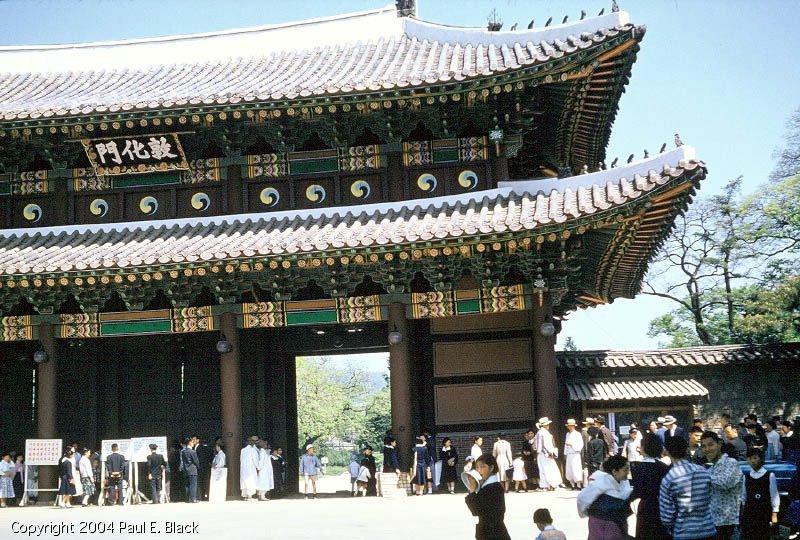

Again, this is a perfect example of choosing a very selective (and favourable) example. Yes, Namdaemun looks super. But what about Gyeonghui palace, which was almost entirely destroyed during the colonial period? And what of Gyeongbok palace, which had only a few buildings standing by 1945, after the Capitol building had been built directly in front of the throne room; or Changgyeong palace, which had a zoo built on its grounds? (photo, Feb. 1968) Are there pictures of Seodaemun or Hyehwamun available that show how the Japanese restored them? Can replacing the Wongudan altar with the Chosun hotel really be seen as 'preserving' Korean cultural monuments? To see what Seoul looked like at the end of the colonial era, this large map made by the US military in 1946 even shows individual buildings, and allows you to see the remains of former palaces. The Japanese "made the Koreans take care of their cultural heritage"? How? Using the example of the capital city, all but three city gates were demolished during the colonial era, and out of five palaces, only two were left relatively intact. Preserving a cultural monument like Namdaemun, (or, more importantly, Seokguram Grotto) was the exception, not the rule. It was not 'Korean neglect' that demolished these landmarks, but decisions made by the Japanese colonial authorities that these structures were not worth preserving that led to their disappearance.

This comment, written by the writer of the post, appeared in various guises in the comments section:
If Korea was so dynamic, why would US President Theodore Roosevelt say that “…Korea has shown its utter inability to stand by itself”?
Because Roosevelt was justifying abandoning Korea to Japan, which was the politically expedient thing to do at the time. Roosevelt also said it because he was unaware of the situation in Korea. That is to say, he was unaware that guerrillas, known as Uibyeong, or "righteous army", armed at first with rusting muskets, were engaging Japanese troops across the penninsula. In 1907, after the forced disbandment of the Korean army by the Japanese, many of its soldiers joined the righteous armies, leading to better organization amongst them. As Andrei Lankov's article notes, the guerrilla war in Korea lasted from 1906 to 1912, when it was crushed by the brutal Japanese response.

Those wanting a more contemporary view of the conflict, and a better idea of the Japanese response, should read the aforementioned Korea's Fight for Freedom, by F.A. McKenzie, which can be read here (or here, where it's broken into chapters).

McKenzie was a Canadian journalist working for a British newspaper, who, though he initially thought a great deal of Japan, was eventually turned against it due to the brutal nature of its occupation. The book traces the history of Korea from the late 1800s to the Samil uprising in 1919. He wrote in the preface to the book in 1920 that
I have long been convinced, however, that the policy of Imperial expansion adopted by Japan, and the means employed in advancing it, are a grave menace to her own permanent well-being and to the future peace of the world.
A rather precient conviction, on his part. In the autumn of 1906, he became the only westerner to travel out into the countryside and meet one of the righteous armies, as the guerrillas were known, then harrassing the Japanese military. He travelled by horse from Seoul to Icheon, then "Chongju" [likely Chungju], Chee-chong [Jecheon], Wonju, and then back to Seoul. He encountered combatants on both sides, as well as the civilians who had suffered the wrath of the Japanese counter-insurgency operations. [from chapters VIII and IX]
As I stood on a mountain-pass, looking down on the valley leading to Ichon, I beheld in front of me village after village reduced to ashes.

Up to Chong-ju [Likely Chungju] nearly one-half of the villages on the direct line of route had been destroyed by the Japanese. At Chong-ju ....I noticed that its ancient walls were broken down. The stone arches of the city gates were left, but the gates themselves and most of the walls had gone....I struck directly across the mountains to Chee-chong [Jecheon], a day's journey. Four-fifths of the villages and hamlets on the main road between these two places were burned to the ground.

The destruction in other towns paled to nothing, however, before the havoc wrought in Chee-chong. Here was a town completely destroyed...Not a whole wall, not a beam, and not an unbroken jar remained.... Chee-chong had been wiped off the map.
One has to wonder how allowing their military to leave a swath of burned out villages and towns in its wake helped the Japanese 'modernize' Korea. After going to Wonju and then to a place called Yan-gun, McKenzie finally found members of the righteous army. On his way home, while passing through a valley, he was surrounded by other members of the righteous army who, due to his western clothes, mistook him for a Japanese, and was told
"It was fortunate that you shouted when you did. I had you nicely covered and was just going to shoot." Some of the soldiers in this band were not more than fourteen to sixteen years old. I made them stand and have their photographs taken.
This best known photo of the Uibyeong is credited to Mckenzie.

In June, 1908, a high Japanese official said that about 20,000 troops were then engaged in putting down the disturbances, and that about one-half of the country was in a condition of armed resistance.... The taunts about Korean "cowardice" and "apathy" were beginning to lose their force.
They would further lose their force after the Samil movement, a civil disobedience campaign against Japanese rule which began on March 1, 1919, the colonial authorities' response to which left thousands of Koreans killed, imprisoned and tortured. McKenzie spends a good portion of his book covering the Samil movement, offering first-hand accounts of the brutal treatment of those demonstrators targeted and arrested by the authorities. McKenzie's book goes a long way towards showing that Koreans were attempting to stand up against the Japanese, at first with rusted rifles, and later, without any weapons at all.

The Japanese response to Korean activism throughout the first decade under the Japanese is described in detail in the recent paper "American Missionaries in Korea and U.S.-Japan Relations 1910-1920" by Akifumi Nagata. Another description of the Samil movement is by Frank Schofield, a Canadian doctor working at Severance Hospital who was very active and vocal during the Samil movement (and whose story is well worth reading, as he was the only foreigner to be told of the demonstrations in advance, who visited a number of villages burned by Japanese troops, and saw first hand the conditions in Seodaemun Prison before being forced to leave by the Japanese). On April 13, 1919, Schofield had this letter published in the Seoul Press (a Japanese-run English-language newspaper):
Since its occupation of Korea, Japan has been saying that materially it has done much for Korea, but I want to raise a question, Has it been solely for Koreans? The duty of the government is to make the majority of its people happy. Only then, the government can be said to be doing the right thing. The duty of a government is not just to provide the people with material comforts, education, and strength, but to make them happy and secure as well.

The Japanese government must realise that the reason as to why Korean people have risen against it with what must seem like foolish courage. The Japanese government must do deep soul searching and recognize that what the Korean people want is not material things but real freedom.
His experiences at this time can be read here, while links to other time periods (some in Korea) can be found here.

The subtext of a great deal of pro-Japanese commentary over at Occidentalism is not just that Korea as a country or a society or an economy was backwards, but also that Koreans as a people were (and are) backwards, and benefitted from Japanese 'tutelage'. If we separate the racist aspect of this thinking from the fact that Korea as an economy and society was not as advanced as the west, or as advanced as Japan was, an obvious question is 'why'?

McKenzie certainly had his own ideas about this:
The Yi method of government killed ambition--except for the King's service--killed enterprise and killed progress. The aim of the business man and the farmer was to escape notice and live quietly.
The Chosun dynasty's brand of Confucianism is often blamed for the lack of Korea's development (as is corruption and factionalism), but Samuel Hawley, in his book The Imjin War, has his own ideas about Korea's lack of progress, and roots them in the results of the 1592-1598 Japanese invasion of the Korean penninsula: [from pgs 564-5]
The scorched-earth policy pursued by the Japanese in the latter part of the war, coupled with the flight of farmers from their fields, additionally dealt a serious blow to Korea's economy, a blow that fell most heavily on the breadbasket provinces of Kyongsang and Cholla in the south. In the survey of 1601, the first conducted in the wake of the war, it was found that only 300,000 kyol of cultivated, tax-paying land remained in the kingdom, down from the 1.5-1.7 million kyol assessed just prior to the war in 1592. This loss of four-fifth's of Korea's farmland meant not only a tremendous drop in the amount of food being produced, but also a huge reduction in the amount of taxes the government could collect, taxes that were now desperately needed to fund the nation's rebuilding. It was a blow from which Choson Korea would never fully recover. One hundred years after the war, the amount of land under cultivation had still not returned to pre-war levels. Two hundred and fifty years after the war, Kyongbok palace in Seoul, the residence of the King and thus the center of the kingdom, still remained a burned-out shell. The government lacked the funds to rebuild it. [...]

The government, its tax revenues down to a mere fraction of prewar levels, was forced to sell upper class yangban status and official titles to the highest bidder to raise desperately needed funds. The number of yangban in Korea accordingly increased, and with it the number of individuals eligible to serve as public officials. This in turn intensified the factional fighting that resumed once peace was restored [...] leaving the government embroiled in an endless series of obscure political wranglings, blind to the changes taking place in the outside world.
Needless to say, it would be incredibly ironic if Korea's 'backwardness', which Japan used as an excuse to establish a protectorate over, and later, colonize, Korea, was in fact aided in part by the effects of Japan's previous invasion, 300 years before.

To say something nice about the post at Occidentalism, it does have a number of interesting photos; it's just the misleading way they're used that's a problem. I don't have a problem with apologist writing hewing closely to the Japanese right's line - it's the fact that it's so poorly written and argued that's annoying, along with the misrepresentation and glaring omissions (which its adherents seem to be oblivious to). On the other hand, responding it gave me a chance to clarify my own thoughts on that era, and learn a lot in the process, so I guess I should thank him for his comment.

Wednesday, March 08, 2006

Touring Seoul's Palaces... in the 1950s

Paul E. Black's 1959 photo of Donhwamun, the main gate of Changdeok Palace. Rebuilt in 1607, it is the oldest wooden gate in Seoul.


Seeing as the last post was about a piece of 500-year-old architecture, it brought to mind some other old architecture I'd seen recently. In this post, a few days ago, Antti reminded me of the existence of Neil Mishalov's website. Mishalov served with the US military in Korea back in 1968 and 1969, and took hundreds of photos of the countryside around where he was posted (near Anyang), Seoul, Incheon, Osan, and other places around Korea. Also to be found on his site are photos taken by two other servicemen (Donald Gaydos, in 1954-55, and Paul E. Black, in 1958-59). It goes without saying that it's a fascinating site.

At any rate, there are a number of photos of traditional buildings amongst Paul Black's collection (on this page) which are labelled as unidentified temple scenes . They're actually palaces, and most of the photos are of Changdeok Palace. You can see the comparison between 1958 and present day here:

At Changdeok Palace:
the Queen's residence in 1959, and today;
the Main Hall, in 1959, and today;
and inside the Main Hall, in 1959, and today.

It's interesting to note how the buildings have changed since 1959 (only six years after the war). The buildings today have fresh paint, and do not allow people to approach as closely as in the past. In the last set of photos, the throne, and the painting above it, have changed, but the room is still the same. Thinking in terms of 'branding' as I mentioned in the last post, is the new throne more representative of what would have existed there during the Chosun dynasty, or does it (and the painting) just look more regal? At any rate, I don't know if the Secret Garden was open to the public in 1959, but Neil Mishalov took some pictures of it in February, 1969 (the last three photos on this page, and the first three on this page).

Some of the other photos are from Deoksu Palace, such as this and this. In two other photos (here and here) the same fountain can be seen (the two photos are facing west and east, respectively). Seokjojeon, the European-style building in the first photo, was completed in 1910, and is now an art gallery, as it was under the Japanese occupation.

Also taken at Deoksu Palace are photos of the display board for a water clock, and a picture of a bell; this is how they are displayed today. It's interesting to see how information boards have changed - and is that water clock truly one of only two in the world? I have my doubts.

Intrepid palace watchers may have a better idea where these photos (1 2 3) were taken.
The first two are of the same building, but I have no idea which palace it is to be found in (ditto for the third photo).

I imagine there would have only been two palaces intact (for the most part) in 1959: Changdeok Palace and Deoksu Palace. A glance at this photo makes clear that there wasn't much left of Gyeongbok Palace by 1945, and I doubt much restoration would have taken place by 1959.


I'm not so sure about Changgyeong Palace, however. I know that a zoo was built there during the colonial era, and judging by the photos at the top of this page (photos 4-9), Neil Mishalov was able to visit it in 1969. Whether it was open in 1959 I have no idea. It's probably worth keeping in mind that Gyeonghui Palace, was only opened to the public in 2002, after a 14-year -long restoration. The fact that it was once so large it was connected to Deoksu Palace by an overpass is fascinating, considering how small the restored palace is today.

If you've made it this far, you may be interested in this article, about a women (and her family) who learned how to make bricks the traditional way, and whose bricks are often used in restoration projects involving traditional architecture.