Tuesday, December 30, 2008

The Disappearance of Gindeung Maeul

As I noted in a previous post, Gindeung Maeul, a neighbourhood near where I live, is being torn down to make way for part of the Banghwa New Town. It can be seen jutting out on the right below:


Here's what it looks like from above in a photo taken in early 2006, with the area scheduled for demolition marked off:


Here are the plans for the New Town, taken from the official website:


Here's a view of a corner store taken in December 2006,


June 2008,


July 2008,


and October 2008.


Of course, I managed to find a tall perch from which to take time-lapse panoramas of the destruction:

June 15

July 28

July 30

August 3

August 9

August 17

August 31

September 21

September 28

October 5

October 19

November 23

This is quite the comparison with how it looked back in June:


At that time I photographed these women tending to a garden. It seemed the owner (or resident) of this dwelling was not planning on leaving anytime soon.


It seems that was a correct guess.

Thursday, December 25, 2008

Merry Christmas!


I hope everyone has a merry Christmas and a happy new year. I'll be heading home to Canada for a vacation, so posting will be light for a little while.


(Some parts of Seoul look festive enough, don't they?)


Of course, some areas are more into the Christmas spirit than others...

Wednesday, December 24, 2008

Exploring Gindeung Maeul


Above can be seen a photo of southeast Banghwa-dong, which contains one of my favourite areas in my neighbourhood, Gindeung Maeul. It was apparently first settled in the late 60s as Banghwa began to sprout along Banghwa-dong Gil (the street curving towards bottom left) and Gonghangno, running along the bottom towards Gimpo Airport to the west (the school at bottom left, Songjeong Elementary School, first opened in 1937). These days Gindeung Maeul is separated from the rest of Banghwa-dong by a 10 lane road which was built in the late 1990s and will soon be connected to the Olympic expressway by a tunnel and extended to Bucheon. It's also bordered to the east by Magok-dong, the last large piece of undeveloped farmland in Seoul, where construction for subway line took place, and the Incheon Airport Railway is being built.

Gindeung Maeul has always been an interesting place to bike or walk around, due to the maze of streets and the variation in the buildings.


As you can see in these photos taken in 2006, most of the streets are not paved, but 'cobbled'...


...and some are too small to drive through.


As you can see above, the dwellings run the gamut from small yangoks (western style single family houses) to literal shacks patched together with whatever materials could be found to multi-storey villa-style apartments.


Unfortunately, I have to describe the neighbourhood in the past tense. Years ago, it was slated to be part of the Banghwa New Town redevelopment laid out when Lee Myung-bak was Seoul Mayor. Gindeung Maeul can be seen jutting out on the right:
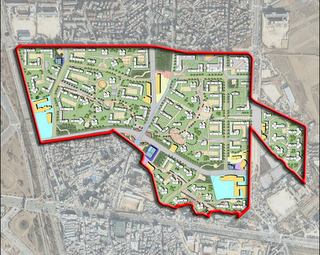

Here's what it looks like from above in a photo taken in early 2006, with the area scheduled for demolition marked off:


Here are the plans for the Gindeung part of the Banghwa New Town, taken from the official website:


I wandered through the area over a period of a few months this past spring and summer photographing the vacant and soon-to-be-vacant houses there. The reason for the mess before the houses are torn down is due to subcontractors coming in and tearing all the metal out of the house. As window frames contain metal, this means the glass is smashed to get at them, making for quite the mess. Sometimes the ondol pipes are ripped from under the concrete floors as well (as are most of the bathroom fixtures).


Along the horizontal center of the picture above you can see a dwelling almost closer to a hanok than a yangok, as well as a cobbled together house. Note the women working in the garden at bottom right; they were obviously not planning to leave soon. Contrast those dwellings with the one standing behind me when I took the photo above:


I really like that building, for some reason. Below, another aged, falling-apart dwelling is in front of a villa.


Here's what the walls looked like inside:


In a similar house, the entrances to some of the rooms were rather makeshift:


Note that the electrical outlets and switches have been wired in after the structure was built:


The crumbling building at center left above can be seen here:


Many of the houses had fascinating nooks and crannies:


Many houses had calendars left hanging, giving an indication of when the owners left:


The same house's courtyard from several different angles:


Note the barricade in the photo above, and how it has been pushed down in the photo below:


This house had a window opening onto a field (which is how we snuck in the first time).


More windows...


Many places had windows with shelves set into them in this same style:


As dead as it looked, there was still some life to be found...


...no matter how hard people tried to snuff it out.


There were lots of cats around.


Not everyone was trying to wipe out the plant life, as you can see a garden being planted in the courtyard above. Many houses still had gardens producing vegetables or plants growing on roofs despite the disappearance of the tenants.


Here's an example of a floor ripped up, as well as a few other kitchen shots:


Someone didn't want their betamax collection, I guess. The odd thing is that the larger tapes are not VHS - they're much larger. I have no idea what kind they are!


Here's a view of a corner store taken in December 2006,


June 2008,


July 2008,


and October 2008.


I imagine the last two shots help give you an idea of the neighbourhood's fate, but I'll save that for another day.

Thursday, December 18, 2008

Buried beneath the stadium...

Igansumun (二間水門). Lots more photos are here.

The excavating around Namdaemun and Gwanghwamun has been turning up historical objects and foundations to long-lost buildings and walls, as I've mentioned before, and now it's the redevelopment at Dongdaemun stadium (which I've written about before here and here) which has revealed an important piece of Seoul's past.

Actually, this Joongang Ilbo story from October 1 (which I missed) provides more information, and starts with this premise:
With the loss of Namdaemun to arson earlier this year and the controversy surrounding the Seoul city government’s stalled decision to demolish a part of Seoul City Hall, town planners appear to be more aware of the issues of cultural preservation.

On Sept. 11, the Jungwon Cultural Properties Institute reported the discovery of Igansumun, a gate which controlled the water flow from Mount Namsan to Cheonggye Stream.
Actually, this 1776 map of Seoul shows the stream which flowed through the wall and where the Igansumun must be (Ogansumun controlled the flow of Cheonggyecheon):


We're told that "[t]he newly discovered gate is about as big as a four-story building and wide enough for a couple of buses to pass through." This photo, taken this week, gives an idea of size of the gate in comparison to the people:

It was found at the site of the old Dongdaemun Stadium, which has been torn down to make way for a new design park. Excavators at the Dongdaemun site, which was once used as a military training ground during the Joseon Dynasty (1392-1910), also dug up about 50 meters (164 feet) of the Seoul fortress wall in September.

The fortress walls protected Seoul for hundreds of years until they were pulled down a century ago. The newly discovered section used to connect Dongdaemun to Gwanghuimun, one of the eight smaller gates built along the wall.

Cho Rok-ju of the Jungwon Cultural Properties Institute mentioned that such a discovery in a sprawling metropolis such as Seoul was a groundbreaking excavation, “probably one of the biggest excavations in terms of size and historical relevance.”
Of course, by 2010, this area is to be turned into the Dongdaemun Design Plaza and Park.


Another, newer view, including the maxtyle building , can be seen here.
The original plan of the design park was to replace a large portion of the stadium and build an underground cultural plaza that would connect the Dongdaemun fashion malls to the subway station and the Euljiro underground arcade.

But city planners are now waiting to see what other relics are dug up and will consider how to incorporate these finds into the original plans.

“We are putting all our efforts into further excavations to see what we can unearth. Although there are no definite changes to the Dongdaemun Design Plaza and Park plan as of yet, we are still in the process of taking the proper steps by working with various cultural organs,” said Kim Su-jeong of the Seoul City Cultural Assets Division. Kim said that they had expected to discover some significant archeological finds prior to the discoveries at Dongdaemun. An official dig took place from Sept. 1 to 10 this year - the entire stadium had been leveled by April.
This Joongang Ilbo article has a photo of some of the relics (like pottery) that have been dug up. More examples are here and here. The article goes on to reveal (unsurprisingly) that "there could be problems ahead. Not everyone in government wants to see changes to the original plans." Before going on to look at other 'cultural preservation' topics (Gwanghwamun and Taepyeong Hall), we're told that "Lee Sung-jun of the Jungwon Cultural Properties Institute said there will be further digs. The hope is to find a further 140 meters of the fortress wall."

Photo from here.

Well, they haven't done too badly. As this article describes a previous photo,
Cultural property experts examine a 123-meter section of wall from Seoul Fortress yesterday at the former site of Dongdaemun Stadium. The site is the future home of the Dongdaemun Design Plaza and Park. The wall was assumed to have been completely destroyed during the stadium’s construction under Japanese colonial rule, but a section, about 4.1 meters tall and eight to nine meters wide, remains.
So, in addition to the original 50 meters uncovered in September, another 73 meters have been dug up, in addition to what seem to be several building foundations. A video can be seen here.


It would be nice if the city could find some way to preserve this wall (or at least the water gate, Igansumun), but laying waste to its history is one of the things the Seoul city government does best. Why keep real, actual historical remains - or historical buildings - lying around when when you could build a new office tower or shopping center to draw more investment and tourism into the city center?

But then, perhaps all of these ongoing excavations and discoveries might help tilt the scales in favor of preservation. We call always hope.

Tuesday, December 16, 2008

The pointlessness of rote memorization

On the day of the university entrance exam, Roboseyo posted about this protest against the suneung. I just found an article from a week and a half ago at Yonhap titled "Young activists risk future in breaking from ‘oppressive’ school system" which looks at two of the students who took part in the protest and how they came to be there. Here's an excerpt:
As hundreds of thousands of her peers huddled over their desks at testing centers around the country, she stood in front of a government building in downtown Seoul, denouncing South Korea's education system.

"I didn't want to live like a machine anymore," the 18-year-old high school senior said about her decision to boycott the college entrance exam in mid-November, asking that she be identified only by her surname Kim. [...]

In middle school, Kim was, as she tells it, a "model student." She studied hard before exams and cared about her grades. She recalls being under the impression school was preparing her for life.

But in her first year of high school, Kim came across John Taylor Gatto's "Dumbing Us Down," a burning critique of the education system in the United States. A former teacher in New York’s public schools, Gatto argues that traditional education produces individuals who are uniform in their way of thinking.

The idea radically changed Kim’s attitudes, and afterwards she says she felt something like betrayal. Her confidence in the Korean school system was broken, she recalls.

Kim stopped studying for tests; when it came time to take exams, she filled in answers randomly. She didn’t skip classes until her senior year -- and even then it wasn’t often. But she did only enough to skate by, dealing quietly with her frustration as she sat at her desk.

While such apathy towards school would have horrified most parents here, Kim says hers grudgingly accepted it.

It wasn’t until earlier this year that she became interested in the kind of activism that led her to demonstrate in front of the Integrated Government Building. She joined an on-line forum for a youth human rights group called “Asunaro,” and began to attend meetings and rallies.

Sitting at a coffee shop in an artsy Seoul neighborhood, Kim speaks confidently about her views. She argues that being made to sit in a chair all day and perform rote memorization is oppression, not education, and that students and teachers should be put on more equal footing -- a bold argument in a country where Confucian hierarchy still dictates the flow of society.

“If you sideline students as too immature, the top-down culture won’t change,” she says.
Read the entire, lengthy article here.

Speaking of rote memorization, over at the Joshing Gnome, Joe Mondello is posting his paper on the Ministry of Education. Looking at the historical influence of the civil service exam, he observes that the "necessity of esoteric, impractical knowledge for success in Korea" dates to the Joseon period. Hearing the words "esoteric" and "impractical", I could only think of the high school student who showed me his music homework, which was to memorize the song "Come back to Sorrento" so as to be able to sing it in class. The catch? He had to sing it in Italian, a language he had never been exposed to before.

(crossposted at Hub of Sparkle)

No room for seconds

[Update: The Korea Times has the cyber attack story here.]


Photo from here.

You know, I was starting to get annoyed at the media coverage of figure skater Kim Yu-na's 'failure' on the weekend, what with the Korea Times and Herald cribbing from Yonhap, leading to a 'three-peat' of the headline (and article) "Kim Yu-na Fails to Win Third Straight Grand Prix Title," the Chosun Ilbo writing, "Her failure to win the Grand Prix Final three years in a row is only the beginning of a new journey ahead of her," and the Joongang Ilbo writing of her "mistake-filled free skate" (before explaining that "Kim managed only a single rotation on her triple lutz, normally her strong jump, for the second straight day and then fell on her triple salchow in the latter part of her program," indicating that she'd made all of two mistakes). But, just when you're starting to think that the media are acting more prickish than usual toward an "underperforming" athlete (ie. one that does not win gold), you read of Japanese netizens leading a cyber attack on VANK. The reason?
According to VANK, Korean netizens started the fight by crashing a Japanese site after Japanese figure skater Asada Mao beat Korean figure skater Kim Yun-a in the Grand Prix final in Goyang, Korea on Saturday.
You can always count on this breed of netizen to make the media look good, though to be sure, the media will never be as entertaining as these keyboard warriors trying to crash a Japanese portal into the Pacific. They would never actually want to sink the Japanese Islands, of course, because if they did, the sea that shall remain unnamed would simply become the Pacific Ocean, and good luck trying to change that name, VANK. It's funny how my suggestion to change the sea that shall remain unnamed to the "West Sea" (seeing as its west of Japan) is always met with utter incomprehension.

Anyways, to be fair, the aforementioned Joongang Ilbo article is actually lengthy and the best article of the bunch, relaying this quote: “It’s wonderful to have a rival like Yu-na,” Asada said. “We motivate each other and I’d like to keep having this motivation of each other.” This reminds me of the photo they took together almost two years ago titled, "we are rivals and friends".


Too bad these netizens - on both sides - can't get more into this spirit. But then, that's sports nationalism for you. As for other articles that are not so critical, a Yonhap article titled "Everybody's in love with Kim Yu-na, and so is the market" tells us that "Kim, an 18-year-old figure skater who took silver at the Grand Prix Final before an adoring home crowd this weekend signed a two-year sponsorship deal Monday with South Korea's top automaker, Hyundai Motors." It seems Hyundai isn't too concerned about her "failure," though the Korea Herald notes possible reasons for that:

The company said that it decided to sponsor Kim as her image is compatible with the brand image the carmaker is promoting for itself.

The figure skater has become one of the most popular celebrities for commercial advertisements. According to reports, a milk brand advertised by Kim has seen sales jump six times while the sales of a bakery chain's new product bearing her name is increasing at a rate 3.5 times faster than similar new products.

Perhaps she'll be able to help stem the tide for Hyundai during this economic downturn. To be sure, this isn't the largest product she's ever advertised for:


As for the Korean netizens on the attack after she won the silver, perhaps it was just the preliminary for this competition.

Monday, December 15, 2008

"Nothing but scandalous"

I've been reading Donald Clark's Living Dangerously in Korea (The Western Experience 1900-1950), which can be found here, and it's a fascinating book. If you have any interest in Korean history, or in the history of westerners in Korea, then it's well worth reading. I imagine I'll write a few posts based on quotes from this book, but for now, I thought the following quotes were worth looking at, starting with Korean American writer Younghill Kang's opinion of foreign missionaries expressed in his 1931 book The Grass Roof:
The writer Younghill Kang once described two kinds of missionaries in Korea: the kind that was “educated and sincere,” and the type “that cannot get any job in the West so he comes to the East where he can live cheaply and have a cook and a waiter and a gardener and cherish a superiority complex over the ‘heathen.’ He announces that the Lord has called him for service, but in reality the West has kicked him out for being unfit.”
If you're thinking this sounds familiar, perhaps these anti-English teacher comics from anti-english spectrum will help illustrate the post.

"If I stay in my hometown working at WalMart,
no girls will ever talk to me."

Now, whether most Koreans felt this way is hard to know (Clark explains why Koreans thought westerners were strange, including the idea that traveling far from home was generally considered to be traumatic for most Koreans); perhaps Kang felt this way because he was educated and had experience with westerners in both Korea and North America. Of course, as Clark relays in a footnote,"Not surprisingly, Younghill Kang’s remarks about missionaries in The Grass Roof elicited bitter comments about his ingratitude from several Canadian missionaries who had helped him as a student and arranged for him to study in the West."

Even more interesting is the following story about how the Korean social ethics banning casual dating prevented women from fraternizing with American soldiers during the U.S. occupation of Korea between 1945 and 1948, making it difficult to find Korean secretaries.
[T]he young, educated women who worked in USAMGIK offices were often approached for dates. The women, their families, and Korean society in general misunderstood these overtures, andthey put the women in a difficult position. For example, one morning an American officer found that his Korean receptionist was very upset by a leaflet that a man had handed her on the way to work. He ordered up a rough translation and found that it said:

"WE COULD NOT OVERLOOK YOU, WOMANHOOD, when you fool around with Westerners in just showing your vanity and worldly devices, which is nothing but scandalous, while you should put all your strength on establishing the state of new Korea. From now on any one of you who shows the following scandalous actions beware that you will be insulted right in front of public.

1. Those women who are quite animated in riding automobile with Westerners.
2. Those women who wink at Westerners in saying “Hello gum” and “My home” and such short words.
3. Those women who chew gum and stroll all over town.
4. Those women who are whispering to the Westerners in the night.
5. Those women who go into the dance hall just because they are crazy about coffee and chocolate."

So then: girls must be glum when riding in automobiles with westerners (even though riding in anything other than a bus must have been quite rare for most people at the time), can't wink and say "Hello gum" (??), chew gum (these guys must hate gum) and stroll around town (suggesting that they should then go around town in a car... glumly... if they're going to chew that hated gum?), and should not whisper to Westerners in the night (but should talk in a normal voice?). As for disparaging girls "just because they are crazy about coffee and chocolate," that may go to show that the "doenjang nyeo" is not such a new phenomenom (indeed, you could probably write an interesting paper comparing the 'modern women' of the 1930s with the 'doenjang nyeo' of today).

In Outlanders: Tales of Korea, a zine published by Scott Burgeson, Zane Ivy's story "The Limits of Segyehwa" details his experience with a Korean company producing EFL materials in the late 1990s. When the head of his department, a Hispanic American in his early 60s, began dating a 36 year-old Korean divorcee, "the company apparently "got a call" from the security guard at [his] company-leased apartment, informing the company that he had been having a "young Korean girl" staying over at his apartment." In response to this, the company president demanded he break off the relationship and write a letter of apology. When he did this, he was then asked to resign, which he did, returning to the U.S. with his Korean girlfriend. The story concludes with:
We learned that while Koreans might be receiving a lot of government-inspired pressure to embrace segyehwa, there seemed to be a limit to how much "embracing" that permitted... if you wanted to keep your job, at least.
This reminds me of my first boss in Korea, who said that he'd be happier if none of us had (Korean) girlfriends or boyfriends, to which my co-worker Jill replied, "Yeah, that's just want you want: sexually frustrated people around children."

One thing is for sure - Anti-English Spectrum Cafe and its xenophobic, "we must protect our women from the barbarians (and themselves)" attitude, as expressed by member Lee Eun-ung, is nothing new, and in fact is part of a long, proud tradition, involving even the "the father of Korean American literature." On the "low quality" front, Canadian missionaries have been updated as Canadian English teachers, and the "nothing but scandalous" behavior of some licentious women, instead of involving U.S. soldiers, now mostly refers to English teachers. Of course, soldiers still get mentioned often enough, such as in the brouhaha over the U.S. State Department naming Sinchon and Hongdae dangerous zones in Seoul, where Korean newpapers went to lengths to prove there was no anti-foreigner violence there:
Lee Seung-hwan, an official with the non-profit organization, “Club Culture Coalition,” which promotes a healthy night life, said, “Since the clubs in the Hongik University area banned the entrance of American soldiers, there was hardly any incident involving foreigners.”

Lee added, “In the past, there were many brawls between American soldiers who inappropriately approached Korean girls and Korean men who responded to the situation.”
While I'm sure incidents like that happen often enough, it's interesting how Korean overreaction gets omitted, such as during the 1995 subway incident.

Thursday, December 11, 2008

Three seasons in photos

I thought I'd post some photos of the snow the other night, but then decided to post a few photos of the changing seasons as well. It's been awhile since I've listened to this Mojave 3 song; it's long been a favourite, and a good soundtrack, I think (hat tip to Roboseyo and Iceberg for the concept).


Here are a few shots of rice growing in the Magok fields near my house. I imagine in 10 years they'll be gone (likely sooner).

May

September

December

Namsan Park by night in August:


The street below is near my house, seen in November...


A trip in November took me to Yeongheungdo, about 10-15 kilometers south of Incheon. Below is the fishing port and the Yeongheung Bridge connecting it to the mainland.


There was a market with lots of sea creatures nearby.

"I have a bad eeling about this..."

My friends and I stayed near this beach.


The maeuntang and kalguksu were tasty (though I think Kalguksu is more to my liking as breakfast food).


A short hike up a nearby mountain was scenic...


This is, I think, the ruins of a bunker on Chihyeonsan, near my house.


Fall ended rather suddenly; I took this picture on a Monday...


...and the photo above the next day. And all the leaves had even been swept up and taken away!

Here are a few shots of the snow on Sunday near Hanseong University station (after another dinner at Song's Kitchen, where the Hub of Sparkle gathering was held two weeks ago).


Old and new...


I have lots more photos like the one above (including the process of an entire neighbourhood near my house being torn down), but I'll save those for another day...

Monday, December 08, 2008

Changing incorrect perceptions

Ohm Kyong-sop, the "vice president for tourism technology at the Korea Tourism Organization,"
has something to say about "Korea Sparkling":
These days, there has been much discussion on the applicability of Korea's national tourism branding slogan, as experts in brand and promotional marketing have been open to share their praise and criticism of the current national brand campaign.

Accordingly, a controversy has ignited over the appropriateness of the tourism branding slogan, "Korea, Sparkling,'' made public last year. As some of the opinions in question are based on misinformation that might mislead some readers, it is helpful to revisit the methodology used to develop Korea's tourism brand and its meaning and symbolism.
Ah, yes, the critics are 'misleading' the readers, and their incorrect perceptions must be changed. After explaining how the slogan was developed, we're told that
The goal of the slogan is to transform the image of Korea from a characterless, unknown and featureless country to a "sparkling'' and attractive tourism destination in the minds of international visitors. Furthermore, this new image can serve as a source of inspiration and pride for Korean citizens.
Well, you can't say that government officials sticking their fingers in their ears and ignoring the criticisms and suggestions of foreigners, the very people they're trying to target with their branding campaign, is unpredictable. I just hope David Kilburn and David Mason aren't visited by officials from the National Intelligence Service.

Friday, December 05, 2008

turumagi iyagi


Not much more to say about this Rolling Stone photo than, "Well, you wanted to dress every foreigner you could point a camera at in clothes you yourself wouldn't be caught dead in 360 days a year."

I don't know how the Black Eyed Peas (is that like a black pearl?) felt about their hanboks, but at least one visiting foreigner was quite pleased with his:
When she created the outer jacket for national leaders participating in the Busan APEC conference of 2005, U.S. President George W. Bush took his jacket home with him, saying he loved the softness and color of the fabric.

I was chatting with an American who wears a hanbok daily (no, not the Marmot), and he mentioned that when he started working for a government office, they had to change the rules - which required that a suit be worn - to accommodate him wearing their traditional clothing. It was something he chuckled about, because he knew there was no way they could not allow him to wear Korean Traditional Clothing. It would be like rejecting their own culture, like having to look at a map with "Sea of Japan" on it every day.

By the way, aren't these school uniforms, of a style introduced somewhere between 1910 and 1945, just smashing?

Thursday, December 04, 2008

Pearls before bloodlines

[Update at bottom]

While researching something else, I came across a December 2002 Donga Ilbo article about Hines Ward, predating Korean society going ga-ga over him by over 3 years. Now, the Donga's website has generally been the most unimpressive of the Korean Media's English language websites and the translations could often be quite bad (for example Hines Ward's first name is never used, which might be fine (really?) in Korean, but not in English). Anyways, one of the redeeming features of the Donga Ilbo site is that each article in English has a link to the Korean language article which inspired it. It's interesting glancing at the Korean article in this case to see how it was translated.

For example (let's ignore the spelling/grammar here):

"On appearance, he is an Africa-America. Part of him, however, contains the Korean heritage."

This is translated from "외모는흑인이지만 워드에게는 한국인의 피가 흐른다." "In appearance, he is black, but Korean blood flows through Ward['s veins]."

Interesting, the focus on blood. In this post I mentioned Sin Chae-ho's pioneering historiography 100 years ago in which he focused on the minjok, or Korean race/people as the subject of Korea's history, linking the minjok to the mythical progenitor Tangun. Not mentioned in that post was that he used the jokbo, or the family genealogical record, as the model for tracing the "one blood" race of Koreans back to Tangun. Perhaps you can detect the influence of this idea in a 14 year-old ethics textbook (translated by the Metropolitician here (another worthwhile post is here)):
The minjok can be defined as having been passed down the same bloodline, using a common language, and that which has lived on between a common history and culture that is the basis of a consciousness of a community of 'us' that constitutes the group. Therefore – just like how we are constituted from the same blood as that of our ancestors – the minjok is made up of the concepts of family, ethnic group, or tribe, we sometimes point to the race and call it a large family.
Korea's ethics textbooks are to change, however - in part due to Hines Ward's first visit to Korea after being named MVP in the Superbowl in 2006 - and North Korea, which has taken these ideas to frightening extremes, was not happy:
The words themselves take a knife to the feeling of our people, but even more serious is that this anti-national theory of “multiethnic, multiracial society” has already gone beyond the stage of discussion. Already, they’ve decided that from 2009, content related to “multiracial, multiethnic culture” would be included in elementary, middle and high school textbooks that have until now stressed that Koreans are the “descendents of Dangun,” “of one blood line” and “one race,” and to change the terms “families of international marriage” and “families of foreign laborers” to “multicultural families.” This is an outrage that makes it impossible to repress the rage of the people/race.
The North Koreans are better known for this outburst two years ago:
The North's delegation leader Maj. Gen. Kim Yong-chul started off an unfortunate thread by quipping, "Since the climate in the South is warmer, the farmers must be hard at work." His South Korean counterpart Maj. Gen. Han Min-gu of the South replied, "The population of the farming communities is actually falling, and many bachelors from such areas marry women from Mongolia, Vietnam and the Philippines."

Kim reportedly grimaced and snapped, “Our nation has always considered its pure lineage to be of great importance -- I am concerned that our singularity will disappear.” Instead of contradicting him, the South Korean delegation said such dilution of the bloodline was “but a drop of ink in the Han River,” adding this would cause no problems “if we all live together." But this failed to mollify the North Korean. "Since time immemorial, our nation has been a land of abundant beauty. Not even one drop of ink must be allowed to fall into the Han River,” Kim thundered.

I was told that the media didn't mention (or it wasn't translated) that the North Korean eventually conceded that Korean blood would 'improve' these other races, but I'm not sure if that's true or not. At any rate, it was the final sentence of the original Donga Ilbo article that got my attention:

"Anyway, Ward is also a proud Korean."

The Korean sentence? "흑진주 워드도 역시 한국인이다."
"Anyway, black pearl Ward is also a Korean."

[Update - I knew I'd heard the phrase 'black pearl' before - thanks Brian]

Monday, December 01, 2008

Low quality donater?

The Korea Times presents us with this picture:

Model and actress Hyun Young smiles with Kim Dong-soo, the chairman of the Community Chest of Seoul, at Jungmok Elementary School’s auditorium Monday morning in Mokdong, Seoul. Hyun, the goodwill ambassador of the Seoul branch of Community Chest of Korea, donated 50 million won to the organization and also participated as a substitute teacher at the school.
I really hope she doesn't have any communist relatives.

Oh, and is she qualified to be a substitute teacher? Perhaps someone should notify this man, though he may not be concerned seeing as she isn't a non-Korean.

Update:
Kim Yu-na has also donated quite a bit of money to charity.