Friday, May 10, 2013

A nose by any other name...

It was almost a year ago that the notorious 'MBC video,' a news report titled 'The shocking truth about relationships with foreigners' was broadcast. For those who may have missed it, here it is:


For anyone who had been in Korea for awhile and had been paying attention, this report wasn't much of a surprise, as I pointed out in my initial response - it's been going on for a long time now, and many post-English Spectrum Incident 'news' reports from 2005 to 2007 featured similar content. What was perhaps surprising was the response of MBC officials, who said that the piece intended to portray "Korean women who are out of their sense and get involved in these kinds of affairs" with foreigners and replied to critics with "Maybe you have a guilty conscience."

Mind you, as I pointed out here, the response of expats to the piece seemed as steeped in a sense of victimization as the original report itself, with a standout example being an expat writing "I feel like MBC has raped my family" (and when female expats said that this was offensive, male expats told them it wasn't).

That last linked-to post also included this video uploaded to Youtube which satirized the MBC report:


Now it can be told: The video was made by Gord Sellar, his (then) fiancee, and friends. His take on the response to the above video is well worth reading. There was a lot of discussion regarding whether being a non-Korean disqualified one from commenting upon (or parodying/satirizing) Korean culture. He also notes that the 'racism' of the MBC video was commented on exhaustively by expats, but few noted how sexist it was.

But what I'm going to comment on today is the fact that he noted that "expat men were wringing their hands in worry about whether the "dick jokes" were "too much"" and that it was "completely miss[ed] that the joke took place in the social context in which [there is a] hypertrophied interest in white men's penises, and where they go at night."

I couldn't read that and not think of some of the Korean newspaper cartoons about foreign English teachers which I posted here, and how much the (white, male) teachers' faces and noses seemed to resemble... another body part - especially when the eyes and mouths are removed:

 I think the girl at bottom left might be singing this song.

 The woman in the bottom right photo looks rather excited and attentive.
As for the bottom left cartoon, 문화체험, indeed!

 I think the girl at bottom left just realized what's sitting in front of her.

 I have no words. (This has not been altered in any way.)

 Personally, I think these two are my favourites:

"Uncle Sam I am."

ABC? Check. Pile of money? Check. Penis? Check.

So, readers: Do you think there's something to this nose-penis connection? Or am I just seeing things? And more importantly: Is this way of drawing whitey deliberately done, or is it just part of a tradition and little thought goes into it?

Thursday, May 09, 2013

Bandow on the US-ROK alliance and why it should end

In a recent op-ed in Forbes titled "South Korea: Close Friend Of The U.S., And A Defense Welfare Queen," Doug Bandow questions whether the US-ROK alliance should continue. Referring to Park Geun-hye's planned policy of 'trustpolitik' with the North, he writes:
This policy obviously is no bargain for America: the South underwrites the military of the nation against which the U.S. is prepared to go to war. In return, Washington receives marginal assistance from the ROK in conflicts the U.S. should not be fighting.

The strategy looks equally dubious for the South. Complained Edward Luttwak, “South Korea has matched the North’s bellicosity with its own strategic perversity: It remains obsessed with an utterly unthreatening Japan and has been purchasing air power to contend with imagined threats from Tokyo as opposed to the real ones just north of the demilitarized zone. Seoul is simply unwilling to acquire military strength to match its vastly superior economy.”

Even so, the decision should be Seoul’s alone—if America was not defending the South. Washington has reason to object to being asked to defend the ROK from an enemy which the ROK is subsidizing. If Seoul responds that the subsidies don’t matter because the DPRK poses no threat, then U.S. military support is unnecessary.
Read the rest here.

Wednesday, May 08, 2013

Comparison of articles about sex crimes by Korean teachers and the most recent case involving a foreign teacher

With a Naver news search turning up nearly nearly 70 articles about this most recent brouhaha over English teachers, I wondered if this is simply to be expected when you mix educators and (alleged) sex crimes against children. So, let's look at coverage of similar cases in Korea over the last week.

News yesterday that a middle school teacher in Daejeon had been sentenced to two years in prison for the attempted rape of one of his students, and that a high school teacher (also in Daejeon) was fined 10 million won for repeatedly touching his student, appeared in seven reports such as this one. Worth noting, though, is that four of those reports were from local media outlets (such as Chungcheong Today, Joongdo Ilbo and DT News), and only three were from national media outlets (Yonhap, YTN, and Chosun.com). The title of the Chungcheong Today article did describe them as "teachers worse than animals," however.

A week ago an elementary school vice principal was sentenced to 6 years in prison for molesting nine elementary school students; this appeared in 14 news reports (while news of his arrest in October appeared in 11 reports).

More newsworthy than news of teachers being convicted for molesting underage students, it would seem, is the news that a Chungnam University Law School professor has been dismissed for touching a law school student (this story has appeared in 18 reports). So it would appear that the age of the victim has little bearing on how newsworthy a story is considered to be.

I also stumbled across this story which appeared in around 20 news reports (mostly online or sports papers) last July, which tells us this:
A criminal who broke into a one room apartment and tried to commit rape, once caught, shockingly turned out to be an elementary school teacher with a sexual perversion. [...]

Parents who learned that the perverted teacher had taught elementary school students strongly argued that "Employment screening of temporary teachers should be stricter."
The school representatives were also left scratching their heads, saying that there were no symptoms of perversion during the interview or document review. Imagine that. The former article did include this happy little image, though the case did not involve a little girl nor a giant black bird.


It's similar to this one in that it involves an angry shadow, but the 'two faced' English teacher's shadow is rather more demonic and threatening.


Coverage of all of the above stories together is dwarfed by the coverage of the recent foreign teacher case. It would seem alleged sex crimes by foreign teachers are more newsworthy than news of Korean teachers being convicted of, and sentenced for, sex crimes against their students. Worth noting as well is that 29 of the 70 or so reports about the foreign teacher turned up in the Naver search are television news reports (YTN makes up most of them, but all of the other networks have at least two reports), and almost all of the major newspapers covered it. Compare this to one television report on the above stories involving Korean teachers and the mostly local, online or sports paper coverage of the Korean related stories. Compare also the simple statement that "Employment screening of temporary teachers should be stricter" with the detailed reiterations of the problem of foreign criminal record checks taking into account that whole 'innocent until proven guilty' thing westerners harp on about and how it means murderers and rapists will come here and hide. (To be sure, there have been fugitive murderers from the US teaching here, and almost all of them have been Korean citizens).

While the last Korean case above had headlines talking about "Our children's PE teacher is a pervert" and spoke of the threat of the 'teacher with two faces,' the '우리 아이' (our children) tends to come out a lot more when dealing with a foreign teacher, because then it's time to circle the wagons. The most recent foreign teacher case also includes a tale of a foreign fugitive taking advantage of Korea's lax security, and is fodder for the 'endless' media reports about the weaknesses of the foreign teacher employment system. Perhaps keeping the teachers permanently confined and under watch with regular drug and HIV tests would solve the problem?*


Or perhaps it could just be admitted that systems - which by their nature are inflexible - don't always work, and try to minimize the damage rather than wringing hands and bemoaning the lack of a foolproof system?

Perhaps this less-than-stellar system is worth reminding people of:
According to material submitted by the Ministry of Education, Science and Technology to National Assembly Education, Science and Technology committee member Rep. Kim Sang-hui (Democratic United Party), from 2008 to June 2012 135 teachers were punished for sex crimes [...]

Out of the 135 teachers punished for sex crimes, 41 were dismissed and removed from the classroom, while the remaining 81 (65%) faced demotions, suspensions, pay cuts, reprimands or cautions and are still working.

In particular, of 56 teachers who committed sex crimes against minors such as students, 20 faced disciplinary action such as suspensions, pay cuts or reprimands. [Emphasis added.]
Perhaps if the media reacted in the same way to these cases involving Korean teachers as it does when foreign teachers are arrested, this problem might have been dealt with a long time ago.


*Not being serious... just wanted to throw in the GoT reference.

Tuesday, May 07, 2013

Kukmin Ilbo editorial demands stricter government controls over foreign English teachers

On May 5 the Kukmin Ilbo published the following editorial:
Establish effective management measures for native speaking instructors

It's been revealed that an American male wanted for sexual assaulting a minor several times in the US has been working in our country as a native speaking instructor in places like elementary schools for nine whole years. This man isn't known to have committed any other crimes here in Korea and has been deported to the United States, but parents have not been able to conceal their anxiety. This is because a loophole in a system of hiring native speaking instructors which is unable to filter out criminals has been exposed yet again.

Foreigners trying to work in our country as native speaking instructors should receive a special qualification screening. According to the 'Act on the Establishment and Operation of Hagwons' amended in 2010, foreigners must submit things like a university degree, a criminal record check, and a health certificate containing things like drug test results in order to be issued an E-2 visa which allows them to work as native speaking instructors. Since 2011, native speaking instructors have frequently submitted batches of various certifications to regional education offices for verification of qualifications.

However, the verification system is incredibly lax. Criminal record checks only include final verdicts, and the fact that someone is wanted for a crime is not included. If a foreigner commits a serious crime such as rape or murder and flees to Korea and works as a native speaking instructor, there is no way to determine this. As well, the health certificate only includes the results of a urine and blood test, tests which can only detect drug use within the previous two weeks. Drug crimes by native speaking instructors are endlessly occurring, but since information is not exchanged between law enforcement agencies and education authorities, effective management of foreign instructors is lacking.

A bigger problem is unqualified instructors entering the country on tourist visas. The truth is that the supply of native speaking instructors can not cope with the demand of hagwons wanting to hire them. It's known that there are far more foreigners working as native speaking instructors than the 20,000 or so foreigners who are living in Korea on E-2 visas. The government should immediately remedy the loopholes in the native speaking instructor hiring and management system which allow people like fugitives, ex-cons and drug users to teach young students. It should not show concern through words only but put forward effective measures.
Where to start?

First off, the 'Act on the Establishment and Operation of Hagwons' was amended in 2011, not 2010. The writer seems to have run with the mistaken assertion seen in all of the other articles about this case that criminal record checks were introduced in 2010 (instead of 2007, after Christopher Paul Neil's arrest) and conflated it with the Hagwon Law revision.

It then brings up the problem that "criminal record checks only include final verdicts, and the fact that someone is wanted for a crime is not included." Considering how conducive Korea has been to responding to the CERD (seven months overdue come Friday), I'm sure a polite word to the FBI would get them to waive that whole 'innocent until proven guilty' basis of the American legal system to make Korean journalists happy.

We're then told that the drug tests foreign teachers get "can only detect drug use within the previous two weeks." This was first mentioned after the arrest for drugs of four foreign teachers in Busan in June last year, and another arrest in July was followed by a media chorus demanding random tests or hair tests for foreign teachers. Thankfully, though police were 'quoted' saying that there should be such tests, a Ministry of Justice official was quoted saying, "To have periodic tests without evidence simply because of the risk is an excessive regulation."

Of course, the Kukmin Ilbo seems to be suggesting that such tests might be necessary because "drug crimes by native speaking instructors are endlessly occurring." I'm not sure how they define 'endlessly,' but the last drug arrest that was reported (and I think it would be pretty rare that an arrest of an English teacher wouldn’t be reported) was almost 7 months ago. Endless! The Gyeongnam Sinmun even published a cartoon about that arrest (for eating pot cookies):


In speaking of the foreign teachers on tourist visas and saying that "there are far more foreigners working as native speaking instructors than the than the 20,000 or so foreigners who are living in Korea on E-2 visas," the editorial seems to be channeling a recent MBC report about foreign teachers on tourist visas which used ‘hagwon industry’ stats to say that there were 5,000 foreigners teaching English on tourist visas (which may well be true, give or take 5,000).


  ("Demand for native speakers: 30,000 ; legally registered instructors: 25,000 ; 
The difference: 5,000 -  Source: hagwon industry.)

The editorial says there are around 20,000 rather than 25,000, however. Perhaps they are using their own statistics. The Kukmin Ilbo has also reported on ‘unregistered’ instructors before, applying that label to both Korean and foreign hagwon instructors. The difference in the reports was striking, however, as it described in a neutral way Korean instructors doing something that was ‘illegal’ in an administrative sense, while the foreign instructors in such a position were introduced with "Drugs and molestation by native speaking instructors in hagwons are never ending."

One can only imagine the demands that would be made upon the government if it could exercise full sovereignty over US soldiers. Since they can't, similarly blue-eyed, blond-haired teachers are a fair substitute target, I suppose.

Update on the 'wanted teacher' case

On Friday it was announced that an American wanted for sexual assaulting a minor several times in the US had been working in Korea as a native speaking instructor in places like elementary schools for eight years (or nine years, or ten years, according to the Seoul Sinmun). A news search at Naver now turns up over 60 articles or news reports on this case.

Over at ROK Drop, someone claiming to know the teacher who was arrested left several comments about the case. The first is here, and a second (and and following) comment is here. The commenter claims that the suspect was involved in a bitter divorce and his ex-wife accused him of abusing their three year old daughter. He also wrote that he contacted the teacher's wife and she said he'd already been deported. Being the internet, who knows if it's true, but it makes for interesting reading.

TV Chosun did a report on this case, and in it the teacher is interviewed by police and he says, "I was accused, and they dropped the case. I didn’t know that there was a case. I did not know there was a warrant." 

TV Chosun also provides some helpful images:


It doesn't quite compare to the Munhwa Ilbo's cartoon, though:


Just for fun, here are some more shadow images of Americans - in this case from a 1990 North Korean comic book titled "Sick and Rotten World" (which depicts the world outside of North Korea to be a scary, scary place. This is part of the "NamJoseon (South Korea), Death Zone" section which portrays the dangers of US soldiers:


I love how their hats make them appear to have horns, especially in the last panel. This is similar to WWII era Japanese depictions of Anglo-Americans.


Here's an evil American having his way with a Korean woman:

'Their true, foul, beastly nature'

Note the similarities with this image (again):


"The entire world accuses the US Army of unpardonable barbarity
against south Korean women."

And back to this again:


Golly, that would make a great T-shirt. Or perhaps putting it on large banners to hang in the arrival lounge at Incheon airport would be better?

Monday, May 06, 2013

Groove article on HIV testing of E-2s up

The text version of the article "Dear Korea: I Still Don't Have AIDS" from Groove Magazine's April issue can be read here (and an editorial is here). The article is a condensed and altered version of a Journal of Korean Law article by Ben Wagner and I published last summer.

Two foreign English teachers died in Incheon over the weekend

There were two separate incidents this weekend.

Sisa News reports that A 26 year-old American native speaking teacher was killed when he was hit by a bus crossing the street at a crosswalk at Dongmak intersection in Incheon's Yeonsu-gu at 2:30pm on Saturday. The driver was apparently making a left turn towards the industrial complex there and was surprised to see the teacher walking across the crosswalk. The teacher arrived in Korea last May and was working at an elementary school in Paju. Police informed his family via the US Embassy and are investigating the 58 year-old driver and trying to determine the exact series of events which occurred.

Meanwhile, Asia Gyeongje, in an article titled 'Foreign English instructor in his 30s falls to death at a pension while drunk,' tells us that a British English instructor fell about 20 meters to his death from a retaining wall at a pension on Jangbong-do (an island north of Incheon Airport) at 8:45 pm on Saturday. He was part of a group of teachers taking part in a travelling club, and the organizer said he heard moaning outside and found the instructor on the ground at the bottom of the stairs. (NoCut News adds that he had head injuries and was moved to a hospital but died after arriving.) Police say that he was walking down the stairs while drunk and lost his balance and fell over the railing. They're still trying to figure out exactly what happened. The teacher was working at a hagwon in Namyangju, Gyeonggi-do.

Friday, May 03, 2013

American wanted for sex crimes against children found to have taught in Korea for the last 8 years

Well, it's been six months without any foreign teachers being arrested for anything (not that that's stopped the media from occasionally digging out old reports to rebroadcast), but that's come to an abrupt end, and there have been more than 50 articles / broadcasts about this. Today the Korea Herald reprinted a Yonhap report which begins like so:
U.S. pedophile suspect arrested in S. Korea after 8 years on the run

An American man suspected of sexually abusing minors in the United States has been arrested in South Korea after an eight-year-long international manhunt, police here said Friday.

The 44-year-old suspect, whose identity has been withheld, is suspected of raping minors in the U.S. state of Kentucky four times between August and October 2003, according to the Seoul Metropolitan Police Agency (SMPA).
One wonders if the Chosun Ilbo will report on this in English and take umbrage at the term 'pedophile,' instead asking that he be called a 'behavioral addict'? Or is that just for Korean 'talents'?

I'm not sure if there was more than one victim or not - the Korean articles don't use any plural terms and make it sound like there was one victim abused four times. Here's a translation of the Donga Ilbo's report:
American who sexually assaulted young girl openly worked as an instructor for 8 years in Korea

Worked in places like language hagwons, elementary schools, and universities.

Police have caught an American wanted for repeated sexual assaults of an underaged girl who openly worked in Korea as an English instructor for more than eight years. To strengthen the management of foreign English conversation instructors, the need for criminal record checks when applying for the visa was implemented, but as they don't include the fact that someone is under investigation or that they are wanted, there are calls for improvement.

The Seoul Metropolitan Police Agency's International Crime Division announced on May 3 that it had arrested A (44), an American, for committing a crime in the US and illegally entering Korea (a violation of the Immigration Control Act), but would shortly deport him to the US.

According to the International Crime Division, he is suspected of sexually assaulting a minor four times between August and October 2003 in Kentucky, and to escape the local police who were pursuing him, he came to Korea via a third country such as Thailand on June 27, 2004. As the investigation was in its early stages at the time and it wasn't until February 2005 that he was put on a wanted list, he had no problems entering the country.

For the last eight years since arriving in Korea, the investigation found that he had worked as a native speaking instructor at places like language hagwons, elementary schools, and universities in the Jeollabuk-do area.

He entered Korea on an E-2 (conversation instruction) visa, which allows foreigners who teach foreign language conversation instruction in public schools and hagwons for up to two years. And when the visa needs to be renewed, it seems complicated in that one must go to another country like China or the Philippines and return to Korea to have the visa reissued.

In particular, from July 2010, when native speaking instructors applied for the education visa, a criminal record check from their home country was requested, but A had no problem. This is because only judgements are recorded on one's criminal record, while the fact that someone is being investigated or is wanted is not.

However, when A applied for an FBI criminal record check, his address in Korea was needed, and investigators in the US were able to learn of his location.

It was found that investigators in the US had known in the beginning that A was hiding in Thailand, so they never made any separate request for investigation to our police.

Police received a request for cooperation in the investigation from the US via Interpol in February, and caught and arrested him.

A police official said, "He has not been found to have committed a crime in Korea, so we plan to deport him to the US." "We will continue to investigate to see if there are more foreigners hiding in Korea who have committed crimes in other countries."
It might be worth noting that every article mentions that criminal record checks became mandatory in 2010. It was actually in 2007; in 2010 it became necessary to get a specifically FBI and RCMP CRC in the US and Canada, respectively (in other countries all local checks included national checks; the fact that the same is true in Canada didn't seem to matter). I also have no idea what this 'two year' long E-2 visa thing is all about. They're issued for a year and I don't know of any limit on how often they can be renewed (at least for public schools - perhaps things have changed for hagwon instructors?).

YTN is all over this (it's published at least ten articles today) and tells us in one report that "For eight whole years he taught English in our country" and adds that he was arrested on April 26. KBS (unlike YTN) allows me to take screen shots, so it's clear he's not gyopo/Korean citizen (they've tended to flee murder charges in the past, not sex crimes).

This MBC report states that he married a Korean woman, and in it he's being interviewed by the police officer who says the warrant was issued in 2005, and the teacher says, "Nobody notified me. Nobody said anything to me. [chuckles] I don't have the money to go back." 

All of the networks have reported this story: Here's a montage of the introductory images:


You'll notice a lot of shadows in those images. They don't hold a candle to the Munhwa Ilbo's cartoon, however, which may be the best 'beware evil white males' cartoon ever:


Incredible, huh? It's likely the best of the English teacher cartoons I've collected (thought this one has a nice demon connection as well), but has some stiff competition from North Korean propaganda. The shadow above is like a souped up version of the one below...


...with one of the screaming children from below added for good measure.

Let's not forget the grudge over Sincheon!

One more time!


Here's how the Munhwa Ilbo article it's in (in hard copy as well) starts:
An American wanted for first degree sexual assault of a child turned out to be... an 'elementary school instructor' on the run in Korea for 9 years

Sexually assaulted a child related to him in 2008... entered the country on an 'E-2 Visa'

One day, an American who worked as a native speaking instructor at places like language hagwons, elementary schools, and universities in the Jeollabuk-do area was drunk and told other native speaking instructors in English, "The truth is, I'm wanted for sexual assault." However, his coworkers didn't care about this.

He usually had an explosive temper, but his coworkers could not help but take as a joke the truth that A, who had worked in Korea as a competent native speaking instructor for nine years, was wanted by the FBI for the sexual assault of a child younger than 12. It was the same for the young students in his class who had no reason to doubt their blue eyed foreign teacher and the parents who believed him and entrusted their children to him.
From the completely wrong date in the sub-headline to an obviously fabricated conversation (thanks for pointing out they spoke together in English - what an authentic detail!), it's quite the work of art. Of course the foreign teachers didn't care, it's not like a friend of Christopher Paul Neil turned him in, or that a foreign teacher reported this mistreatment of a child. Also, this is the only article I've seen that says it was a relative that he abused, so I assume she made that up, too.

It turns out reporter Jeong Yu-jin was busy today, however. There's another article by her which points out the problem with the criminal record checks, and then suggests it doesn't matter since so many foreign teachers are on tourist visas anyways: 
There are 21,254 foreigners on E-2 visas... verification is inadequate
[...] There are not a few cases in which people enter the country on tourist visas rather than E-2 visas to work as native speaking instructors. An official at a foreign language hagwon in the Seoul area said, "There are a lot of native speaking instructors who enter the country first on a tourist visa and after a few months if they like how they're being treated, then they apply for an E-2 visa."
That sounds like she sad down and read this recent MBC 'it's time we reminded people what a problem foreign teachers are' report.

News 1 also went in this direction, and got a few interesting interviews (reporter Jeong above should take a few pointers:
Toothless native speaking instructor criminal record check

An immigration policy division official at the Ministry of Justice said, "It's because the country is following the principle of the presumption of innocence." "When a criminal record check is issued by a country's law enforcement agency such as the FBI, it can't help but not include the fact that an investigation is in process or that the person is wanted."

If foreign law enforcement agencies are cooperated with, not just convictions but also ongoing investigations and wanted notices can be included in the records so they can be fully looked into.

There are also opinions that not just cooperation with foreign law enforcement agencies but also a detailed revision of the related law is needed.

Rep. Sin Hak-yong of the DUP, who led the strengthening of regulations related to unfit native speaking instructors in 2007, said, "A revised regulation to make a check include whether a person is wanted for a sex crime is necessary."

"For the protection of Korean children and youth, when the E-2 visa is issued or extended, the examining of the existing criminal record check to see if it is faked or tampered with should be strengthened," he added.
Nice to see level-headed MOJ officials explaining the "principle of the presumption of innocence," while politicians continue to make dumb suggestions to make it appear as if they're actually doing something. Perhaps Rep. Sin thinks he can get the US to change its legal system a little and waive the presumption of innocence when compiling criminal record checks. (Oh, and send my regards to AES, Rep. Shin).

A Herald Gyeongje article seems to miss the point it makes here about criminal record checks:
It exposes an big loophole in the management of immigration for foreigners and the issuance of the conversation instruction visa.

On the other hand, Article 44 of the Act on the Protection of Children and Youth stipulates that "A person who been confirmed and sentenced for sex crimes can not be engaged in a business that provides educational services directly to children and youth," though there could be a problem with those wanted for sex crimes who have not been convicted being able to work as instructors.

A police official said, "It's a serious problem that sex offenders, who we are very worried may commit another crime, are able to work as instructors for children and youth." "Improvements to the system to filter out foreign instructors lacking qualifications and continuous inspection by the relevant authorities are needed," he added.
That article seems to suggest that the same problem exists for Korean instructors as well, but no one is suggesting anything be done about that - though something must be done with the foreign instructors!


Oh, and it seems foreign teachers in China may be in for a rough time since two foreigners wanted for sex crimes against children have been caught teaching there. The Kukmin Ilbo even reported on it and made this happy little cartoon:


Tuesday, April 30, 2013

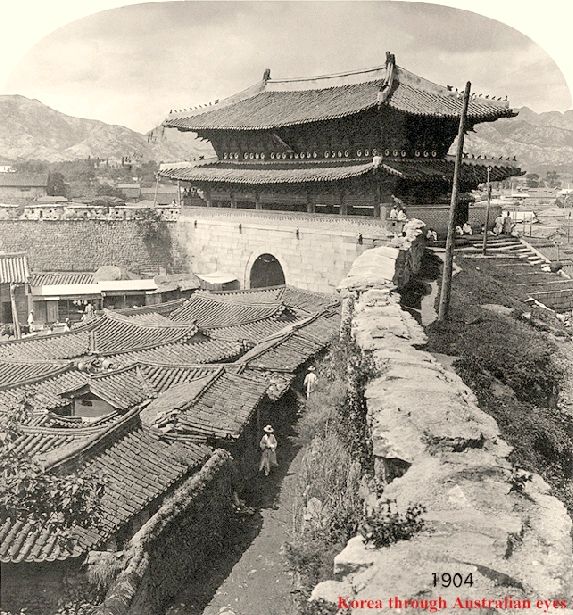
Namdaemun restored

It was over five years ago when a man angered over lack of compensation for his property set Namdaemun on fire, severely damaging it. It's set to reopen this Saturday after years of restoration work:
The Cultural Heritage Administration said it will hold a ceremony to mark the completion of the restoration of Sungnyemun, also known as Namdaemun meaning "south gate" in Korean, at 2 p.m. on Saturday at the site in central Seoul.

Severely damaged in the arson attack by an elderly man in January 2010, the gate underwent restoration with the participation of the nation's top-notch master carpenters and craftsmen, including those named intangible cultural treasures.

The administration said the gate made of stone and wood was restored to resemble its original form when it was first built in the late 14th century.[...]

The team also broadened the width of the stairway on its east side and lowered the ground around it by 30 to 50 centimeters in an effort to restore the gate to its original shape, officials said.
One of the good things to come out of the reconstruction was the excavations which took place around the gate, which revealed that the streets around the gate had risen by 1.4 meters during the past 500 years. It's nice to see that the restored gate will take that discovery into account.
Despite the restoration, the gate's value as a national treasure remains intact, according to experts.

"Many people think Sungnyemun was totally burnt down in the fire, but that's a misunderstanding," said Park Eon-kon, architecture professor at Seoul's Hongik University who headed the advisory group for the project. "Only part of it was destroyed."[...]

Lee Eui-sang, a 72-year-old mason who participated in the project, said the government's plan to restore Sungnyemun in a traditional way perplexed him at first.

"I didn't know what to do because all the tools used by the nation's traditional masons disappeared in the middle of 1970s," he said. So, he had to travel around the country in search of old tools.
Hopefully those tools and his knowledge get passed on.
The walls on both sides of the gate, which were demolished during the 1910-1945 Japanese colonial rule over Korea, have been rebuilt as well.
Actually, the walls were demolished in 1908, ostensibly at the behest of Korean government ministers, though the Japanese did have control of much of Korea's internal affairs by that point. Mentioned in the linked post is the assertion by the city that when Namdaemun's doors were opened in 2006, it was for the first time in 99 years, something which turned out not to be true at all. Here are photos of the restored gate:


When I saw the above photo, I thought it nice to see the walls restored, especially since they recall the image of Namdaemun from over 100 years ago:


On the other hand, I also regretted the loss of its iconic shape. As it turns out, however, the 'inside' part of the gate does still keep that shape, which is a pretty inspired compromise, I think.

 From here.
After the ceremony [this Saturday], the restored gate will be open to the public every day from 9 a.m. to 6 p.m., except Mondays. The hours will be extended by one hour till 7 p.m. in May, the month it reopens.

On May 4, all four royal palaces -- Gyeongbok, Changdeok, Changgyeong and Deoksu -- and Jongmyo Shrine will be opened for free admission in celebration of Sungnyemun's reopening, the office said.
There you have it.

Give me a break

[Update]
A bill extending the retirement age to 60 was passed in the national assembly Tuesday.

[Original Post]

The Korea Times reported yesterday on a "bill proposing workers be granted another holiday when a national holiday falls on a Saturday or Sunday":
Saramin, an online recruiter, said 94 percent of respondents said lawmakers should approve the “alternative holiday bill” in the survey conducted by the company on 999 employees in the country between April 16 and 25.

“Six out of 10 respondents expected ‘alternative holidays’ would boost their quality of life while 40 percent of them said the holidays would help them focus on their jobs more efficiently,” said the company.

Asked how they would spend the days off, about a quarter of the employees said they would rest. Twenty-one percent said they would take trips, followed by 19 percent who wanted to spend more time with their families. The others said they would study or enjoy hobbies.

The survey result came two days after the nation’s five major employer groups announced their opposition to the bill, pressuring lawmakers not to approve it. They argued that, if the bill is passed, it would cool business sentiment seriously. [...]

Last week, lawmakers from both the ruling and opposition parties at a subcommittee of the National Assembly agreed to seek approval of the bill at the plenary session, reigniting the debate on alternative holidays.

However, pressured by the business groups, they decided to postpone putting the bill to a vote until later in September. The bill needs to be approved in the committee and the plenary session before going into effect as a law.
An Arirang report quoted a Korea Employers' Federation spokesperson who said, "Firms with shift operations will suffer a four billion dollar loss because of higher labor costs. Productivity will be compromised, too, because workers will work less."

I imagine he's happy with the delay:

(Notices blood on lips, licks them, says, "Ah, precious blood.")

It should be remembered that when Korean companies and the public sector switched to a five day work week (in 2005 or so?), which gave employees Saturdays off, Arbour Day (April 6) and Constitution Day (July 17) lost their public holiday status. The inclusion of Hangeul Day as a public holiday is nice, but it's not like another holiday in October was really needed, was it? Not that I'm complaining, of course.

According to this SBS report, the bill is a little more complicated - if the Lunar New Year or Chuseok holidays fall on a Saturday or Sunday, they will be made up for, but all other holidays will only be 'replaced' if they fall on a Sunday. In other words, if the bill was in place, in 2013 there would be three extra days; in 2014, two; in 2015, three, and in 2016, four. Over the next four years, then, there would an average of three extra days off a year. Clearly, this must be stopped.

A Donga Ilbo article delves into some of the complexities surrounding the bill:
The proposal to designate a weekday as an “alternative holiday” if a national holiday falls on Sunday was a campaign pledge by Moon Jae-in, the former presidential candidate of the main opposition Democratic United Party, not President Park Geun-hye’s. During last year’s presidential campaign period, Moon pledged to introduce alternative holidays to promote the leisure industry as an economic growth engine.

However, the alternative holiday system has been included in major state tasks drawn up by Park’s presidential transition committee in February, even though it was not a promise made by the president. As the National Assembly is moving to pass a bill on the alternative holiday system, the administration, which is supposed to implement the major state tasks, is trying to dissuade lawmakers from enacting the bill.

The Ministry of Culture, Sports and Tourism has long been trying to introduce the alternative holiday system, as nothing is more effective in promoting culture and tourism industries than to have more holidays. The Culture and Tourism Institute, a state-funded think tank under the ministry, claimed in 2010 that the introduction of alternative holidays would create 85,000 jobs and the effect on production inducement worth 4.9 trillion won (4.4. billion U.S. dollars). However, the ministry’s attempts have been foiled by the business community and other economy-related ministries and agencies.
It's interesting how the amount mentioned above as a benefit is similar to what the Korea Employers' Federation spokesperson said would be lost. The article goes on to describe how there was disagreement within the presidential transition committee regarding including the alternative holiday system into the major state tasks, and now the Park administration has excluded this bill from a list of 204 tasks that require legislative action, likely due to the complaints from business organizations.

The article also mentions that "Some said that the system required only a revision of a presidential decree, rather than enactment." This is also echoed in the SBS article, which notes that there is no Law regarding public holidays, only a presidential decree. The SBS article also mentions that, while the bill would benefit people working for large companies or government employees, the self-employed and day labourers opposed it, as did housewives. I can understand the first two, but am scratching my head regarding the latter. There must be a lot of unhappy housewives out there who don't want to spend three more days a year with their families. Happy early Children's Day and Parent's Day, indeed. Too bad the former is on a Sunday this year...

Monday, April 29, 2013

Watch the Andrei Lankov lecture on 'The Female Face of North Korean Capitalism'

Anyone who missed Andrei Lankov's RAS lecture titled "The Female Face of North Korean Capitalism" from a few weeks back can watch it here.

Sunday, April 28, 2013

Oops: An Asian American fraternity has gotten in trouble for posting a video which includes blackface, and a lot of people aren't happy. Korean networks have received complaints in the past for performers using blackface in the last decade, though it's been going on for decades (and do read Gord Sellar's post here). Worth noting, though, is that none of the performers in this newest video have Korean surnames. (Hat tip to brent.)