Sunday, December 05, 2010

Portrait of the leader-to-be as a young man


My friend Ryan just emailed me a link to this Globe and Mail article about a portrait presumed to be of Kim Jong-un which was recently photographed by a Canadian tourist in Rason, North Korea. It may give clues as to how Kim the youngest's past will be portrayed in future propaganda, with the suggestion that he was sent to the west to learn about its ways and technology.
“It’s big news,” said Brian Myers, an expert on North Korea at Dongseo University in South Korea. “It’s hard to be completely certain on the basis of an untitled image alone. … But I cannot imagine a schoolboy outside the Kim family meriting this kind of painting, and it is very similar in mood and layout to depictions of the young Kim Il-sung and the young Kim Jong-il. So I would assume that it is Kim Jong-un although it is not a particularly striking likeness in view of the Kim Jong-un we have seen photographed in the past few months.”[...]

The portrait appears to be the start of an effort to turn [a] potential liability into in asset. “It goes to the heart of what will be the regime’s main problem in glorifying the boy, namely the fact that he was overseas during at least part of the famine or [so-called] Arduous March. The regime is for some reason loath to let foreigners see this nascent personality cult,” Prof. Myers said. “We have seen footage of [Kim Jong-un], and of course we can see him on the TV news every few days … but we know next to nothing about how the regime is articulating his biography. This painting offers important insight into what kind of mythobiography the regime is either planning or is already teaching the masses in party meetings, study meetings etc. outside the view of foreign visitors.” [...]

There is, however, some debate among Pyongyang-watchers over whether the picture is important. Andrei Lankov, a respected North Korea expert at Kookmin University in Seoul, scoffed at the notion that this was the new boy’s coming-out portrait. “This is his grandfather. Generalissimo Kim Il-sung. The background and school uniform leaves no doubt about it: the late 1920s,” Prof. Lankov wrote in an e-mail after seeing a copy of the portrait.
The entire article is well worth reading.

From there I clicked over to this article, which looks at the what responsibilities Canada might have as a member of the United Nations Command in the event of a Korean War. It has this to say about Canada's current military involvement in Korea:
The briefing note indicates Canada's military footprint in the Korean Peninsula today is very light. Canada's defence attache to Seoul, a colonel, and his assistant, a sergeant, represent the country on the UNC. Canada's defence attach in Tokyo represents Canada at the UNC's “rear” headquarters in Japan. And Canada also contributes a major to the Korean Army Staff College.
Meanwhile, this Korea Herald article provides some numbers when discussing North Korea's military capabilities, some of which are rather sobering (like the north having 5,200 multiple launch rocket systems).

And while on the topic of the north, Scott Burgeson sent me a link to this post about North Korean anchorwoman Ri Chun-hee. She really does need to be heard to be believed. She's also looked at in this broadcast by Jason Strother.

Friday, December 03, 2010

Gyeonggi's native speaking teacher levels explained

On Tuesday I posted an article titled "Only 2% of Gyeonggi-do native speaking teachers are at Level S" which described the different levels native speaking teachers had been rated at in Gyeonggi-do. It was not clear exactly what these levels were, but as it turns out, they are simply the pay levels for teachers in Gyeonggi-do. This is made clear by a post at Anti-English Spectrum. If not for their links to government ministries and other agencies, who knows how much more in the dark we would be on these things?

Here's a breakdown by level and number of teachers:


Here is a breakdown by level, qualifications, and monthly pay:


When I first saw the article, I wondered if it was based on actual evaluations of teachers, which would likely be more useful than rating them based only on their qualifications. Also worth mentioning is the fact that no school district would want to pay 2000 foreign teachers 2.5 million won a month. Of course, mentioning that might direct criticism towards the school district office instead of, as the aforementioned article did, onto the teachers.

Thursday, December 02, 2010

Subway groper exposed

[Update: The man in question turned himself in.]

According to Yonhap (via the Segye Ilbo) yesterday a netizen posted a video of a middle aged man groping a woman asleep (or passed out?) next to him. It was taken at Sincheon station on Line 2 on the last train headed for Sindorim at 12:30am Tuesday night.


Perhaps in the future gropers might want to rein in their hands if people around them have their phones out.... which would probably put a stop to all groping on subways. Police are currently investigating the case using CCTV footage and traffic card ID records.
The Joongang Ilbo has an article about how life has been made more interesting for the 37 middle school students living on Cheongsan Island in Jeollanam-do due to a principal who set up extracurricular activities for them. While previously students dreamed of getting off the island as soon as possible, the photography, music and art classes have given them reason to be interested and engaged in their surroundings. A few more photos of the island are in this article, while these Naver image search results give one an idea of the island's natural beauty. Here's a map showing the location of the island in relation to Mokpo:

Wednesday, December 01, 2010

Yeongpyeong-do children staying at English village for free

The Joongang Ilbo has a report entitled "The faces of children weighed down by fear of war beam in native speaker's class," which looks at how the Incheon English village has opened its doors to children from Yeongpyeong-do. Sixteen grade one and two elementary school students (as well as other middle and high school students) are being allowed to stay for 6 days (until December 4) for free (including food and accommodations, which normally costs 480,000 per person). The children have complained about the saunas where they have been staying, saying they’re too hot and stuffy, as well as loud. One middle school student said she hadn’t slept well until arriving at the English Village.

It’s made clear how some of the children have been traumatized by the experience of the attack and becoming, for all intents and purposes, refugees. One girl, a grade two student, saw a truck burning during the attack and complains about the life in the sauna, while a grade one boy hadn’t spoken (since the attack) until the day before, when he was able to become more comfortable and started started answering, “저요, 저요” to questions in a loud voice, regaining his former composure.

The English village has waived some of its rules (as in not speaking Korean) in order to make the children’s stay more comfortable. A native speaking teacher and Korean teacher work side by side in order to encourage the children to actively participate in the classes. It would seem Yeonpyeong Elementary school did not have a native speaking teacher, as the elementary school girls mentioned in the article had never seen a foreign teacher before, and were surprised by her blonde hair. “She’s really tall, too,” they whisper.


Parents and teachers from Yeonpyeong-do are invited to come to the classes, and a grade one homeroom teacher from Yeonpyeong Elementary school noted that Yeonpyeong-do’s parents are worried about how their children will adjust, but many can’t get to their schools. She also said that the children might be startled by loud sounds for some time.

As noted in this summary of Lee Myung-bak's address to the nation last week, "Lee said that some artillery rounds fired by the North pounded an area just about 10 meters away from a school on the island." According to this article,
Some 120 students attending a public school on the island escaped from their classrooms as soon as they heard the sound of shells and headed for shelters on the mountain in the back of the school.

The school's vice principal Ha Jun said, “I heard that most classrooms had their windows broken because of the sound of the shells and vibration. Fortunately, no students or teachers were injured.”
This Korean Times article looks at the differences between what those who left Yeonpyeong-do want in compensation from the government, and what the government is willing to offer. The government is committed to moving the people back to the island, giving them compensation for destroyed or damaged houses, paying for the repairs/rebuilding of the houses, giving them housing allowances and tax breaks, and possibly putting people up temporarily in Songdo.The residents have other ideas:
Out of a total 1,361 registered residents, most were evacuated to Incheon and other inland areas while dozens of people remain on the island. Many of the evacuees have been staying at 24-hour-saunas or temporary shelters, which they claim to be shoddy.

Choi Seong-il, the chairman of an ad-hoc Yeonpyeong Island emergency residents’ committee, says most residents have decided not to return to the island in fear of another deadly attack, urging the government to fully help them resettle on the mainland and make a living in a new community.
I have my doubts that the government will support calls by some residents for "the government to fully support our livelihoods on a constant basis."

For more on the background of the dispute over the Northern Limit Line, there's a good article by Andrew Salmon at the BBC.

Tuesday, November 30, 2010

"Placing native speaking teachers in schools should be re-examined"

As Brian has noted, there has been talk of public schools phasing out native speaking teachers.

There have actually been several articles about this in the past week or so. According to a November 23 Yonhap article, next year Gyeonggi Office of Education will reduce the number of native speaking teachers for the first time. Out of 2,183 elementary, middle and high schools, 2032 have 2,256 native speaking teachers working for them, and next year 200 (or 8.8%) will be cut. This has led to worries of rising private education costs. The Gyeonggi-do office of education has pointed out that they already have equivalent of 1 teacher per 1 school, the related budget will be increased 500 million won to 4.5 billion won next year, and specialist Korean English conversation instructors will be hired.

A November 25 Donga Ilbo article elaborates further on the latter instructors, saying that Gyeonggi-do began selecting Korean English conversation specialist instructors in June 2009, and there are currently around 650 working in schools, with plans to raise the number to 1000 next year.

It also notes that as the plan to reduce native teachers has become known to students' parents, there has been resistance due to fears of private education costs rising. According to parent Jeong Suk-hee, (39, Bundang): "Among parents there has been talk that Korean English conversation specialist instructors lag behind native speaking instructors," and, "If there isn’t much difference in the supporting budgets, we want native speaking teachers to be placed [in schools]."

On the 28th, Newsis, and on the 29th, Suwon.com reported further on this. Here's a translation of the latter article:
Only 2% of Gyeonggi-do native speaking teachers are at Level S

It has come to light that among Gyeonggi-do native speaking teachers, only 2% were given the highest rating, ‘S Level,’ given to high quality teachers, when evaluated by the National Institute for International Education (NIIED - part of the Ministry of Education, Science and Technology).

As these excellent teachers are concentrated in big cities like Gunpo, Uiwang, Suwon and Bucheon, analysis points to a serious imbalance in the region.

According to comments made by representative Rep. Jo Myeong-ho, member of the Gyeonggui provincial council’s education committee, on the 28th, of 2203 native speaking teachers working in Gyeonggi-do, 1274 are from the US, 332 from Canada, 253 from South Africa, 169 from England, 78 from New Zealand, 56 from Australia , 25 from Ireland, and 16 are from Korea.

By Rating, 46 teachers were at Level S, 89 at Level 1+, 320 at Level 1, 452 at Level 2+, 791 at Level 2, and 487 at Level 3, and 18 others.

Only 455 (21%) were rated at level 1 or higher, and in particular only 2% were at the S Level.

Most Level S teachers work in metropolitan areas such as Uiwang / Gunpo (7), Suwon (5), Bucheon (4), Hwaseong / Osan (4); there are none in rural areas like Yangpyeong, Icheon, Gimpo, Gapyeong or Yeoju.

Yeoju and Yangpyeong do not even have any teachers rated at or above level 1.

Native speaking teachers invited through NIIED's EPIK program receive their rating after a comprehensive assessment which takes into account their education and experience, and whether they have teaching qualifications such as TESOL.

Rep. Jo stated that, "If someone possesses a 4 year degree from a university in countries like the US, Britain or Canada, they can work as a native speaking teacher whether or not they have a related major or teaching certificate," and, "Expenses for a single teacher cost more than 40 or 45 million won per year, but there is no data to objectively evaluate their educational effectiveness."

"The time has come to verify their educational ability and qualifications," and, "it's time to improve English education which has given unconditional preference to foreigners with inadequate qualifications and ability," he added.
One wonders if the 'comprehensive assessment' the teachers receives actually involves evaluating their actual teaching, or if it only takes into account what is known about the teachers on paper.

This isn't just limited to Gyeonggi-do, however. On November 26, the Busan Ilbo published the following article:
Controversy over unqualified native speaking English teachers

It has been exposed that four out of ten native speaking assistant teachers in the Yangsan area do not have teaching certification or English (teaching) certificates.

According to Yangsan city on the 26th, a total of 58 native speaking teachers have been sent to teach English at 53 elementary, middle and high schools in the area. Out of 58 native speaking teachers, Yangsan city covers the costs for 52 (1,880,000,000 won), while the provincial education office spends 170,000,000 won on four teachers, and two are paid directly by their schools themselves.

However, among these native speaking teachers only six (10.3%) have teaching certificates from their home countries, 27 people (46.6%) have TESOL, TEFL, or CELTA English teaching certificates, while the remaining 25 teachers (43.1%) only graduated from university.

Yangsan city council representative Shim Gyeong-suk insisted that, "In order to ensure educational value and quality and the satisfaction of school teachers and students, the entire current enterprise of placing native speaking teachers [in schools] should be re-examined."
Not "native speaking teachers should be required by the ministry of education (or immigration) to have a TESOL certificate," but, "the entire current enterprise of placing native speaking teachers [in schools] should be re-examined."

If we take into account the incorrect reports from the end of September saying that, due to their irresponsible attitude, 66% of native speaking teachers broke their contracts this year, leading to a "serious regional imbalance in English education," I don't think it's too difficult to see a pattern.

Monday, November 29, 2010

Line 9 derailment


According to Yonhap, at 8:10 last night, train 0913 on Line 9 derailed as it headed towards Sapyeong station (in the direction of Shin Nonhyeon Station). Luckily, it was going under 20km per hour when it happened, so there were apparently (according to Metro 9 officials) no injuries. As can be seen above, passengers exited out the front of the train. SBS has a video here which the following photos are taken from (YTN also has video, and according to YTN it took only 8 hours to restore service).


That's quite the spacious tunnel. I've taken photos before out the front of the train as it's moving and thought that it might be fun to walk around the tunnels - but a derailment would not be my first choice in getting such an opportunity.


It's also not exactly comforting that it happened on Line 9, considering I take it every day.

Thursday, November 25, 2010

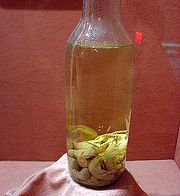
Mice wine?

Or to clarify, baby mice wine?


The post describes it as a health tonic in Korea (and China), and considering I've heard that cats are used to make a health tonic (as are snakes), it shouldn't be so surprising. Still, has anyone ever seen or heard of this?

The state of dabangs in 1965

James Wade provides an interesting look at the world of Korean tea rooms in the mid 1960s.


With its description of the different kinds of music available at different tea rooms, it would seem modern Starbucks, Cafe Bene and their ilk are a poor substitute (especially with the middle of the road mush that passes for music at most). I imagine the coffee is better, though, and the premises are more spacious.

Wednesday, November 24, 2010

B.R. Myers on the Yeonpyeongdo attack

[Update]

Photos of the village in the aftermath of the shelling are here. (Hat tip to DynamicallySparkling)

The Donga Ilbo's article here has a good article about the attack:
Some 120 students attending a public school on the island escaped from their classrooms as soon as they heard the sound of shells and headed for shelters on the mountain in the back of the school.

The school`s vice principal Ha Jun said, “I heard that most classrooms had their windows broken because of the sound of the shells and vibration. Fortunately, no students or teachers were injured.”

It seems villagers were very lucky the shells fell where they did. The article mentions that Daecheong and Socheong islands (the two south of Baengnyeongdo) were evacuated, and that "The Incheon Metropolitan Office of Education indefinitely closed all public schools on five islands off the west coast, including Yeonpyeong and Baengnyeong."

[Original post]

NPR interviewed B.R. Myers regarding the attack on Yeonpyeongdo yesterday. At one point he noted the apparent lack of concern over the attack, and wondered if South Koreans are "habituated to a certain amount of tension, and perhaps they see this only as an incremental increase." This is something he brought up at a talk a month or so ago about the lack of state patriotism in South Korea, when he said he worried that continued provocations by North Korea might desensitize people in the South to them (and also noted that the north could not have failed to notice that one of the results of the attack on the Cheonan was that it led to a sizable segment of the South Korean population turning on its own president).

In other news related to the attack, an early article in the Wall Street Journal is here, an earlier report by YTN is here, CCTV footage of the shells hitting the village on Yeonpyeongdo is here, and a report about the two marines who were killed is here. A map of the attack can be found here, which shows the village on the south side of the island (facing away from North Korea), which is located 13 kilometers from North Korea, and where "an estimated 1,700 people live in some 930 houses," according to this Korea Times article.

This MBC report has a satellite photo of the smoke moving away from the island:


The Joongang Ilbo has several reports in English here, here, and here.

Monday, November 22, 2010

Boared yet again

[Lengthy update at bottom]

The Joongang Ilbo has an article about sightings of wild boars, including one in Samcheong park on Sunday which resulted in its capture. There's a photo of it after its capture here, as well as a chart showing the number of boars caught by year, as well as the number of sightings in cities and on roads since the beginning of October this year, including a collision in Chungcheongbuk-do that left a driver dead.

This isn't the first time boars have made there way into cities - it was reported on (and blown out of proportion) five years ago after boars made three incursions into Seoul in the space of a few weeks:
The capital is under threat from an unlikely invasion after wild boars were sighted at several locations around the metropolitan area. Last month there were repeated sightings at the Sheraton Grande Walkerhill Hotel; now a den that is home to scores of the aggressive beasts has been discovered in Achasan.
Terrifying stuff. Less terrifying were these photos which turned up in June 2006 of a baby boar found in Yangyang, Gangwon-do which was being raised by a woman's dogs as if it was their own.

(From here).


(From here)

Unfortunately, soon after these photos were taken a neighbouring dog realized the identity of the boar and killed it. (I'm not sure if it was possible for that story to have a happy ending, really.)

When I first read about the boars, I wondered just how dangerous they were. To be sure, having a 200 - 300 pound animal charge you is not something that will turn out well, and I eventually noticed that Korean boars did have tusks. What really brought it home was a story in Horace G. Underwood's memoir Korea in War, Revolution and Peace (as well as in Donald Clark's Living Dangerously in Korea) about a hunting trip in the 1930s in (I think; the book's at home) Gangwon-do. The Underwoods built an addition to a Korean family's house with the stipulation that they got to use it for a week of the year, and they would get locals to go up onto the mountain and act as beaters, making noise as they moved down the mountain in tandem, chasing animals to the bottom where the hunters waited. Once, a boar had been shot and one of the Korean men moved towards it when it suddenly reared up and slashed his leg open with its tusk. The man was sent to Seoul and was fine, but Underwood noted that a knife could not have made a cleaner cut than that boar's tusk. He also noted, however, that that was the only time he'd seen a boar gore someone.

[Update]

YTN has a report on the latest boar to be caught, as does MBC (in IE only). Do watch the MBC report though, as it's got some great footage (hat tip to Gary Norris). When MBC explains the number of wild boars in the mountains around Seoul, it uses these great graphics:


AT LEAST HUNDREDS LIVE [THERE]

All I can ask is, "What did you do with Cheongwadae, you bastard pigs?!" Even more fun is footage of a convenience store clerk standing on top of the counter, for what is apparently good reason - it jumps up on the counter after the clerk, who leaps off.


That's a pretty aggressive pig.
The one thing I can't figure out is why they blurred out one of the pigs' faces. While it crossed my mind that 초상권 may also apply to wild animals, I then remembered that most of the other boars had their faces shown. Perhaps that particular boar is related to someone in a position of power. Which might explain the cheongwadae connection above.

Here are a few related articles from the Joongang Ilbo over the past five years:

Searching for a meal
‘Wild pig chase’ ends after 11 hours
A hunting ban spurs city boar baby boom
Leopards on the decline (Which says that the last leopard in Korea was caught in Jirisan in 1963)
An article about the mutant boar movie Chaw.
Wild boars are a hog-sized problem (which tells us that in 1518 boars dug up the grave of a queen)
Villagers up in arms as wild boar invade
The quiet night of Oct. 19 [2009] turned to terror with locals’ screams as a group of nine wild and hungry boar slipped into an apartment complex in a mountainous region of Gumi, North Gyeongsang.
If those boars were anything like the one in the convenience store, I don't imagine it would have been much fun for the people outdoors that night.

Still, I can't help but think of something like SNL's classic 'land shark' sketch, with the doorbell ringing and the family thinking the tangsuyuk has arrived*, only to have half a dozen wild boars burst into the apartment instead. It might work as a trailer. Begin by showing deforestation and apartment complexes surrounding mountains, follow it with images of police chasing and killing boars, and launch into the apartment complex attack.
The scene at school the next day isn't difficult to imagine: "Chul-soo! Do you really expect me to believe that a wild boar ate your homework?!"
"But-but - "

It pretty much writes itself...

* I suppose the tangsuyuk had arrived - but in an uncooked, still-living form.

Anti-Korean protests in Taipei

The Joongang Ilbo reports that after a Korean official disqualified a Taiwanese athlete who was winning a taekwondo match at the Asian Games last Wednesday (after finding extra sensors to register kicks which had been approved beforehand), Taiwanese have held protests which have included flag burning and calls for boycotts of Korean products.
According to news reports, some people threw eggs at a South Korean school in Taipei on Thursday. An owner of an electronics store in Fengyuan in north-central Taichung County hurled Samsung Electronics plasma televisions on the floor and, with the help of two friends, smashed the television screens with hammers.

Workers at a cosmetics store in Taiwan also threw South Korean products on the floor and stomped on them.

People burned South Korean flags outside Taiwan’s Sports Affairs Council last Thursday after an appeal over Yang’s disqualification was rejected by the Asian Taekwondo Union.

Some Taiwanese are boycotting South Korean goods. Another electronics store owner in Taipei is encouraging his customers not to buy cellular phones from South Korea.

Taiwan’s President Ma Ying-jeou has called for a probe into Yang’s disqualification. [...]
Nice to see the president getting on the 'right' side of nationalist hysteria. Now, when I heard of burning flags, I was expecting something more daunting than this:


To be sure, if I were Korean and living in Taipei, I might be worried and would want to be careful when in public places, but if the Taiwanese were, say, ripping up flags on this scale, while yelling, "We will recover our national pride," then I'd be a little more worried:


(From here.)

It's not like things happens on this scale often in Korea (the big ones that stand out in the last ten years have been in 2002, 2005, and 2008 (should we brace ourselves for next year?)), but when it does, it's quite a spectacle to behold.

The Joongang Ilbo article concludes with this:
The ministry also said that Seoul’s representative office in Taipei had been told to convey a message to Taiwan’s government.

“Yang’s disqualification at the Asian Games is regrettable, but the burning of Korean flags and boycotting of products that is spreading across the country is something that calls for attention,” the ministry said yesterday.
Yeah, it sucks when that happens, doesn't it?